
Top 7 FAQs About Pallet Rack Installation
Get Answers to the Most Common Pallet Rack Installation Questions
Most facilities that have been through a pallet rack installation project will tell you the same thing: the details matter far more than they expected.
In fact, these details are not small considerations. Getting them wrong at the start of a project tends to show up as cost overruns, scheduling delays, compliance issues, or a rack system that does not work the way it was planned.
Below are the seven questions we hear most often from warehouse owners, facility managers, and operations leads before they start an installation project. The answers are meant to nudge you to think these details through before work begins.
FAQ #1: How Long Does a Pallet Rack Installation Project Typically Take?
Project timelines depend on the size of the system, permit requirements, rack availability, site readiness, and whether the installation is being completed in an active facility. There is no single best answer, but here is a realistic breakdown.
Physical installation for smaller projects takes 2 to 5 days with a 3- to 4-person crew. WOI crews average 30 to 50 bays per day on smaller jobs, depending on rack height, number of levels, and site conditions. Medium projects typically take one to two weeks. Large distribution center builds or complex multi-system projects can run for several weeks.
What most timelines underestimate is everything before the crew arrives.
When permits are required, engineering documentation, permit submission, and building department review can add 8 to 12 weeks. Pallet rack layout details (such as storage height, rack depth, flue spacing, pallet spacing, and product type) must also align with fire code and insurance requirements, which may add time to the approval process.
New rack material lead times can run 8 to 18 weeks, depending on the manufacturer. Site-readiness issues (uncured slab, incomplete lighting, areas not yet cleared) are another potential disruptor.
Planning for these variables at the start of the project keeps the project on schedule. WOI’s guide to preventing installation overruns covers the most common causes in detail.
FAQ #2: Do I Need a Permit for Pallet Rack Installation?
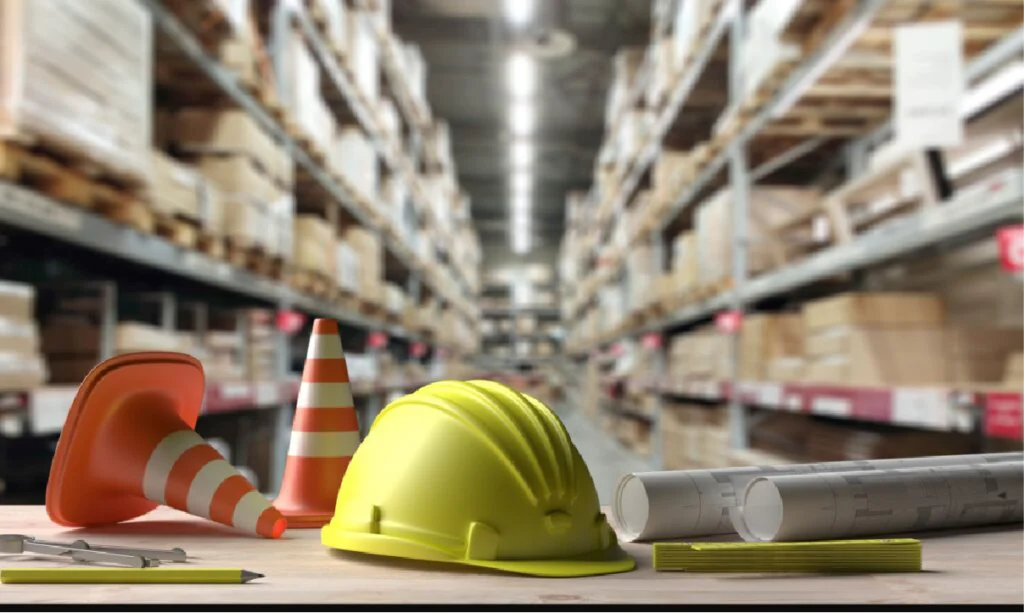
In many jurisdictions, yes. Pallet rack systems are commonly reviewed under local building and fire code requirements because they support stored loads, affect aisle layout and egress, and may interact with sprinkler coverage, seismic design, and high-piled storage rules.
The permit path depends on the local Authority Having Jurisdiction (AHJ). Before installation begins, confirm whether your project requires engineered drawings, structural calculations, a fire code review, special inspections, or final approval before the system can be loaded.
What the permit process typically requires:
- Engineered LARC drawings (Layout and Rack Configuration) stamped by a licensed structural engineer, drawn to scale, and showing rack dimensions, elevations, and placement within the building
- Structural and seismic load calculations accounting for product weight, rack height, seismic zone, and anchor design
- Fire code review covering sprinkler clearance, high-pile storage classification, egress routes, and aisle dimensions
- Hazardous materials documentation if regulated commodities are stored in the facility
- A final inspection or approval by the local authority before the system is placed into service
Requirements vary enough by jurisdiction that the right first step is contacting the local AHJ before submitting anything.
FAQ #3: Can Pallet Rack Installation Be Completed Without Shutting Down Operations?
Yes, many pallet rack installations can be completed while a warehouse remains operational, with the work completed in phases to minimize disruption. Shutting down a warehouse for the duration of an installation is rarely necessary if the project is planned correctly.
With a phased installation plan, the crew works in defined zones while the rest of the facility stays operational. Safety barriers, temporary fencing, and marked exclusion zones separate the crew from warehouse personnel. Material staging areas should be identified in advance and kept clear of normal traffic patterns to support a safe and efficient installation process.
WOI installation teams follow OSHA PPE requirements for each job site, including facility-specific safety rules and any additional protection required by the scope of work.
FAQ #4: What Information Is Needed Before Installing Pallet Rack?
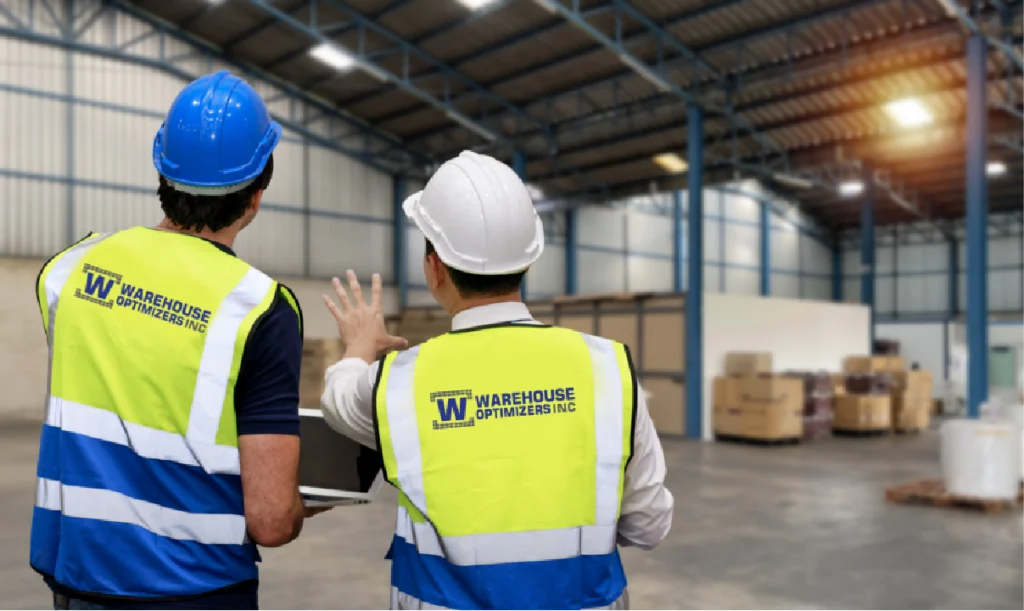
Changes discovered mid-project, such as an obstruction that affects rack placement or an aisle width that does not support the intended lift truck, can create avoidable schedule and cost problems. The more complete the information before the layout is finalized, the less likely those surprises are. WOI’s approach to project planning covers how these variables translate into project scope and schedule.
- Facility dimensions: ceiling height, column locations, dock door positions, and fixed infrastructure (sprinkler drops, HVAC, electrical) that limit usable floor area
- Concrete slab data — thickness and PSI rating, confirmed before installation begins, since anchor selection and installation method depend on it
- Pallet dimensions and actual loaded weight: confirm the true pallet size and weight, not the nominal spec; overhang and weight distribution affect beam spacing, beam capacity, and frame selection
- Lift truck type and model: mast height, turning radius, and fork dimensions must be compatible with the rack configuration and aisle widths
- Inventory profile: SKU count, pick frequency, pallet rotation requirements, and whether the system needs to support FIFO, LIFO, or mixed access
- Future growth plans: headcount changes, automation additions, or product mix shifts within the next three to five years can influence how the system is configured today
The goal is to install a rack system that fits the operation today and can support near-term changes without immediate reconfiguration.
FAQ #5: What Safety Requirements Apply to Pallet Rack Installation?
A compliant pallet rack installation starts with engineering and ends with verification before the system is loaded. Here is what a compliant installation looks like in practice:
- Anchoring: ANSI MH16.1 requires every column to be anchored to the floor. No exceptions. Minimum one anchor per upright; seismic zones and high-impact areas (end-of-aisle forklift exposure) typically require two. Anchor type, size, and torque must follow the rack manufacturer’s engineering documentation.
- Load capacity placards: Every rack system must display a load plaque in a visible location specifying the maximum permissible unit load and bay load.
- Upright protection: Column guards and end-of-aisle rack guards are a practical requirement in any facility where forklifts operate near racks. Damaged uprights reduce the load capacity of the entire bay and must be removed from service until assessed by an engineer.
- Seismic design: Facilities in seismically active regions must account for seismic forces. This typically means heavier base plates, additional cross-aisle bracing, and potentially reduced load capacities. The seismic design category is determined by the engineer of record based on the project location.
- Post-installation inspection: Before any product is loaded, the completed system must be inspected. You need to confirm beam elevations match the approved drawings, all anchors are properly installed and torqued, all components are plumb and square, and safety hardware (beam clips, column guards, row spacers) is in place.
- Ongoing inspection program: OSHA and ANSI MH16.1 require that rack systems be inspected periodically by a qualified person after the installation is complete and in use. Inspections must be documented. OSHA can and does cite facilities under the General Duty Clause for damage that was present but unaddressed.
FAQ #6: Should I Install New, Used, or Reconfigured Pallet Rack?
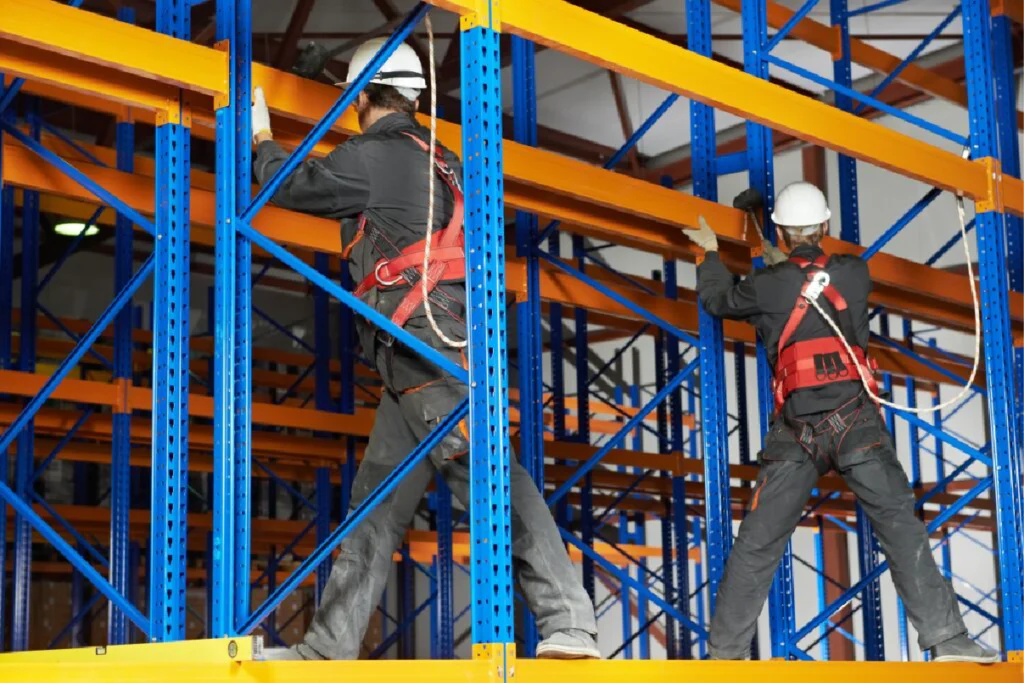
Each option has a legitimate place depending on project scope, budget, timeline, and condition of the rack.
New rack offers complete engineering documentation, known load ratings, a manufacturer’s warranty, and a clean documentation trail for permitting. The trade-off is lead time, which can range from 8 to 18 weeks with major manufacturers. It is generally the right choice for large-scale projects or applications with specific load and configuration requirements.
Used rack can deliver 30–50% cost savings compared to new when sourced from a reputable supplier and properly inspected. The critical requirement is documentation. Installing used rack without verified load ratings is an OSHA violation, not just a safety risk. Original calculations and manufacturer installation drawings help confirm load capacity and ensure the rack can safely support the application. Mixing components from different manufacturers without engineering review voids capacity ratings and can cause connection failures. WOI can help evaluate used rack components, confirm manufacturer-rated capacity, assess compatibility with existing systems, and complete the installation.
Reconfiguration is often the most cost-effective path when an existing system is not working optimally ( storage density or configuration that does not meet current volume). An engineer must review any reconfiguration that changes load conditions, height, or configuration before the system is put back into service. Even minor adjustments can affect rack capacity and should be reviewed before the system is returned to service.
FAQ #7: How Do I Choose the Right Pallet Rack Installation Contractor?
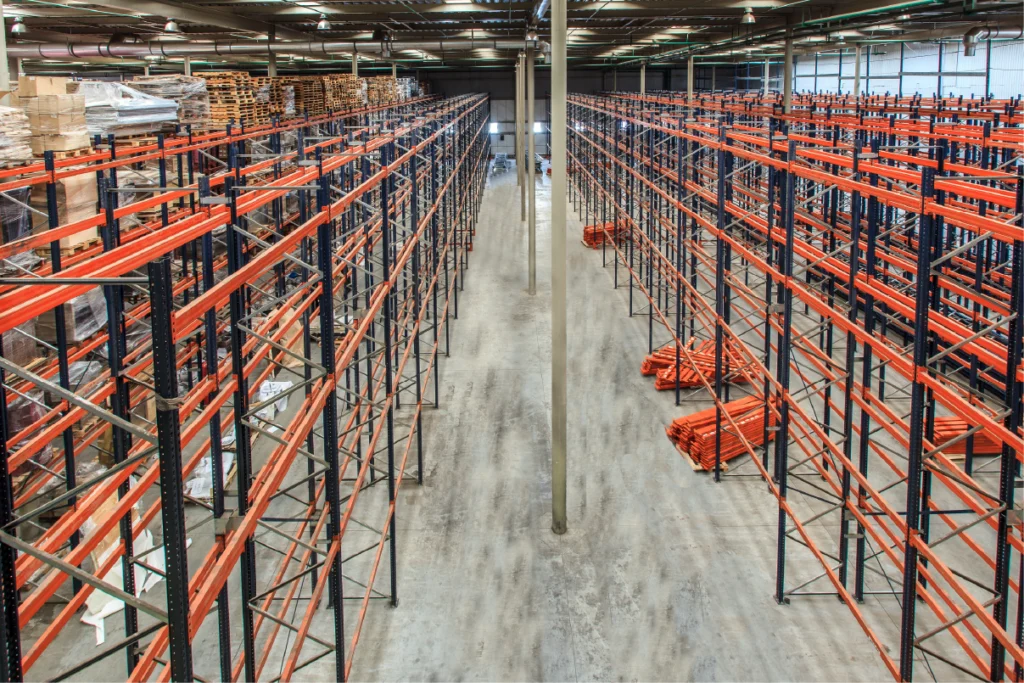
The contractor you choose directly affects the safety, documentation, and long-term performance of your rack system. Price matters, but it should not be the only deciding factor. An installer who creates anchoring deficiencies, skips safety hardware, or leaves you without proper documentation creates problems that cost more to fix than the initial savings.
WOI’s guide covers the full set of questions to ask before hiring. The short version:
- Licensing and insurance: Confirm general liability insurance, workers’ compensation, and a current certificate of insurance before signing anything. Requirements vary by state, so always verify what applies in your jurisdiction.
- Safety credentials: WOI project managers hold OSHA-10 certification or higher, and installation crews are properly certified to operate the lift trucks required for the job. Ask any contractor you evaluate about their safety program, training records, and incident history.
- Relevant experience: References from projects of similar scale, rack type, and operational environment are more useful than a generic track record. Ask specifically.
- Permit and engineering capability: Can the contractor manage the permitting process (coordinating with the engineer of record and the local AHJ) on your behalf?
- Project management: For multi-day or phased projects in live facilities, a dedicated project manager who communicates with your team daily is how the project stays on schedule and on budget.
Red flags include vague scope language, no discussion of permitting or engineering, no documented safety process, unwillingness to verify capacity information, pressure to proceed before the layout is finalized, or no clear plan for working around active operations.
Why Professional Pallet Rack Installation Matters
A pallet rack system is a structural component of your warehouse. The loads it carries, the equipment that operates around it, and the people who work near it every day are all affected by how well it was installed.
Professional rack installation ensures the system is engineered for the actual loads, properly anchored, and compliant with the requirements that apply to your facility. It produces the documentation that OSHA and local authorities expect to see. And it gets the configuration right from the start, rather than discovering mid-project that there is a problem.
Fixing an installation that was not done correctly (re-anchoring, reconfiguring, or addressing a code deficiency) almost always costs more than doing it right the first time.
Partner With Warehouse Optimizers for Your Next Pallet Rack Installation
Warehouse Optimizers Inc. provides professional pallet rack installation, dismantle, relocation, and reconfiguration services across Tennessee, Alabama, Kentucky, and North Carolina.
We manage the full project scope: layout design, engineering coordination, permit management, material sourcing (new and quality used rack), installation by OSHA-certified crews, and post-installation inspection support. Related systems like conveyor, mezzanine, modular offices, and safety products can be managed as part of the same scope.
Every project starts with a site assessment and a detailed scope of work. Through the WOI Total Satisfaction Experience™, our team focuses on listening to your needs, executing with precision, adhering to timelines, prioritizing safety, and overseeing the details that help deliver a successful installation.
Contact WOI online to discuss your project or call directly: 865-540-4004.
Contact Us Today
We will be happy to assist you with any questions or more detailed product information on any Warehouse Optimizers products.