
Vertical Reciprocating Conveyors
Take the Load Off (& Up) with WOI Material Lifts
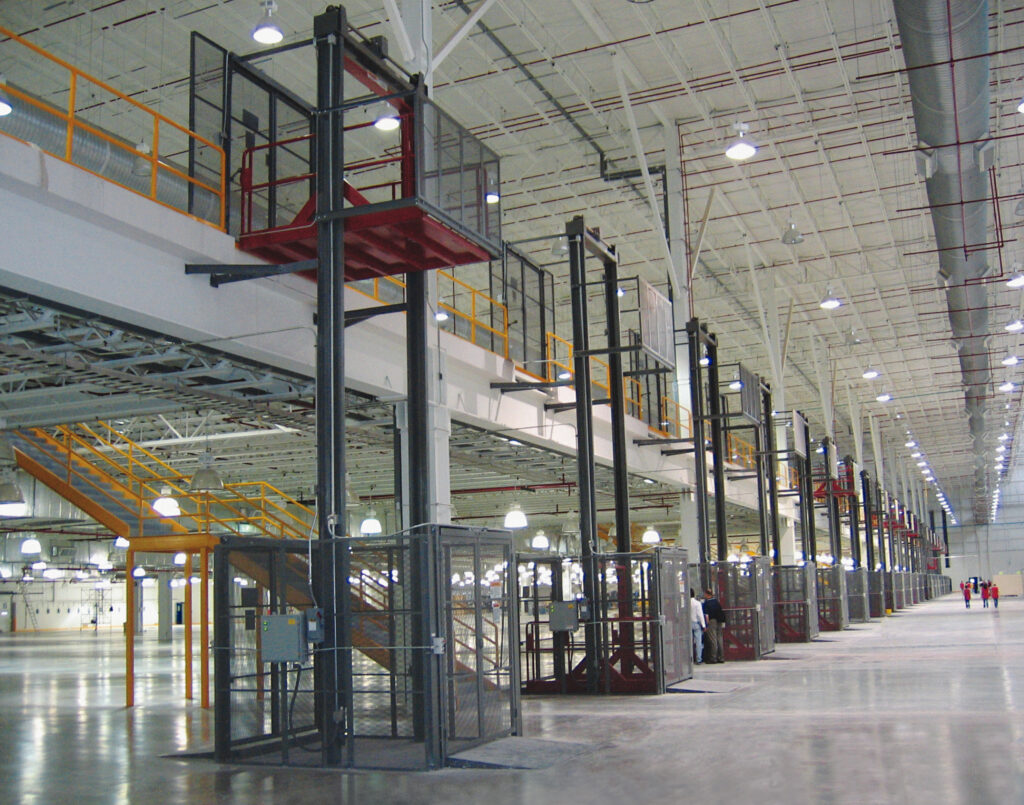
Move large, bulky inventory or equipment from one level of your facility to another with ease using a vertical reciprocating conveyor (VRC). VRCs are elevator-like conveyor systems designed for carrying heavy loads between ground, mid, and ceiling-level storage and operation areas. They move by hydraulic or mechanical actuators that raise and lower the secure platforms between levels at a safe and efficient speed.
Warehouse Optimizers, Inc. (WOI) has been helping businesses successfully integrate vertical reciprocating conveyors into their facilities for decades. We provide turnkey service, including expert guidance, intuitive design, and mechanical/electrical professional installation. Contact us today to learn more about how to give your business the lift it needs to compete.
Benefits of Vertical Reciprocating Conveyors
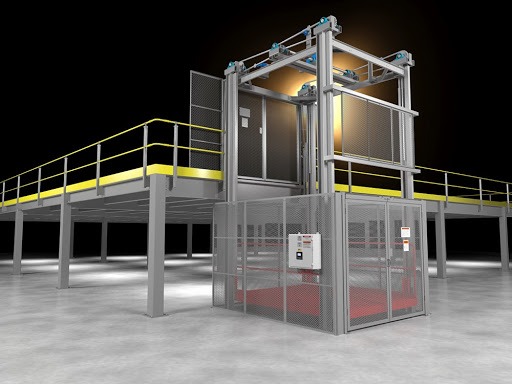
Vertical reciprocating conveyors provide a variety of operational benefits, including
- Safe and efficient movement of products, loaded pallets, and equipment
- VRC systems require no manpower or forklifts for use and can be loaded with pallet jacks
- They cost less to operate and maintain than freight elevators no inspections necessary
- Maximized use of floor space and ground-level storage through multilevel storage
- Designed to fit within existing mezzanine infrastructure for hassle-free integration
- Safe and seamless transport of bulky and heavy goods, like large pallets, equipment, and more
- Systems can be designed to your exact size and weight capacity specs to suit your needs
Floor platforms can be custom-built to move all load sizes through facility levels.
CONTACT US TODAY - PROUD TO BE A LEADING SUPPLIER IN THE SOUTHEASTERN UNITED STATES INCLUDING KENTUCKY, TENNESSEE, NORTH CAROLINA, ALABAMA, AND FLORIDA.
Hydraulic, Mechanical or Rideable: Which VRC is Right for You?
Vertical reciprocating conveyors move by hydraulic or mechanical actuators, which can represent important distinctions in design integration and functionality including load-bearing capacity and lift height capability.
Mechanical VRC Systems – Mechanical VRC systems are designed to accommodate heavier loads and move to higher levels than their hydraulic counterparts. Their platforms can lift up to 30,000 pounds and up to a maximum of 150 feet. They have a lifting speed of up to 28 feet per minute and a maximum platform size of 2 ft. wide x 30 ft. long. These systems also generally require less maintenance.
Hydraulic Conveyor Systems – Hydraulic systems are built to accommodate lighter loads stored at lower heights. They require more frequent maintenance and have a maximum load capacity of 4,000 pounds. Hydraulic VRC systems can lift loads up to 19 feet at a maximum speed of 20 feet per minute. They are initially more affordable than hydraulic systems to install.
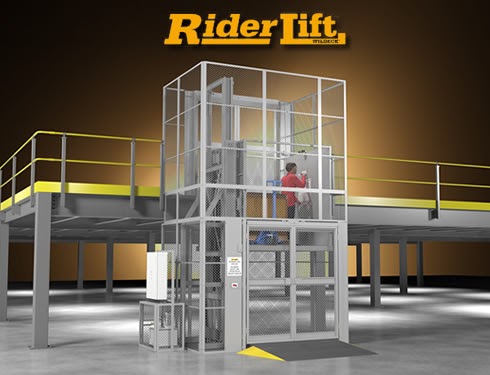
Rideable Material LIfts - Stop climbing stairs to catch up with your cargo on a VRC. Rideable material lifts allow authorized personnel to safely travel between levels with their material at a fraction of the cost of an elevator installation. Ridable lifts offer many valuable benefits for your operation:
- Increase material handling efficiency
- Save time and increase security by having workers ride with their material
- Prevent worker injury from carrying boxes
- Reduce lost time and expense from injuries or accidents
- Maximize facility capacity
- More affordable and easier to install than a passenger or freight elevator
Ridable lifts are not VRCs (Vertical Reciprocating Conveyors). The “RML” (Rideable Material Lift) is a new product category for the material handling industry. VRCs are regulated by the ASME B20.1 Safety Standard for Conveyors and they do not permit riders. Wildeck’s new RiderLift™ RML Type B Material Lift is regulated under the ASME A17.1/CSA B44 Safety Code for Elevators and Escalators and allows one rider to accompany their material to the next level. However, it is not a public elevator and can only be operated by authorized personnel.
WOI is ready to help your business decide which type of VRC is right for your facility so you can make the most informed choice.
Workload Applications of VRCs
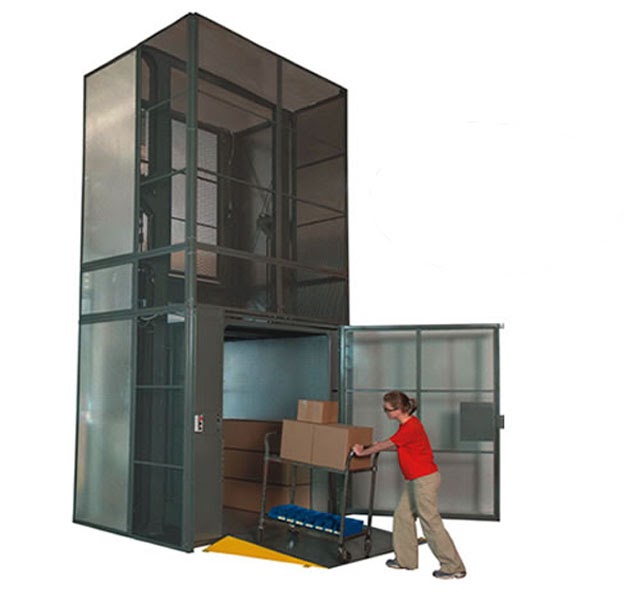
Vertical reciprocating conveyors are used in a variety of applications in manufacturing, distribution, and order fulfillment facilities:
- Mezzanine and high-level work platform storage of goods
- Movement of equipment and parts from one floor to another
- Transporting of raw materials and bulky containers
- Safe and efficient movement of lift vehicles
VRC systems are most commonly found in warehouses, fulfillment centers.
Let WOI Help You from the Ground Up
WOI offers a full-service VRC integration experience, including facility assessment, and logistics, intuitive design, and OSHA10-certified installation services. The WOI 5-Step Total Satisfaction Experience™ guarantees that we will 1. Listen to your needs, 2. Execute your project with special attention to your unique application, 3. Stick to project timelines, 4. Ensure a safe environment, and 5. Pay close attention to the appearance of the finished product.
The WOI team will walk you through each stage of the process and provide expert customer service to deliver great results and peace of mind. Contact a member of our team today and let’s chat or Zoom. Call (865) 540-4004 for a prompt response.
We proudly serve customers throughout the Southeast including KENTUCKY, TENNESSEE, NORTH CAROLINA, ALABAMA, AND FLORIDA.
Contact Us Today
We will be happy to assist you with any questions or more detailed product information on any Warehouse Optimizers products.