
Warehouse Safety – An Up, Down, and All-Around Approach
Celebrating National Safety Month with a Close Look at Warehouse Safety
Warehouse safety should be a daily priority to protect your operation from unnecessary downtime, equipment damage, worker injury, and fines. It also helps you keep productive, trained workers on your team, which in this labor market is a high-value target. National Safety Month is an excellent reminder to take a fresh look at what you’re doing, evaluate what’s working, note any changes affecting worker safety, and adjust where necessary.
If you look at warehouse safety from different perspectives, you may pick up on previously unseen potential risks.
Warehouse Safety Questions – Up, Down & All-Around
- What’s up, and could it come down unexpectedly?
- What’s floor-level, and does it allow for safe, efficient movement of workers and equipment?
- Is all-around daily activity done with safety-mindedness?
Warehouse Safety from the Top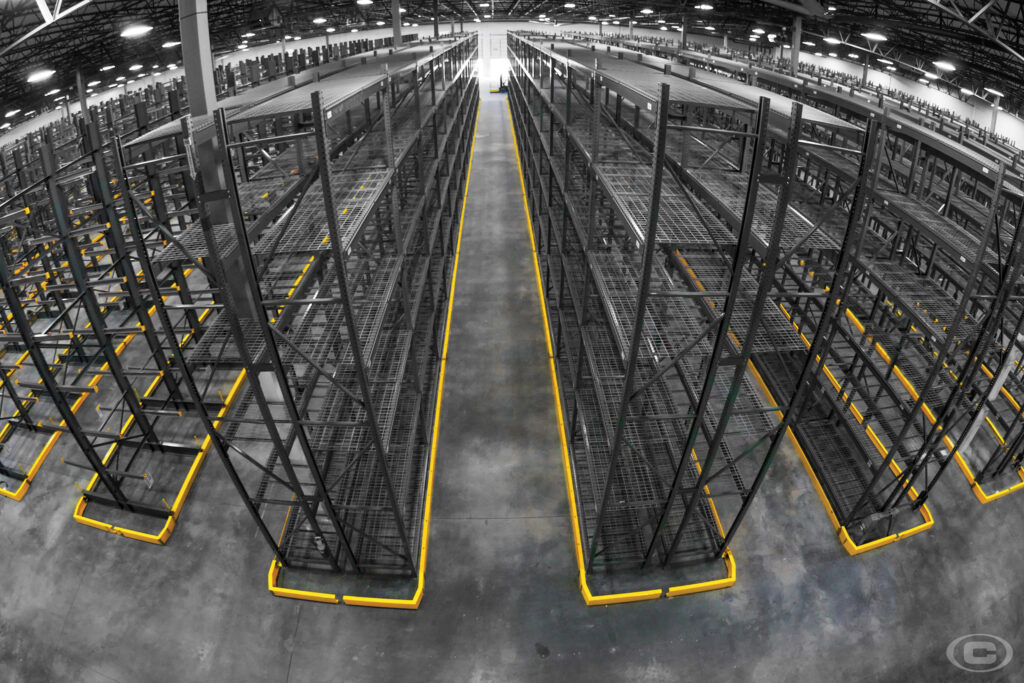
Capitalizing on vertical space is a good business move. Mezzanines and vertical pallet racking are two popular ways to max out your cube space. Let’s consider how to prevent personnel or equipment accidents in raised areas.
Mezzanine Safety
Guardrails – Conduct a safety audit to ensure your mezzanine guardrails are secure and connections haven’t loosened over time. Also, check to ensure the rails aren’t damaged by machinery or equipment.
Decking – How is the decking holding up? Is it worn in areas that could cause slipping? When was the last time you verified the load capacity?
Stair rails – Check the treads for wear, railings for secure connections, and any damage.
Load areas & lifts– Check VRCs, slide- & pivot gates to confirm they are safe and in working order. Look for damage caused by load equipment and ensure all safety measures are in place and in good working order –open, close buttons, harnesses, safety latches, alarms, etc.
Pallet Rack Safety
Equipment strikes – Inspect pallet rack regularly to ensure it is in working order. Promptly assess all equipment strike damage to evaluate severity and system integrity.
Connections – Bolted connections, whether column-to-beam or floor anchors, must be secured. Connections can loosen over time due to floor vibrations and repeated use; checking and securing is always better than suffering a rack disaster.
Pallet stops – It’s small but packs a big safety punch. Pallet stops attach to the rear of the rack bays to prevent pallets from being loaded too far into the flue space. Flue space must remain open to comply with fire safety codes.
Safety netting – Another option is to secure safety netting over the rear of your pallet rack system; safety netting is highly effective where pedestrian areas and aisleways run behind the rack system.
Pallet rack guards – Column and end-of-row guards add a measure of protection to your rack system against forklift and equipment strikes. If your guards look like they’ve taken some hits, it may be time to replace them. Also, if you notice that you have repeat damage areas, consider calling in a specialist like WOI to take a look and offer suggestions to prevent future and perhaps more severe damage.
Floor-Level Warehouse Safety
 You may think that things are safer on the ground, yet, that’s only if you put make-sense protections in place –
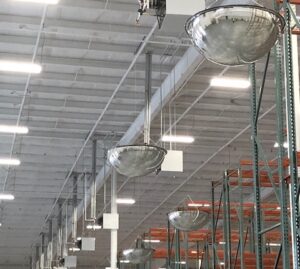
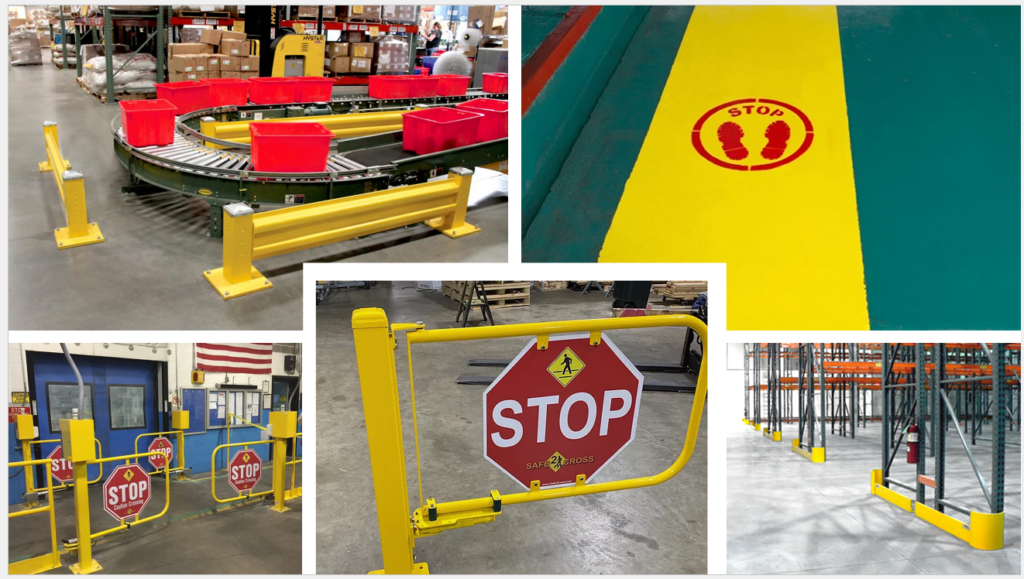
Aisles & shared space – People and equipment must share the same area in a busy warehouse. The best way to avoid workplace injuries is to mark pedestrian and equipment pathways. Consider automatic safety gates at crossings and restricted areas. You can use floor markings, guardrails, lighting, mirrors –whatever solution works best for your team.
Fixed structures – Protective guarding around columns, doorways, machinery, and utilities is a cost-effective way to prevent accidental access. For example, guardrails, bollards, and column guards are dependable and easy to install. Wire safety cages and partitions are also economical to provide a more significant barrier between machines, utilities, computer systems, etc.
Lighting – Workers and vehicles must be able to move in well-lit spaces: update poorly lit areas and replace burned-out bulbs and inferior fixtures.
All-Around Warehouse Safety
Dock safety – Planning efficient staging and separate access for equipment and pedestrians is key to safe dock operations. Use barrier items such as chains, gates, and floor markings to keep access limited to trained personnel. Also, ensure that cleaning materials are readily available to wipe up wet floors.
Ergonomic lifting – Several products are available that help position inventory for safer lifting or movement without putting excess strain on your workers. For example, lift tables, conveyors, and ball transfer deck/tables can be integrated into your intake and processing areas to protect against physical injuries and boost productivity.
Cool rooms – As a Southeast-based business, we know how warm it can get inside some of our customer’s warehouses. Modular cool rooms are a fast, easy, economical solution to help beat the heat and protect your team from heat-related injuries.
Signage – Warning signs are cost-effective measures to remind workers of potential risks. Use mounted plaques or step it up a notch with ceiling-mounted signal lighting. These automated lighting fixtures cast down bright lights, stop signs, etc., to direct traffic, prevent accidents, and help you maintain a productive workplace.
Cleanliness – Clutter, slippery conditions, and crowded spaces are ingredients in a disaster stew. Encourage your team to keep it clean by providing convenient disposal areas and cleaning equipment that enhance a regular cleaning schedule.
Training – Training is critical for both equipment operators and workers. Each must understand their role in warehouse safety and have a way to report hazardous activity or conditions that they encounter. It’s always better to address a concern before it becomes a tragedy.
Warehouse Safety Starts at the Beginning
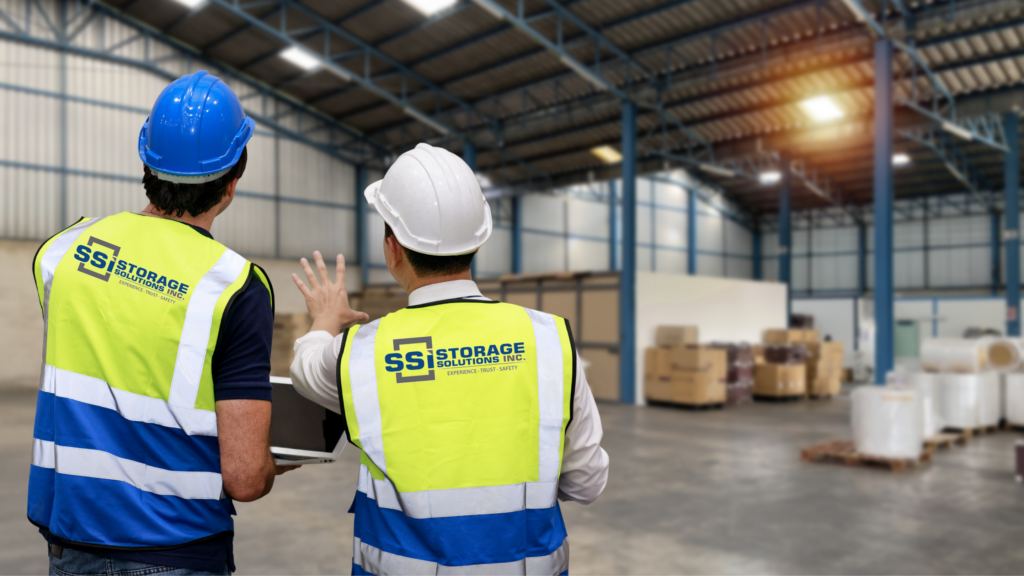
It all starts with an expertly crafted warehouse space design and installation. Working with a full-service support team like Warehouse Optimizers, Inc. (WOI) will put you on the right foot, beginning with productive use of your space and the right amount of safeguarding to let your team do what they do best.
The WOI team works with a single focus… 100% Customer Satisfaction. We don’t sell our customers a project; we partner with them to solve their needs and guarantee their satisfaction. It’s called the WOI Total Satisfaction Experience™.
TSE focuses on five essential customer experiences:
- We will listen to your needs
- Execute your project with particular attention to your unique application
- Stick to project timelines
- Ensure a safe environment
- Pay close attention to the detail of the finished product
Since the finished product is critical to the customer’s satisfaction, we rely on our professional rack installation team. The WOI installation team follows strict protocols on every build.
- Industry Experienced Installation Teams
- OSHA Trained & Certified
- Certified Drug-Free Workplace
- Licensed General Contractor
- Job Safety Analysis
- Forklift, Scissor Lift, and Aerial Lift Operator Trained
Call WOI today for a free consultation and schedule a site inspection —dial (833) 336-7005 or email info@warehouseoptimizers.com. We proudly serve customers throughout the Southeast, including KENTUCKY, TENNESSEE, NORTH CAROLINA, ALABAMA, AND FLORIDA.
Contact Us Today
We will be happy to assist you with any questions or more detailed product information on any Warehouse Optimizers products.