
AGVs, AMRs, LGVs — Automated Warehouse Vehicles Compare & Contrast
AGVs, AMRs, LGVs — Your Future Workforce is Here!
In North America, warehouse management is turning to a new labor force to meet their needs. Purchases of automated warehouse vehicles are expected to double in the next five years. That’s a CAGR (compound annual growth rate) of over 14% per year. The benefits of automated warehouse vehicles are relatively obvious — increased throughput and decreased operating costs; however, the recent health crisis and subsequent labor challenges have ushered in a new urgency to find a solution and find it fast.
What Constitutes an Automated Warehouse Vehicle?
In essence, an automated warehouse vehicle is programmed to autonomously stock and extract inventory, most often from storage racking or specially designed shelving. Automated vehicles can complete this task without a driver, saving labor costs and allowing for low-cost, high output multi-shift work. The major categories of automated vehicles are AGVs and AMRs.
- AGVs – Automated guided vehicles are tried and true as they have been around since the 1950s. As technology advances, these vehicles get more sophisticated and safe. They are manually programmed and move within fixed infrastructure guided by wiring, tape, rails, or tracks.
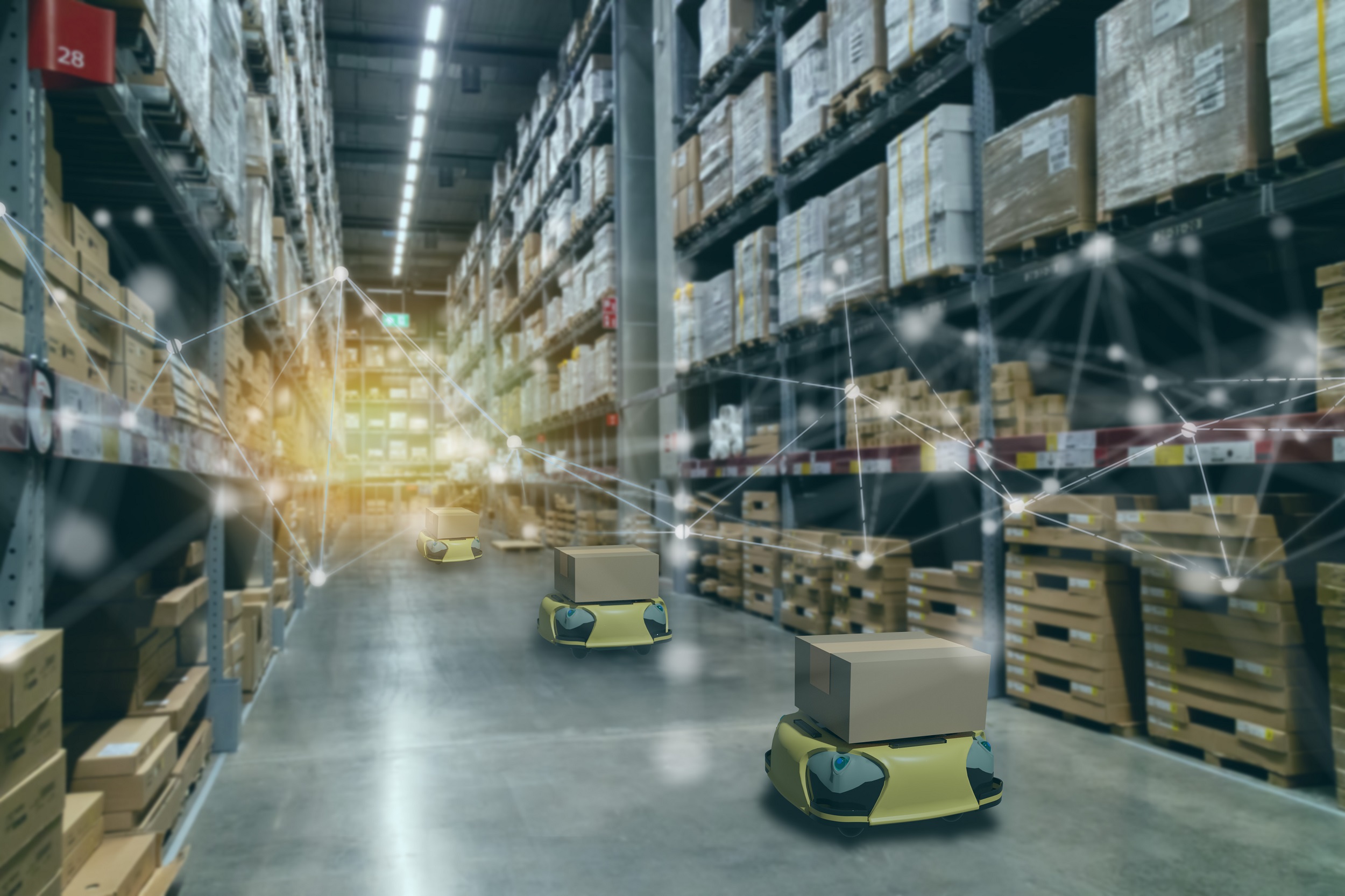
- AMRs – Autonomous mobile robots are guided by internal sensors (camera or lasers) and digital mapping of the facility, making them faster and easier to deploy than AGVs. They are also able to avoid warehouse obstacles. AMRs are programmed within the warehouse management software (WMS).
- LGVs – Laser-guided vehicles are AGVs or AMRs with laser-guided navigation.
| System Characteristics | AGVs | AMRs |
| Installation & Redesign | Considerable upstart cost and difficult to reposition or add-on to the fleet. | Simple to deploy and real-time adaptability. Easy to add on to an existing system. |
| Technology & Programming | Each vehicle is manually programmed | Cloud-based full fleet programming – can be connected with WMS |
| Navigation | Installed infrastructure with set route – i.e., wires, tape, rails, or guides | Digital mapping – system determines most efficient route per trip |
| Interface | Vehicles operate independently | Vehicles communicate with each other |
| Maneuverability | Stopped by obstacles | Maneuver around obstacles |
| Safety |
Vehicles are equipped with safety features to stop if obstacles are identified. Pedestrians and other warehouse vehicles should be able to avoid the trucks as they run on predetermined routes. |
Safety features help robots change direction if obstacles are perceived – however, if AMRs are pulling consecutive loads, rear loads may not be able to shift quickly enough to avoid collision with obstacles. Variable routes make AMRs more challenging to avoid. |
When to Deploy Your Fleet
Your automated workforce will deliver shortened cycle times, increased production or fulfillment rates, and decreased labor costs when deployed strategically. You can more effectively assign workers to tasks such as picking, packing, restocking, and put away to ensure a more smooth operation.
AGVs
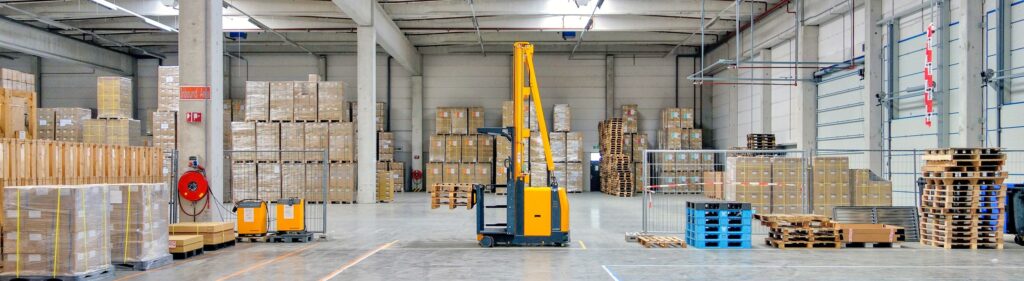
 AGV fork trucks are beneficial where goods need to get from Point A to Point B regularly. They are efficiently run and low maintenance with a high load capacity. AGVs allow you to take advantage of vertical space very effectively, so make sure to work closely with your pallet rack system design team to ensure proper vehicle interface and safety. This can be especially critical for gravity flow systems which require the forks to tilt.
AGV Forks Usage
- Raw materials
- Work-in-process
- Finished products
AMR Robots
The advantage of the AMR robot systems is flexibility. They are ideal for high-volume order picking applications where frequent change is often the name of the game. This system is highly adaptable and quick to deploy.
- Goods-to-Person
- Autonomous Picking Carts
- Robot-to-Goods Picking
Automated Guided Vehicles and Autonomous Robots Lead the Way
There are a lot of moving parts when designing and installing an automated warehouse system. The WOI team can help you find the best solution for your unique application and work with you to integrate it into your facility.
We strive for complete customer satisfaction in all our projects and abide by our 5-Step Total Satisfaction Experience™.
WOI will:
- Listen to your needs
- Execute your project with special attention to your unique application
- Stick to project timelines
- Ensure a safe environment
- Pay close attention to the detail of the finished product
Call Storage Solutions today to start finding your Labor Shortage Solution. (865) 540-4004 for a prompt response. We proudly serve customers throughout the Southeast, including KENTUCKY, TENNESSEE, NORTH CAROLINA, ALABAMA, AND FLORIDA.
For More Information:
See our blogs on automated vehicles and narrow aisle pallet rack design.
Narrow & Very Narrow Aisle Pallet Rack Design
Contact Us Today
We will be happy to assist you with any questions or more detailed product information on any Warehouse Optimizers products.