
Pallet Rack Inspection FAQs: 6 Answers to Avoid Fines, Downtime, and Risk
Your Pallet Rack Inspection & Repair Questions Answered
Pallet rack inspection is one of those tasks that is easy to postpone. A beam wasn’t checked the last time, an upright has fresh forklift paint on it, but everything is still standing, and orders are going out the door.
The problem is that minor damage rarely stays minor. Over time, small hits and loose connections can add up to serious safety risks, lost inventory, and costly downtime if a rack has to be taken out of service.
OSHA requires employers to provide a safe workplace and calls out the need to maintain storage systems in a condition that protects workers and equipment. Below are the questions customers ask most often, along with straightforward answers that can help you decide on the right plan for your facility.
FAQ 1: Do I really need regular pallet rack inspections?
 |
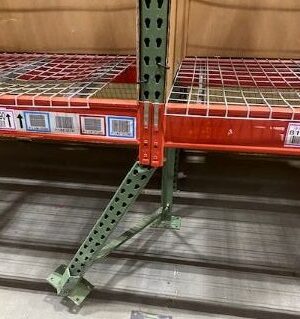 |
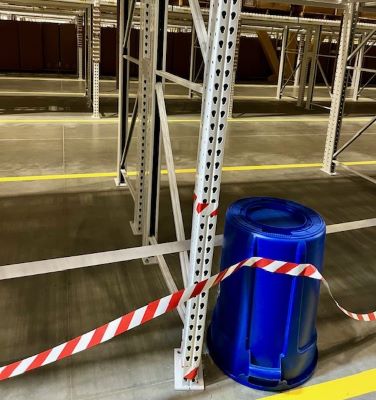
The short answer is yes, you need regular pallet rack inspections. Your pallet racking carries the weight of your entire operation. When it is damaged or overloaded, the risk is not just bent steel. It is people, product, and productivity that you put at risk.
Regular pallet rack inspections keep your operation running smoothly… and give you the peace of mind that you’ll know who to call when the need arises:
- Protect employees by catching damage before it becomes a structural failure.
- Protect inventory from falling, shifting, or being trapped in a compromised bay.
- Avoid OSHA violations related to unsafe storage conditions and uncorrected hazards.
- Reduce surprise downtime when a rack bay must be cordoned off until it can be checked or repaired.
WOI’s inspectors are trained to look beyond the obvious. They are checking uprights, beams, anchors, decking, flue space, and protection devices, as well as patterns of repeat damage that signal deeper pallet racking or traffic issues.
In other words, you are not just getting a checklist. You are getting another set of expert eyes that can help you remove risk from your system before it shows up as an accident or a shutdown.
FAQ 2: How often should my racking be inspected?
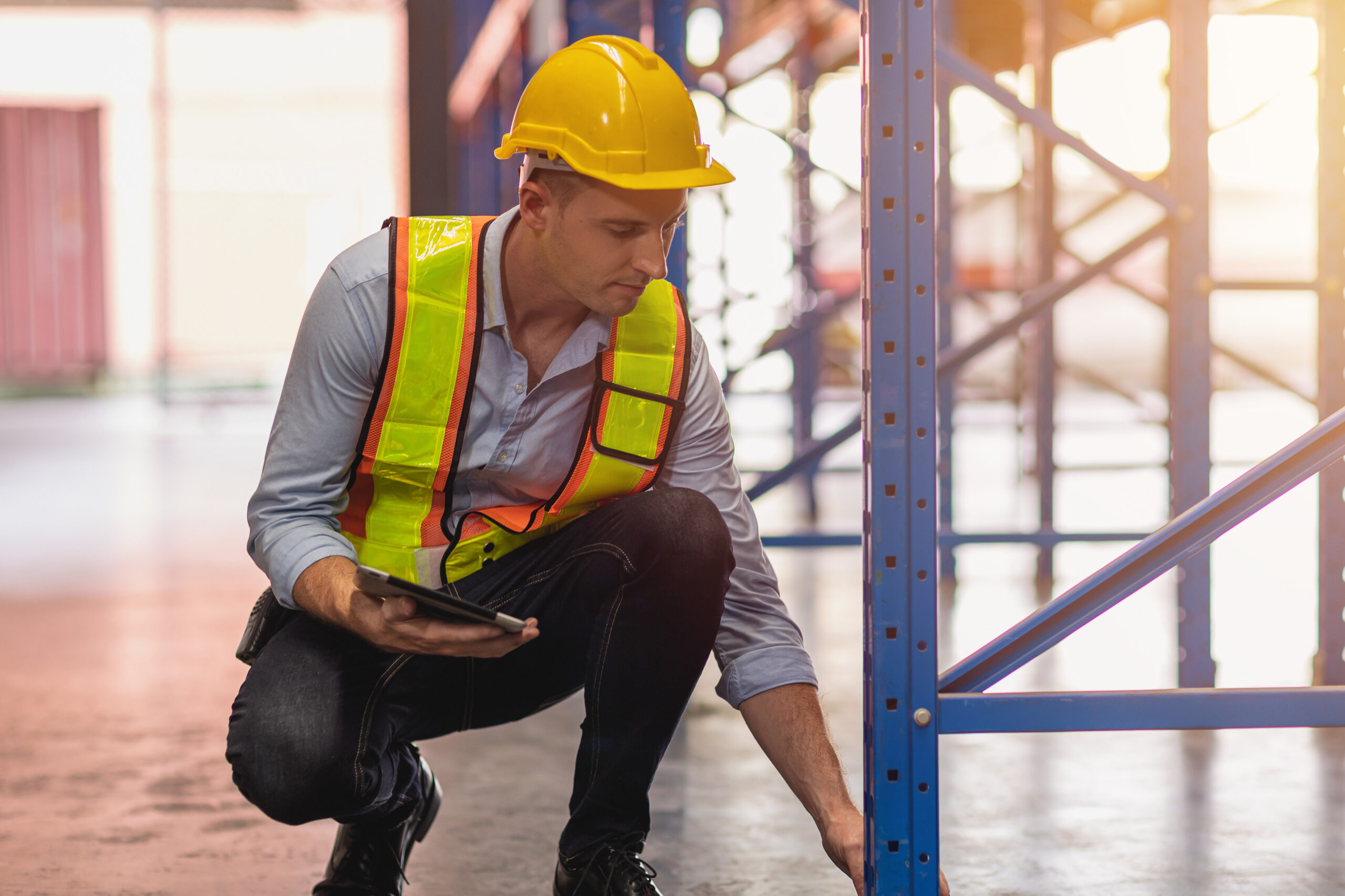
There is no single rule that fits every warehouse. OSHA and RMI emphasize that frequency should reflect how much abuse the rack is likely to see and how critical it is to operations.
At WOI, we typically recommend the following as a starting point:
- High-traffic or narrow aisle systems
Environments with very narrow aisles, high lift volumes, or tight turn radii are more prone to impacts. Weekly or monthly spot checks combined with a formal pallet rack inspection by a qualified professional several times a year help keep up with the pace of activity. - Moderate activity facilities
Operations with steady but not extreme forklift traffic often do well with quarterly inspections, supported by basic in-house walk-throughs in between to flag obvious issues. - Low-traffic or static storage
Areas with minimal forklift movement and stable loads may be suitable for an annual professional pallet rack inspection, paired with internal visual checks.
WOI works with each customer to “right-size” the schedule. A grocery distribution center with narrow aisles will have very different needs than a slower-moving manufacturing parts room, even if the rack style looks similar on paper.
FAQ 3: What happens during a WOI pallet rack inspection?
Many customers are surprised by how thorough a professional pallet rack inspection can be. WOI’s process is designed to be systematic, consistent, and tailored to your rack types and traffic patterns.
A typical WOI inspection includes: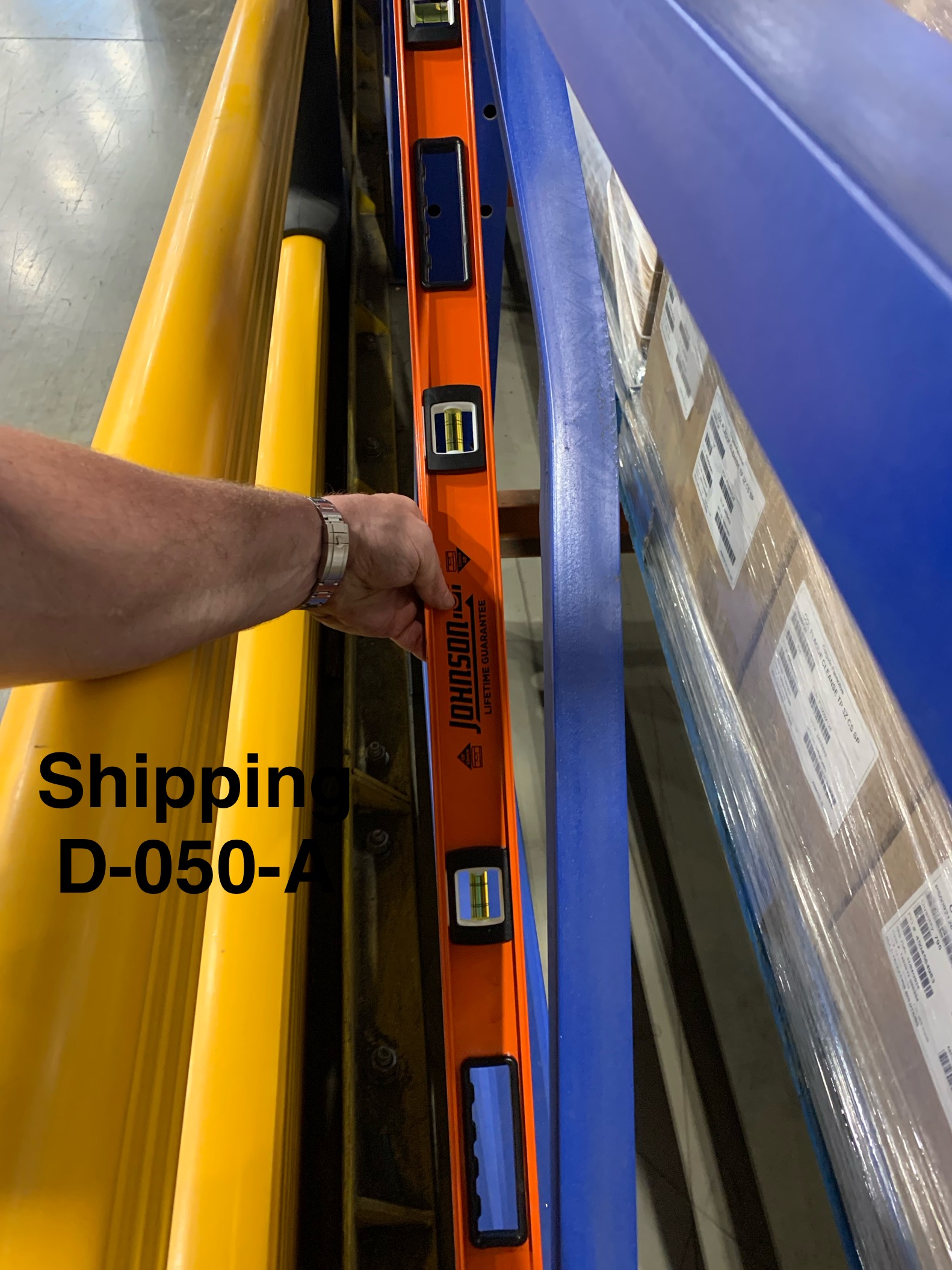
- Walk-through and visual assessment
Inspectors walk each aisle, looking at racks from multiple angles and viewing both front and rear posts. They may use simple tools such as plumb bobs or measuring devices to check deflection and out-of-plumb conditions. - Targeted checks of critical components
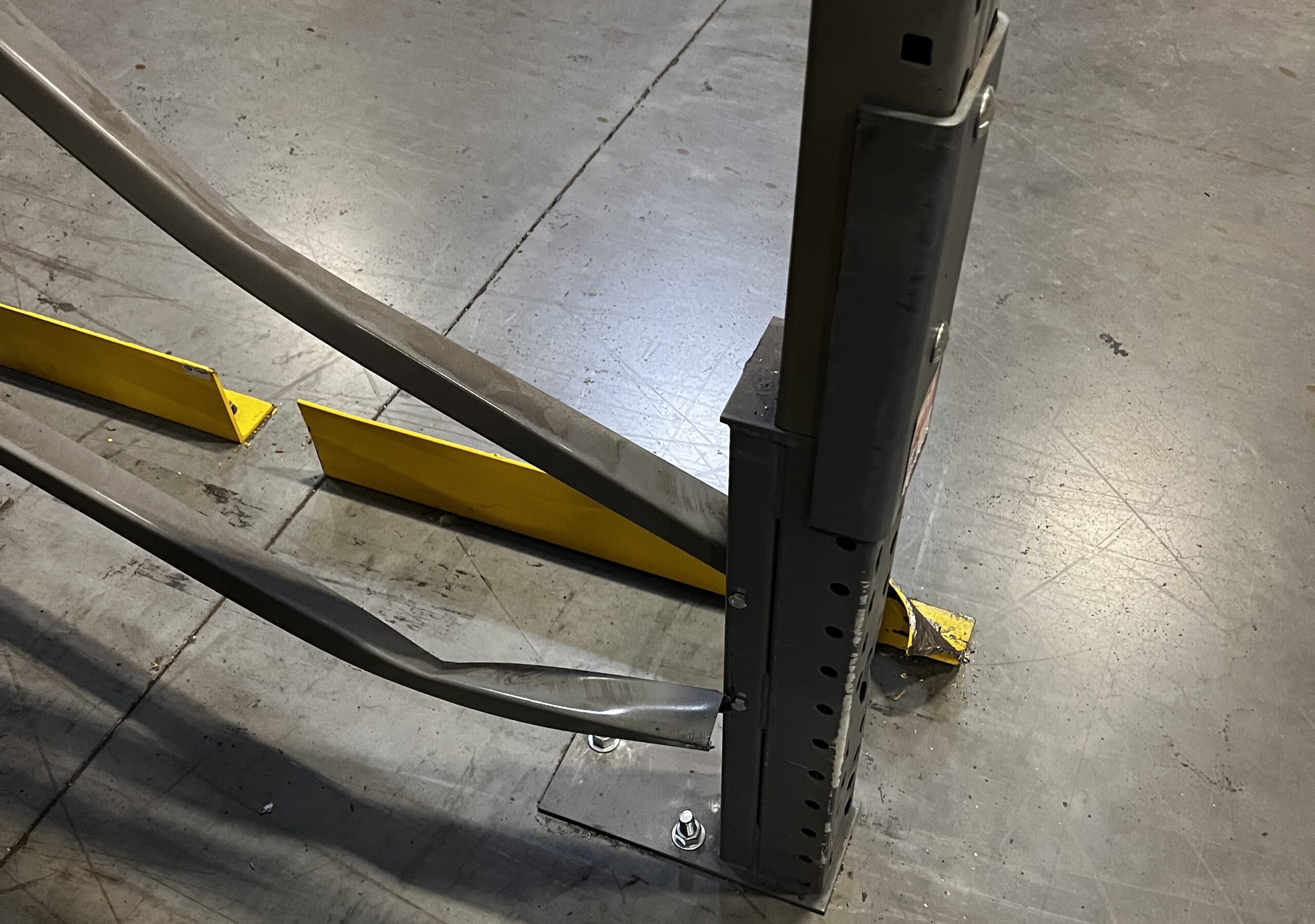
The team looks for issues such as:- Bent, kinked, or twisted uprights
- Damaged or missing beam connectors and safety clips
- Broken or detached struts and braces
- Loose, missing, or sheared anchors and base plates
- Rust or corrosion, especially at the base, in wet or cold environments
- Overloaded or sagging beams and crowded flue spaces
- Misaligned, unstable, or improperly supported loads
- Missing or damaged post protectors and other rack guards
- Risk and condition assessment
Findings are categorized by severity so you can see which issues require immediate action and which can be monitored over time. This helps you prioritize repairs and budget planning. - Clear deliverables
After the visit you receive:- A summary of findings and overall rack condition
- Prioritized recommendations for repair, replacement, or layout changes
- A quote for WOI to complete any required work, including RMI-compliant repair kits and engineer-stamped capacity updates where appropriate
The goal is not to generate a list of problems, but to hand you a clear, practical plan for returning your racking to full, safe capacity.
FAQ 4: What if you find damage – can you repair it too?
Yes. WOI is a full-service pallet rack inspection and repair provider.
When inspections uncover issues, WOI can: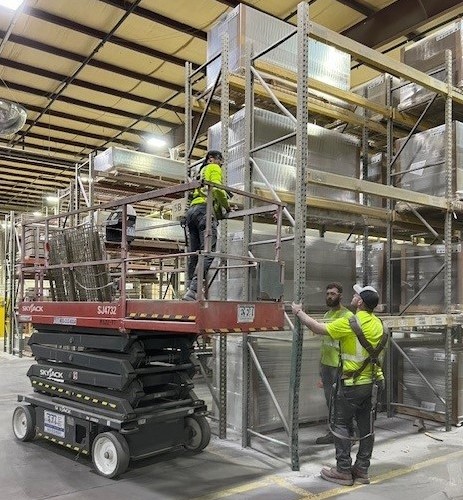
- Supply OEM components or RMI-compliant repair kits designed to bring the system back to its original load rating.
- Coordinate engineer-approved solutions when capacity changes or significant structural repairs are needed, including updated load plaques and certification.
- Provide experienced repair crews that work around active operations, using safe methods and clearly marked work zones to limit disruption.
Repairs are completed in accordance with OSHA expectations, RMI standards, and site-specific safety protocols.
From a business perspective, proper repairs help you:
- Restore safe load capacity rather than guessing at “derated” levels.
- Extend the usable life of the existing rack instead of replacing entire rows.
- Keep more bays available for inventory, which protects throughput and productivity.
Think of inspection and repair as two halves of the same program. Inspection identifies the risk. Quality repair removes it.
FAQ 5: How do your scheduled pallet rack inspection programs and yearly contracts work?
Many facilities do not want to schedule inspections one at a time. They prefer a set program they can budget for and rely on.
WOI offers a Yearly Renewable Agreement that allows you to schedule pallet rack inspection services monthly, quarterly, semi-annually, or annually under a single contract.
WOI Inspection Options:
|
Key advantages of this approach include:
- Consistent compliance and documentation
You have a documented record of inspections and corrective actions, which is invaluable during internal audits, OSHA inquiries, or insurance reviews. - Predictable costs
Instead of scrambling for funds after a problem appears, inspections and many small repairs become part of your normal operating budget. - Fewer surprises
Issues are caught early so they can be addressed before they turn into a bay closure, rush order for material, or extended downtime.
Programs can also include add-ons such as follow-up verification visits after major repairs, or bundled repair services for recurring trouble spots. Your WOI contact will help you tailor the agreement to your facility’s level of activity and risk tolerance.
FAQ 6: When should I call for an extra pallet rack inspection outside the schedule?

Even with a regular cadence, there are moments when you should call for an additional pallet rack inspection right away. At WOI, we typically recommend a supplemental inspection in cases such as:
- New racking installations or system expansions
Anytime you add a new rack or change the layout, it is smart to verify that the installation matches the design, load capacities are correct, and the new configuration works safely with existing systems. - After repairs
A follow-up inspection confirms that all components were installed properly, anchors are secure, and the system now behaves as intended under load. - After a seismic event or major impact
Earthquakes, significant ground vibration, or a heavy forklift strike can compromise alignment or connections in ways that are not obvious from ground level. - Acquiring a building with “new-to-you” racking
When you take over an existing facility, you inherit its racking history. A thorough inspection uncovers hidden damage, outdated components, or non-compliant modifications before they affect your operation. - Repurposing or changing load types
Moving from pallets of boxes to drums, long loads, or heavier SKUs may require engineering review and upgrades to beams, decking, or guarding.
WOI can perform these inspections as stand-alone services or fold them into your yearly agreement, so you always have a trusted team to call when something changes.
How professional installation supports long-term rack safety
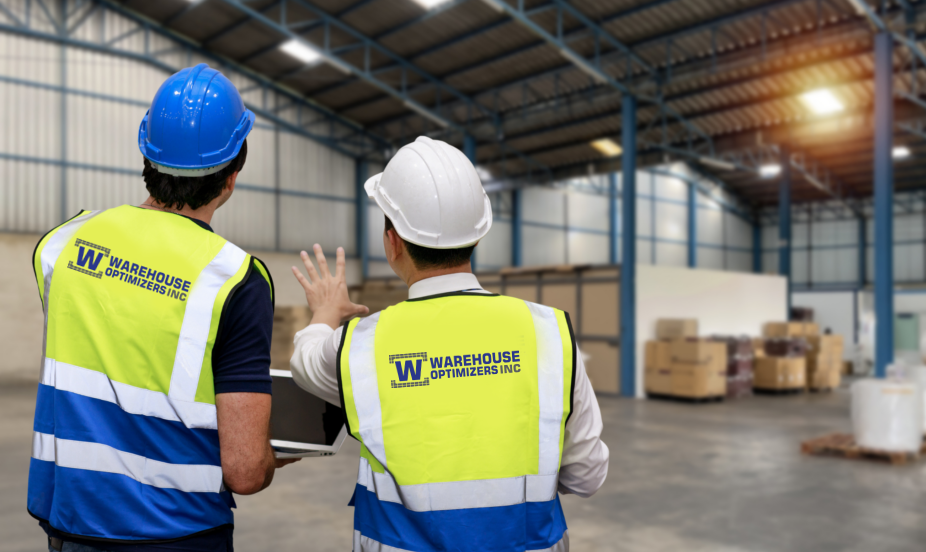
Inspections and repairs work best when the original installation is solid. Many of the issues we find during pallet rack inspections can be traced back to rushed or incomplete installation work years earlier.
WOI’s professional installation services are designed to support a full rack safety lifecycle:
- Correct installation reduces the chance of misaligned frames, missing anchors, or under-rated beams that will later appear as “damage” during inspections.
- WOI handles permitting and coordinates through final sign-offs, ensuring that building codes, seismic requirements, fire codes, and RMI guidelines are addressed from the start.
WOI professional installation credentials include:
- OSHA-trained project managers
- Drug-free workplace certification
- Daily job safety analysis and jobsite inspection
- Authorized forklift, scissor lift, and aerial lift operators
- Tennessee and Alabama Licensed General Contractor #00046536 with a 1.0 experience modification rate
- Full insurance with a 5 million dollar umbrella policy
Starting with safe, code-compliant installation, then layering on regular inspections and quality repairs, sets you up for a safer and more predictable operation over the long term.
The WOI Total Satisfaction Experience in action
Behind WOI’s pallet rack inspection and repair services is one special framework. We call it the Total Satisfaction ExperienceTM.
In practice, that looks like:
- Listening to your needs
Understanding your traffic patterns, rack styles, inventory mix, and risk tolerance, so the inspection plan makes sense for your operation. - Executing with precision
Using detailed checklists, RMI aligned criteria, and engineered repair solutions that match your rack specifications and local codes. - Adhering to timelines
Scheduling inspections and repair work around peak periods, coordinating with your team so disruption is minimized and projects stay on track. - Ensuring safety
Following OSHA training, lift certification, and site-specific rules while working in active facilities. - Attention to detail
Not just flagging “the big things,” but also catching small recurring issues, missing labels, or patterns of near-miss damage that could lead to future problems.
The result is a long-term partnership rather than a one-time visit. Our team becomes an extension of your safety and facilities team, focused on keeping rack systems safe, compliant, and productive.
Pallet rack inspection that protects people, product, and productivity
Pallet rack inspection and repair are not optional extras. They are core parts of risk management for any warehouse or distribution center.
With WOI, you get:
- A clear pallet rack inspection process that fits your level of activity.
- Repair capabilities that restore capacity and extend the life of your racking.
- Scheduled programs and yearly contracts that keep you ahead of issues.
- Professional installation and a Total Satisfaction Experience that ties it all together.
If you would like to take a proactive step toward safer racking, consider this your invitation to act.
Request a no-obligation pallet rack inspection or talk with us about setting up a yearly inspection contract. Together, you can put a plan in place that protects your people, safeguards your inventory, and keeps your operation running smoothly for years to come.
Contact the WOI team for more information.
WOI Service Areas
Nashville TN, Knoxville TN, Clarksville TN, Memphis TN, Chattanooga TN, Johnson City TN, Huntsville AL, Birmingham AL, Bowling Green KY, Asheville NC, Charlotte NC, Kalamazoo MI, South Bend IN
Contact Us Today
We will be happy to assist you with any questions or more detailed product information on any Warehouse Optimizers products.