
Understanding Lateral Forces of Push-Back Rack for Warehouse Safety
Where Things Go Sideways: Common Causes of Lateral Forces in Push-Back Rack
Push-back rack systems are a popular dynamic pallet storage system that provides space-saving, high-density storage without compromising accessibility. However, as with any storage solution, operational safety remains a critical concern—especially when managing lateral forces. These forces, often generated during forklift loading and unloading, can pose significant risks to the racking system’s stability and the safety of forklift operators.
Let’s dive into the nuances of lateral forces in push-back rack operations, examining their impact on forklift safety and providing actionable strategies to mitigate risks while optimizing performance.
Push-Back Rack System Operation
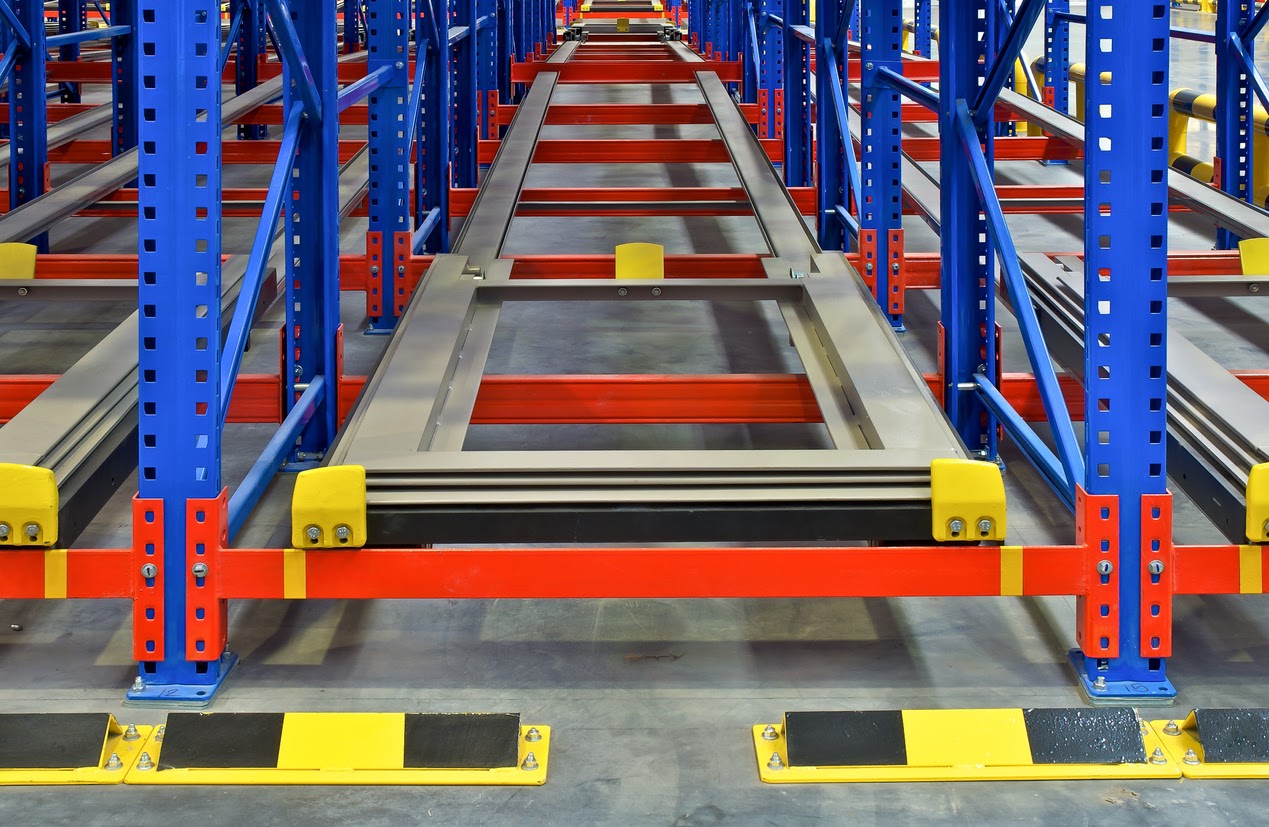
Push-back rack systems use a series of wheeled carts that “nest” within each other at the aisle face. Pallets are loaded onto the top cart and pushed back to load additional pallets, allowing for 2-5 pallets per lane to be stored. The carts glide along slightly pitched rails, using gravity to flow pallets to the aisle face as inventory is extracted. This design supports a Last-In/First-Out (LIFO) inventory rotation.
However, lateral forces can be introduced during operation when forklifts push pallets into the lane or extract them from the carts. Uneven or misaligned movements amplify these forces, potentially disrupting the system’s balance and creating safety and operational risks.
Benefits of Push-Back Rack Systems
Push-back racks are widely used in various industries due to their numerous advantages, including:
- Space Efficiency: Maximize vertical and horizontal storage space, allowing more pallets to be stored in a smaller footprint.
- High-Density Storage: Accommodates multiple pallets per lane, ideal for operations with a smaller SKU variety but high inventory volumes.
- Faster Pallet Access: Pallets flow forward automatically, reducing retrieval time and increasing productivity.
- Improved Inventory Organization: Dedicated storage lanes for single SKUs streamline inventory management, enabling faster and more accurate product selection.
The Role of Forklifts in Push-Back Systems
Forklifts are responsible for both loading and unloading pallets within these storage systems. However, even small movements by forklifts can generate lateral forces that, if not managed correctly, pose significant safety and operational risks.
Key Considerations for Push Back Rack Systems
Safe and efficient forklift operation and quality pallets are crucial to minimizing lateral forces and ensuring system stability:
Alignment
Forklifts must align properly with the opening of the push-back lane to avoid applying uneven forces during loading or unloading. When a forklift pushes a pallet at an angle rather than squarely aligned with the cart, the force is distributed unevenly across the system and can cause carts or pallets to shift, destabilizing the system.
Controlled Movements
Operators should use slow, steady motions to avoid abrupt forces that could destabilize racks or pallets. Sudden stops, starts, or sharp turns can shift carts or pallets off-center, introducing instability. Careful handling minimizes this risk and reduces equipment wear.
Weight Management
Evenly loaded pallets are essential to maintaining balance within the system. Overloading or uneven weight distribution can amplify lateral forces, leading to potential rack damage, pallet shifting during movement, or pallet tipping.
Pallet Design
Pallet design is very important to the proper function of push-back racking. Quality, undamaged pallets that will support their loaded weight in free-span loading are required. Used pallets should only be used if they are in grade “A” condition. Super sack loads require pallets that will support concentrated weight in the middle of the pallet. If pallets change from the original design criteria, the vendor should be notified for valuation.
Push Back Rack Cart Decking Options
Several decking options are available for push-back racking carts. Bar grading, support bars, and wire decking are optional to accommodate multiple pallets if needed. Structures and carts are designed according to pallet specifications and maximum load weight. Consulting the manufacturer for recommendations based on pallet loads and configuration is required before ordering for proper system function.

Rack Damage
Worn or damaged rails and carts hinder smooth pallet movement, increasing lateral forces. Misaligned rails may cause carts to stick or jam, requiring more force to move pallets and further destabilizing the system. Additionally, worn wheels on the carts can disrupt the flow. Structural rack components reduce damage from impacts and can minimize costly damage.
By prioritizing these operational best practices, warehouse managers can mitigate the risks posed by lateral forces while improving both safety and efficiency in push-back rack systems.
Impact of Lateral Forces on the Rack System
Unchecked lateral forces can severely impact the performance and safety of push-back rack systems. Repeated exposure to uneven forces places excessive strain on carts, rails, and other structural components, accelerating wear and tear, shortening their lifespan, and increasing maintenance costs. Persistent lateral forces can also compromise rack stability by shifting or displacing components, leading to misaligned rails that may cause pallets to fall, creating serious hazards for forklift operators and warehouse personnel. Over time, the cumulative impact can warp or damage racks, necessitating costly repairs or replacements and potentially causing operational downtime.
Lateral Forces Potential Risk
- Increased Wear and Tear
- Rack Instability
- Structural Damage
To mitigate these risks, Warehouse Optimizers Inc. (WOI) offers comprehensive rack inspection and repair services. Our team identifies any rack wear, misalignment, or damage and provides timely repairs to restore structural integrity. Regular inspections by WOI help ensure that all your storage racking remains safe, efficient, and fully operational, protecting both your warehouse and workforce.
5 Strategies to Mitigate Lateral Forces and Ensure Warehouse Safety
Effectively managing lateral forces in push-back rack systems is critical to maintaining warehouse safety and operational efficiency. Proper training, routine pallet rack maintenance, and the right equipment can significantly reduce the risks associated with these forces.
- Forklift operator training is a key factor in mitigating lateral forces. Operators must be taught proper techniques for loading and unloading pallets, with an emphasis on aligning the forklift accurately with the push-back lane and using controlled, steady movements.
- Regular rack system maintenance is equally essential. Inspections should focus on the condition of rails, nested carts, and other critical components. Damaged or worn parts must be repaired or replaced promptly to prevent further strain on the system and to maintain safe operation.
- Weight distribution is another critical area to address. Pallets must be evenly loaded to maintain the structural balance of the racks and carts. Uneven weight distribution can amplify lateral forces, increasing the risk of rack damage or pallet instability. Operators should also strictly adhere to the manufacturer’s weight limits for racks and forklifts to ensure safe inventory handling.
- Using forklift-specific safety features can further enhance safety in high-density storage operations. Forklifts with advanced stability systems and enhanced maneuverability are better suited for navigating warehouse aisles. Additionally, installing cameras or sensors on forklifts improves operator visibility, reducing the likelihood of misaligned or abrupt movements that generate excessive lateral forces.
- Real-time tracking systems use sensors and software to measure and display pallet load weights, ensuring even weight distribution before placing pallets into the push-back rack.
By implementing these strategies, warehouses can significantly reduce the risks posed by lateral forces, protect their equipment, and ensure a safer, more efficient work environment for operators and staff.
Partnering with WOI: Your Assurance for Safety and Satisfaction

When installing push-back rack systems or any other warehouse solutions, you need a trusted and experienced partner to ensure success. Warehouse Optimizers Inc. (WOI) is your go-to provider for safe installations and guaranteed satisfaction. Here’s why:
Safe and Professional Installations
- OSHA-Trained Project Managers: Our team is fully trained to meet internal and external safety standards and handle complex installations.
- Drug-Free Workplace Certification: We maintain a professional and reliable workforce for every project.
- Daily Job Safety Analysis and Inspections: Safety is our top priority, with continuous monitoring to ensure secure job sites.
- Authorized Lift Operators: Our certified operators for forklifts, scissor lifts, and aerial lifts ensure precise and safe equipment handling.
- Licensed and Insured: As a Licensed General Contractor in TN & AL with a $5M insurance umbrella and a 1.0 Experience Mod Rate, we offer full coverage and accountability.
- Permitting Handled for You: Our team manages all permitting requirements prior to installation, so you can focus on your operations.
At WOI, customer experience is our priority. We go beyond delivering products and services by exceeding expectations and addressing what matters most to you. Trust us to put your interests first and deliver Total Satisfaction!
The WOI Total Satisfaction Experience™
- We Listen: We prioritize understanding your unique storage challenges and operational goals.
- We Tailor Solutions: Every project is customized to fit your warehouse layout and needs.
- We Respect Your Schedule: Adhering to timelines ensures minimal disruption to your operations.
- We Prioritize Safety: Strict safety protocols guarantee a secure workspace for all involved.
- We Deliver Excellence: Our polished final products exceed expectations, enhancing your warehouse’s efficiency and functionality.
Your Warehouse Optimization Partner
Choosing WOI means choosing quality, safety, and a seamless experience from start to finish.
Contact us today to learn how we can help optimize your operations with trusted installations and exceptional service. Let’s build a safer, more efficient warehouse—together.
Contact Us Today
We will be happy to assist you with any questions or more detailed product information on any Warehouse Optimizers products.