
Planning Storage Rack for Automated Warehouses
How to Plan Storage Infrastructure That Supports Warehouse Automation
Warehouse automation projects naturally draw attention to robots, conveyors, software, and ASRS technology. However, storage racks remain a critical part of the overall warehouse infrastructure. They support inventory storage, replenishment, and material flow throughout the operation. In an automated facility, racking becomes an integral part of the material handling system.
Planning storage infrastructure early reduces redesigns, delays, and unnecessary costs. Whether you are building a new automated facility or upgrading an existing warehouse, storage rack planning belongs in the conversation from the beginning.
Evaluate Your Storage Requirements
Everything downstream (rack type, dimensions, load capacity, and automation interfaces) depends on what inventory you are actually storing. Before anyone draws a layout, work through the storage profile.
- What products will be stored? Dimensions, packaging, stackability, and any temperature or handling requirements
- What pallet types and load weights are involved? Pallet size, style, and condition matter as much as weight. The pallets you buy set the footprint for every rack position
- What inventory profile will the system support? SKU count, velocity, and how much of the inventory is fast-moving versus reserve
- What throughput is expected? Pallets in and out per shift, plus how much peak-period volume exceeds an average day at your warehouse
- How often will positions be replenished? Replenishment frequency determines how much conventional reserve rack is needed to support the automated system.
- How might storage needs change over time? New SKUs, seasonal swings, and volume growth over the next several months to years
Answering these questions early provides the foundation for storage rack planning and helps ensure the automation solution is designed around your operational requirements.
Determine Whether Existing Rack Can Be Used
Reusing rack can reduce project costs, but only if it meets the new application’s layout, capacity, condition, and modification requirements. It should genuinely suit the new application.
Four questions settle it:
- Existing vs. new: Does the current layout support the automation footprint, or does reconfiguration cost more than starting fresh?
- Modifications: Can beam elevations, bay depths, and row spacing be modified to meet the requirements of the new automation system?
- Capacity: Is the rack rated for the loads you plan to store now? Original load ratings should be confirmed.
- Condition: Existing rack should be inspected for damaged uprights, missing hardware, out-of-plumb frames, and undocumented field modifications before determining whether it is suitable for use.
Understanding the condition of your existing rack early helps you make informed planning decisions before automation design and installation move forward.
Evaluate Your Facility
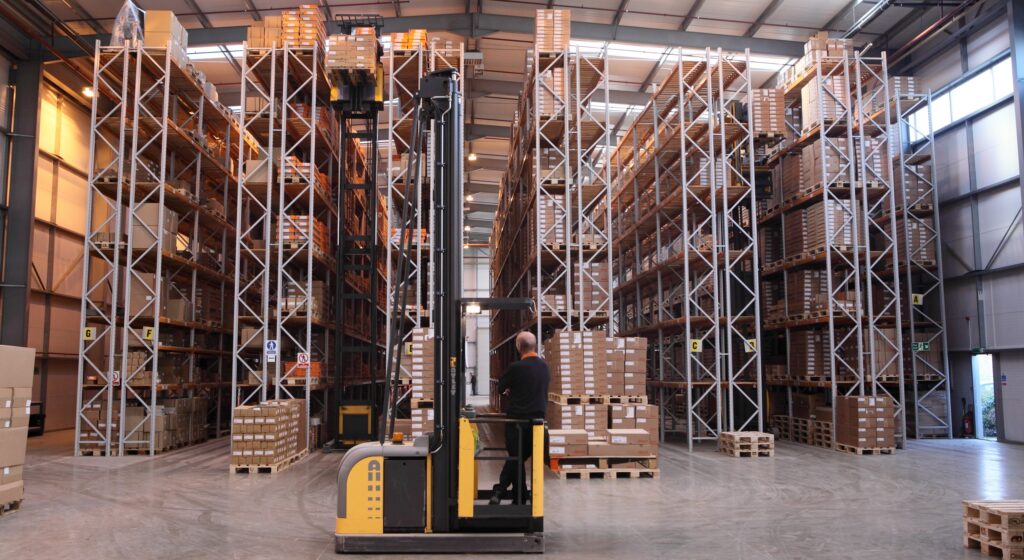
The building sets hard limits on what automation and storage rack can do together. Five areas to document early include:
- Floor: Slab thickness, reinforcement, joint locations, and anchoring capacity all matter. Floor flatness and levelness are equally important, as automated equipment and tall rack systems typically require tighter tolerances than conventional forklift operations.
- Building: Column spacing, clear height, dock and staging locations, sprinkler layout, and fire protection requirements. Local building codes and seismic criteria need attention here too.
- Clearances: Aisle widths, overhead obstructions, and equipment travel paths should all be evaluated to help ensure the planned storage system supports efficient material flow.
- Future expansion: Identify where additional storage or automation will be installed and ensure the current layout preserves access to that area.
Document these before design starts. Retrofitting around a facility constraint discovered mid-install is the most expensive way to learn it exists.
Select the Right Storage Rack System
Every automation project has different storage requirements. The right rack system depends on inventory characteristics, throughput, available space, and how the storage system will support the overall material handling process.
Storage systems commonly incorporated into automated warehouse projects include:
- Selective pallet rack for reserve storage and direct access to individual pallets.
- VNA pallet racking where storage density and vertical cube utilization are priorities.
- Push-back racking for high-density LIFO storage applications.
- Pallet flow rack where FIFO inventory rotation and replenishment support operational requirements.
- Carton flow rack for high-volume full- and split-case picking
Rather than selecting a rack system independently, the storage solution should be planned as part of the overall warehouse operation to help support inventory flow, replenishment, and automation objectives.
Integrating Storage Rack with Automation Solutions
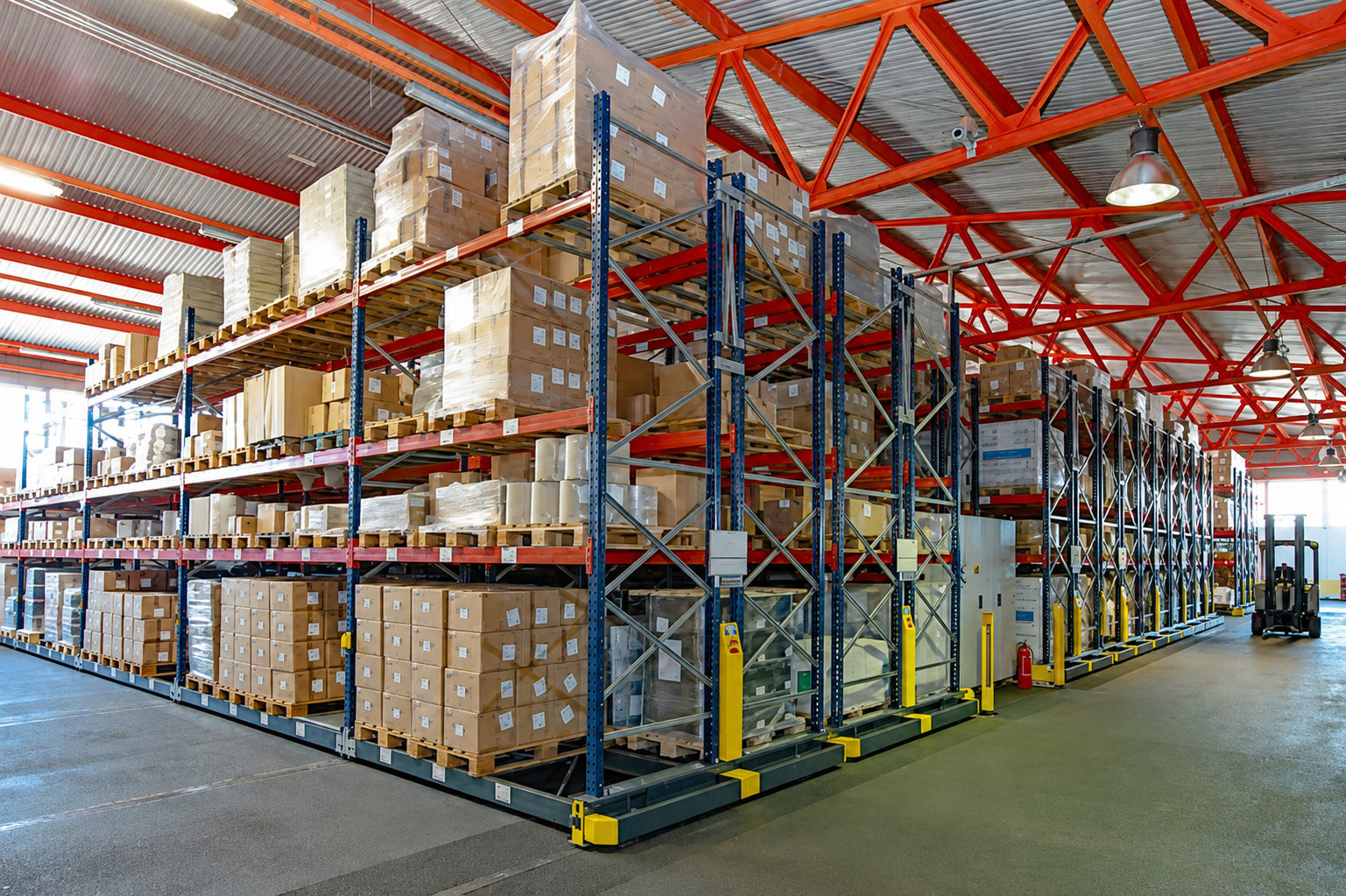
Storage rack often takes on additional responsibilities within the overall material handling system. Here’s what to take into account.
Reserve Storage
Many automated systems do not hold an operation’s entire inventory. Conventional pallet rack is often used to store reserve inventory that replenishes ASRS systems, robotic picking systems, goods-to-person stations, or conveyor-fed operations as demand requires.
Sizing reserve storage is an important planning decision. Too little reserve inventory can affect replenishment, while too much reserve storage may consume valuable warehouse space.
Automation Interfaces
Storage racks can also be planned to integrate with automated material handling equipment. Depending on the application, that can include:
- Conveyor transfer points where pallets or cartons move between the rack and conveyor systems
- Robotic pallet pickup and drop-off locations with fixed elevations and positioning tolerances
- AGV and AMR interface stations where guided vehicles load and unload conventional storage racking
- Induction and staging positions that connect conventional storage with automated workflows
These interfaces require careful attention to rack layout, elevations, clearances, and pallet positioning. Sequencing matters too. The rack and flooring contractors must coordinate their schedules to keep the installation on schedule.
Start With the Storage Strategy
A well-planned storage system helps support the performance, safety, and long-term flexibility of an automated warehouse. WOI helps customers evaluate facility requirements, recommend practical storage solutions, and professionally install the storage infrastructure needed to support long-term operational goals.
At Warehouse Optimizers, Inc. (WOI), safety comes first on every project. Rack that is misaligned, under-anchored, or out of plumb puts employees, inventory, and equipment at risk. In automated warehouse applications, proper installation and alignment become even more critical because automated systems rely on consistent positioning and tighter installation tolerances.
With over 300 installations completed annually, our team manages the full scope, from permitting through final sign-off.
The WOI Total Satisfaction Experience™
When you partner with WOI, you gain more than design and installation expertise. You get a team that understands how storage rack has to perform inside an automated operation. Our WOI Total Satisfaction Experience™ is built around five key principles:
- Listening to Your Needs: We start with your inventory profile, throughput targets, and automation plan before recommending a single rack component.
- Executing with Precision: Elevations, clearances, and anchor points are set to the tolerances your automated equipment requires, not to a general-purpose standard.
- Adhering to Timelines: We coordinate with automation vendors, flooring contractors, and your production schedule so rack installation does not become the critical path.
- Ensuring Safety: Every phase is planned around live operations, with OSHA-10-trained project managers and daily job safety analysis.
- Attention to Detail: We verify plumb, level, and load ratings at close-out so the system is ready to interface with automation on day one.
Ready to plan the storage infrastructure behind your automation project? Call (865) 540-4004 or contact a WOI rep for a free consultation. You can also review our pallet rack installation FAQs and warehouse planning timeline guide before your first call.
WOI Service Areas
Nashville TN, Knoxville TN, Clarksville TN, Memphis TN, Chattanooga TN, Johnson City TN, Huntsville AL, Birmingham AL, Bowling Green KY, Asheville NC, Charlotte NC, South Bend IN
Frequently Asked Questions
What should you consider when planning storage rack for an automated warehouse?
Planning begins with understanding your inventory, pallet specifications, throughput, replenishment strategy, facility constraints, and long-term growth plans. These factors help determine the storage rack system and how it will support the planned automation.
Can existing pallet rack be reused in an automated warehouse?
Existing rack can be reused if its condition, load ratings, dimensions, layout, and installation tolerances meet the new system’s requirements. A professional inspection and engineering review should be completed before reuse is approved.
Which storage rack system is best for warehouse automation?
There is no single best system. Selective, VNA, push-back, and gravity flow racks each support different combinations of storage density, selectivity, inventory rotation, and throughput.
How does storage rack integrate with warehouse automation?
Storage rack systems can provide reserve inventory, staging positions, and fixed transfer points for ASRS equipment, conveyors, robots, AGVs, and AMRs. Rack elevations, clearances, and pallet positioning must be coordinated with the automated equipment.
Why do floor and building conditions matter in an automated warehouse?
Floor condition, ceiling height, columns, utilities, and other building features can affect storage rack layout and automation equipment. Evaluating these conditions early helps identify potential constraints before installation begins.
Contact Us Today
We will be happy to assist you with any questions or more detailed product information on any Warehouse Optimizers products.