
High-Density Storage Solutions: Choosing the Right System for Your Business
High-density storage solutions help maximize warehouse storage potential and avoid costly warehouse expansion by condensing goods into a consolidated space. Storage Solutions Inc. is ready to help you identify the different types of high-density storage systems and determine which one works best for your facility, based on your square footage, product output, and general operations.
Benefits and Considerations of High-Density Storage Solutions
High-density storage solutions offer a variety of space-saving and inventory-management benefits, such as:
- Significant space optimization for stored goods
- Better organization and accessibility of inventory
- Increased ROI and better organization of SKUs
- Economical alternative to expanding the square footage of your facility
High-density pallet or super sack storage solutions can help you effectively and affordably house your inventory to keep it safe, organized, and within your staff’s reach at all times. There are many things to consider when implementing high-density storage solutions, such as:
- Type and size of products in your warehouse
- Size of your facility (specifically ceiling height)
- Structural and climate Issues in your warehouse
- Average load size and SKU types
Aisle width and available floor space are also important things to consider when choosing a high-density storage option. The use of very narrow aisle (VNA) forklifts greatly decreases the floor space needed.
What Type of High-Density Storage Solution is Right for My Warehouse?
Before determining what type of system your business needs, it’s best to know the different types of high-density storage systems out there, such as:
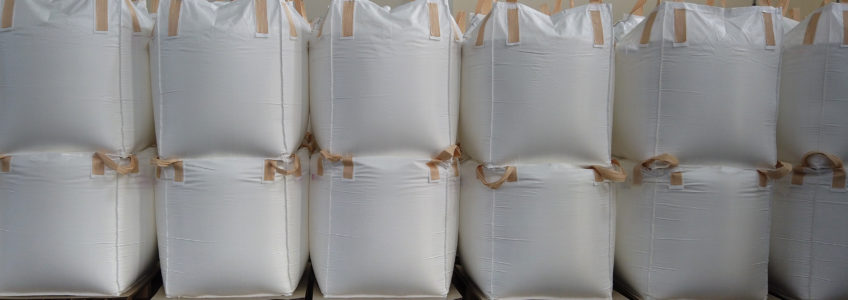
Bulk Storage
Bulk storage is a term used to describe the storage and safe-keeping of larger-size or larger quantities of items often stored in their original containers or on pallets stacked on the floor. One of the primary advantages of bulk storage is that it requires no physical storage mechanism other than a stable, environmentally appropriate space. Bulk storage is used for a variety of products from tires, grain and garden supplies that can be stored outdoors to liquids like petroleum and beverages. Super sack bulk bag storage accommodates a variety of products including plastic pellets, powder compounds, and coffee beans.
Drive-In/Drive-Thru Rack Storage
Drive-in pallet rack systems are floor-to-ceiling steel racking systems consisting of steel racks and rails that can be built to store over ten pallets deep. They are high-density storage solutions for pallet loads with the identical or a smaller number of SKUs. Drive-in pallet racks are often used for last-in-first-out (LIFO storage configurations because when pallets are loaded, the forklift loads the first pallet all the way to the back of the rack. The first pallet to be picked is the last one to be loaded.
- How It Works – A forklift drives into one end of the racking system and loads the first pallet all the way to the back of the rack. The forklift then backs up and retrieves another pallet, repeating the cycle until the rack lane is fully loaded and the last pallet stored is in position to be first picked.
- Benefits and Considerations – Drive-in racking can be built for virtually unlimited storage depth, save time on picking and stocking and are cost-effective and can maximize space in your warehouse. They also require an expert forklift to ensure product and rack safety, they can lead to “honeycombing (excess empty and unused spaces) as your number of SKUs increase and limit the kinds of products you can store because of the LIFO configuration.
Drive-thru racking systems are very similar to drive-in configurations, but they provide a point of exit for lift vehicles. They require a bit more square footage in your warehouse, but are ideal for first-in-first-out products like perishable foods.
Push-Back Racking
 Push-back racking systems are systems where the pallet being loaded pushes the previously loaded pallet behind it until the lane is fully populated. The design is very similar to drive-in and drive-thru pallet racking; however, their rails are generally only built to accommodate two to six pallets deep. They’re made of beams, rails, and carts, and are built on a decline toward the front so pallets can travel by gravity without the need for power. Push-back racking is another ideal option for LIFO but offers greater SKU selectivity. Each push-back lane can store a unique SKU.
- How It Works – As pallets are being loaded by forklift into the lanes, each newly loaded pallet pushes the previous pallet into the position behind it until the lane is full. When the lane is full, the last pallet loaded is the first pallet in position to be picked.
- Benefits and Considerations – Push-back systems offer higher-density storage, 100 percent SKU selectivity and maximize productivity in your warehouse. They also require an expert forklift driver, limit pallet accessibility and are only good for certain kinds of products.
Pallet Flow Systems
 Pallet flow racks are open-ended racking systems that are built on a slight slope to allow pallets to travel easily into the front-facing storage position. They’re made of durable steel racking and roller or wheel beds in the lanes to help pallets travel with greater speed. They are ideal for FIFO because they allow the first pallet to be loaded to be the first picked on the opposite side of the rack.
- How It Works – The forklift loads the pallet on one side of the rack and the pallet travels at a controlled rate on the roller bed, which is built on a slight decline, to the front of the rack. When the first pallet loaded is ready to be picked, the forklift can travel to the other side of the rack for retrieval and processing.
- Benefits and Considerations – Pallet flow racks are great for perishable products and can accommodate heavy-duty items. They allow for quick and efficient inventory rotation and deep lane capacity for optimal storage. They may also, however, require a substantial initial investment, high levels of maintenance and offer relatively limited SKU selectivity.
Pallet Shuttle Systems
Pallet shuttle systems can be either semi or fully automated and eliminates that need for a forklift operator to enter the storage lane. They are ideal for high-volume pallet turnover and busy loading and unloading activity. They provide deep storage lanes for high-density purposes and greatly reduce the risk associated with forklift operator error.
- How It Works – Pallet shuttles use a cart system to help pallets seamlessly travel along storage lanes. A shuttle runs along the rack rails, storing the pallet in the first free location it senses through built-in sensors. The cycle is repeated until the rack is full. The shuttle can travel at 295 feet per minute when empty and 148 feet per minute when full.
- Benefits and Considerations -Pallet shuttles can be costly to implement and require a great deal of floor space but it can be an ideal option for anyone looking for seamless, high-volume carton management. The sensors on the shuttle facilitate intelligent, high-density storage.
Cantilever Racking
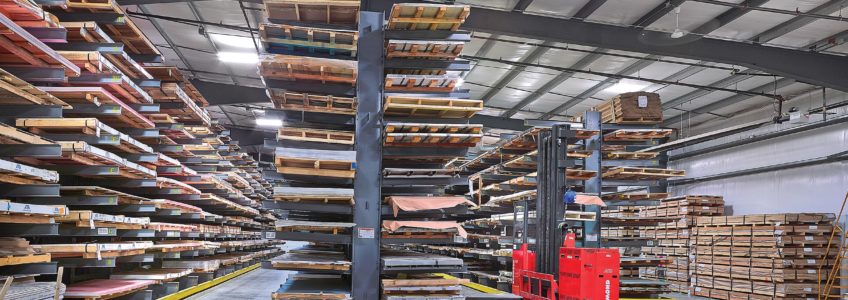 Cantilever racking is ideal for larger and more awkward and bulky items that may not fit on conventional shelves, like construction equipment, lumber, etc. They’re adjustable and their shelves can be configured in a variety of ways to accommodate different load sizes at a given time.
- How It Works – Structural or roll form upright columns connected to a strong and sturdy base allow for adjustable shelving configurations.
- Benefits and Considerations – Cantilever racks offer high-weight capacity, adaptable design and can help you store hard-to-store items; however the price point is higher than other racks and can use more floor space.
The Choice Is Yours…the Pleasure Is Ours
When you’re ready to implement high-density storage solutions, call the friendly and knowledgeable team at WOI. With our 5 Step Total Satisfaction Experience™ you are guaranteed that we listen and execute your project paying special attention to your particular application, project timelines, safety, and appearance of the finished product. We will walk you through each stage of the process and offer expert customer service and peace of mind. Contact a member of our team today and chat, Zoom, or call us at (865) 540-4004 for a prompt response. We proudly serve customers in Tennessee, Alabama, and throughout the Southeast.
Contact Us Today
We will be happy to assist you with any questions or more detailed product information on any Warehouse Optimizers products.