
A Comprehensive Overview of Pallets: Sizes, Shapes, and Materials
Know Your Pallet Specs Before Designing Your Pallet Racking Systems
When it comes to transporting and storing goods efficiently, the humble pallet plays a pivotal role in many industries. Selecting the right pallet for your warehouse can boost productivity, enhance safety, and save you money in the long run. Below, we’ll walk you through the most common pallet types, dimensions, materials, and key considerations to keep in mind as you design your pallet racking storage systems and plan your warehouse operations.
1. Why Pallets Matter
Pallets serve as a foundation for moving goods through the supply chain. They make handling, storing, and transporting products more efficient by allowing forklifts, pallet jacks, and automated systems to lift and carry loads in bulk. The right pallet choice can improve:
- Warehouse safety: Minimizes risks of breakage, collapsed loads, protruding nails or sharp edges, and 5S for a clean safe work environment.
- Operational efficiency: Eases product handling, reduces labor time, streamlines storage and retrieval, and improves rack storage performance.
- Cost savings: Longer-lasting, higher-quality pallets mean fewer replacements and improved load stability, which lowers your risk of damaged goods.
While pallets offer numerous benefits for warehousing, manufacturing, and distribution facilities, there is a wide variety of pallet styles, shapes, and materials. Each of these factors can affect how your operation engages with the pallet. Let’s dig into this topic a bit further.
2. The GMA-Style Pallet: A Common Standard
With around two billion pallets in circulation in the United States—and 400 million manufactured each year—the pallet is a widely recognized fixture in supply chains. Of all those pallets, one style is most common: the GMA-style pallet. GMA pallets meet specific standards set by the Grocery Manufacturers Association, which aims to create a design compatible with most material handling and storage systems across different industries.
GMA-Style Pallet Parameters
- Material: Wood
- Dimensions: 40″ wide x 48″ deep x 6½″ high
- Stringer-style, 4-way entry: Notches in the stringers allow forklifts to access from all four sides.
- Load capacity: Typically around 2,500 lbs.
- Deck boards:
- Top 7 total boards: One 5.5” x 40” on each end with five 3.5” x 40” in the middle
- Bottom 5 total boards: One 5.5” x 40” on each end with three 3.5” x 40” between the notches
- Thickness: Top and bottom deck boards must be at least 0.5” thick
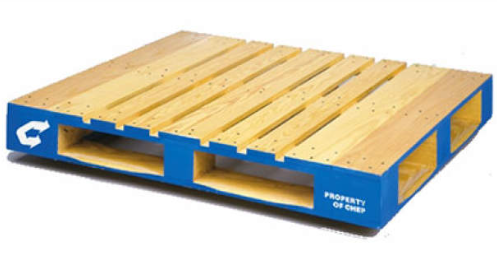
These specifications enable easy forklift or pallet jack access from multiple angles and provide a stable base for a wide range of product loads. GMA-style pallets are compatible with all standard pallet racking and automated storage and retrieval systems (ASRS).
3. Other Common Pallet Types
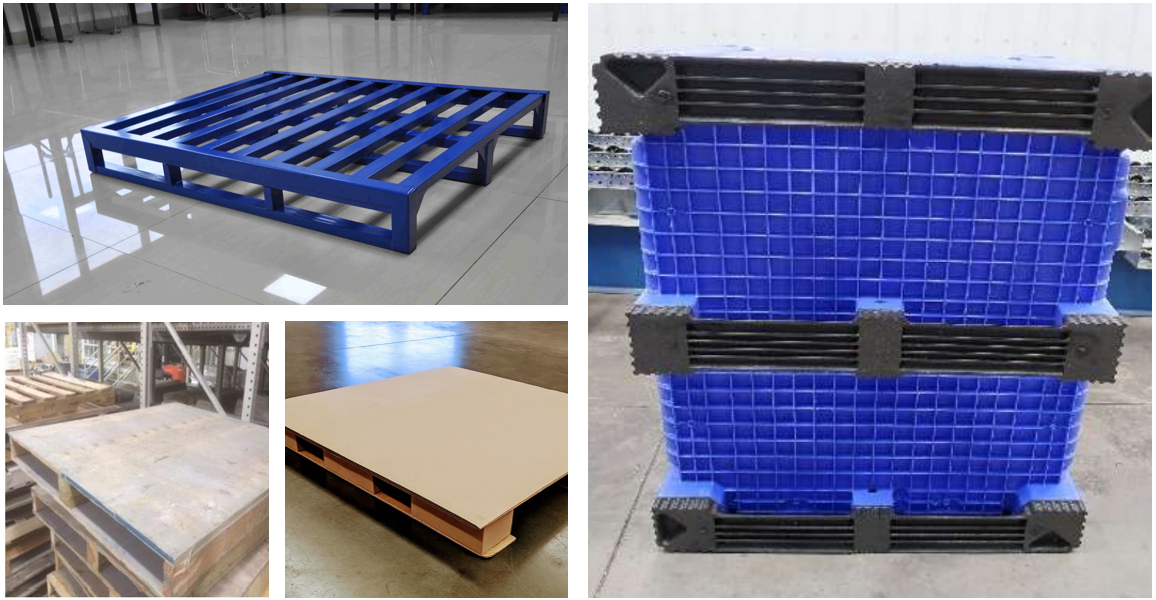
Top Left: Metal, Right: Plastic Pod, Bottom Left: Donor, Bottom Right: Cardboard
Pallets come in a variety of designs and materials beyond the GMA standard. Each style caters to different operational requirements.
- Block Pallets
- Use blocks (generally 4 to 12) in place of traditional stringers.
- Typically offer 4-way forklift entry due to the openings between blocks.
- Skid
- A pallet without bottom deck boards.
- Often 2-way entry, used for lighter loads or specific industrial applications.
- Square Pallets
- Common sizes include 42″ x 42″ or 48″ x 48.”
- Useful for certain shipping configurations, especially when consistent load dimensions are required.
- Pod-Style or Orbis (Plastic) Pallets
- Feature molded “feet” instead of full-length bottom boards.
- Lightweight and resistant to moisture. Commonly used in food or pharmaceutical industries.
- Solid-Top Plastic Pallets
- Provide a smooth surface to reduce damage to packaged goods.
- Often allow 4-way forklift access.
- Honeycomb (Corrugated Paper) Pallets
- Lightweight and eco-friendly.
- Best for one-way shipping or export, where recycling or disposal on arrival is likely.
- Metal Frame Pallets
- Can vary widely in size and design.
- Important to inspect welds and edges that might protrude and cause safety risks.
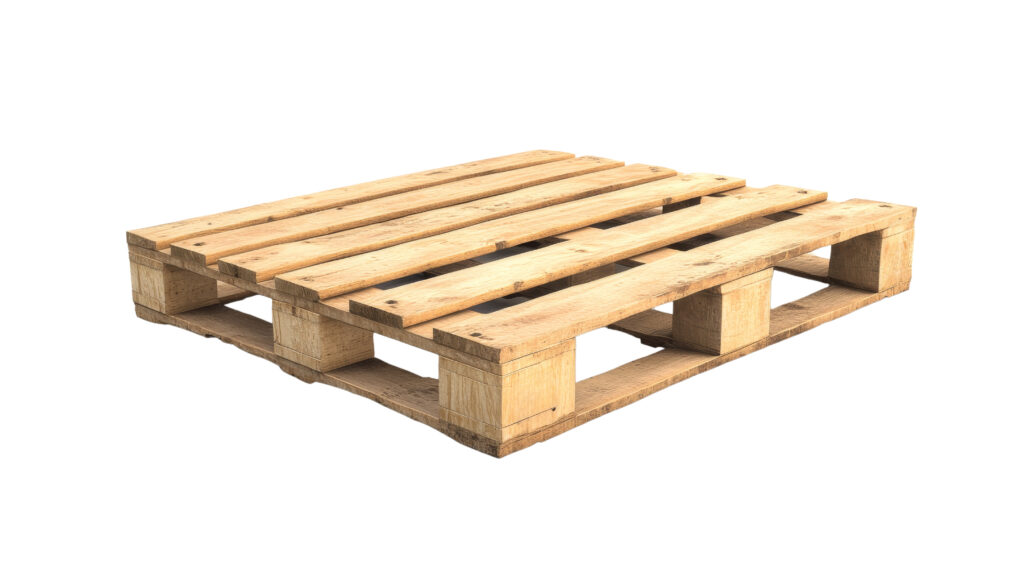 |
 |
| Block Pallet |
Plastic with Solid Top |
4. Slave Pallets: An Often-Overlooked Option
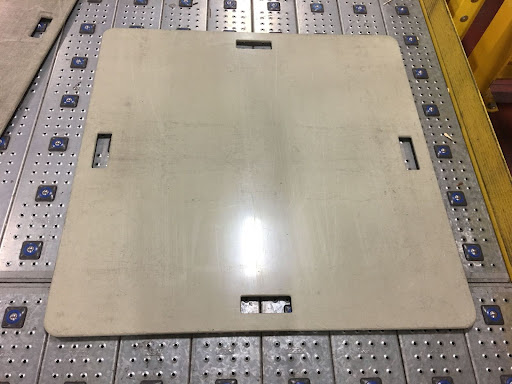
Donor Pallet on Ball Transfer Platform
Slave pallets are designed primarily for internal material handling, especially in automated systems such as ASRS, robotic stacking, or conveyor lines. They act as a stable base to move various types of pallets or containers:
- Applications:
- High-density automated warehouses
- Quality control stations handling different container types
- Conveyor staging and re-palletizing areas
- Walkable ball transfer platforms
- Benefits:
- Protect primary pallets from wear and tear during automated handling
- Allow standardized system setups
- Easily stacked and stored when not in use
For operations that see a high volume of mixed pallet or container types, captive (slave) pallets can streamline workflows and reduce downtime.
5. Measuring Your Pallet Correctly
Understanding the dimensions of your pallet is crucial for warehouse layout and pallet racking design. Here’s how to measure a stringer-style (GMA-style) pallet:
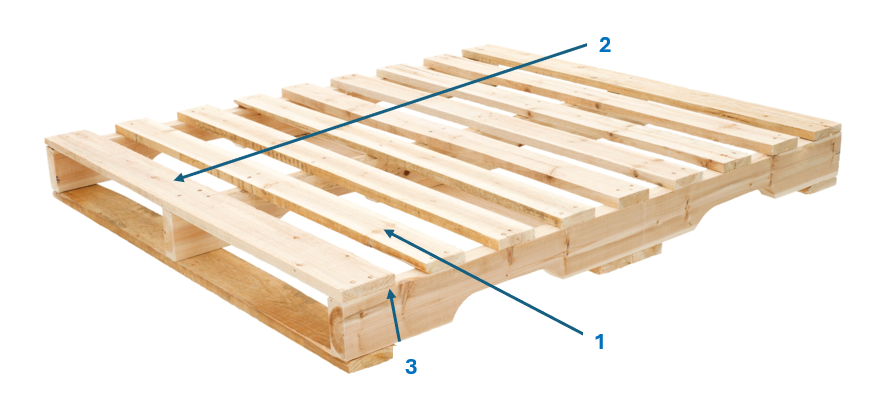
- Width: Measure across the deck boards (the boards on top where the load sits).
- Depth: Measure along the length of the stringers (the long beams that support the deck boards).
- Height: Measure from the top deck boards to the bottom surface of the pallet.
Orientation Matters
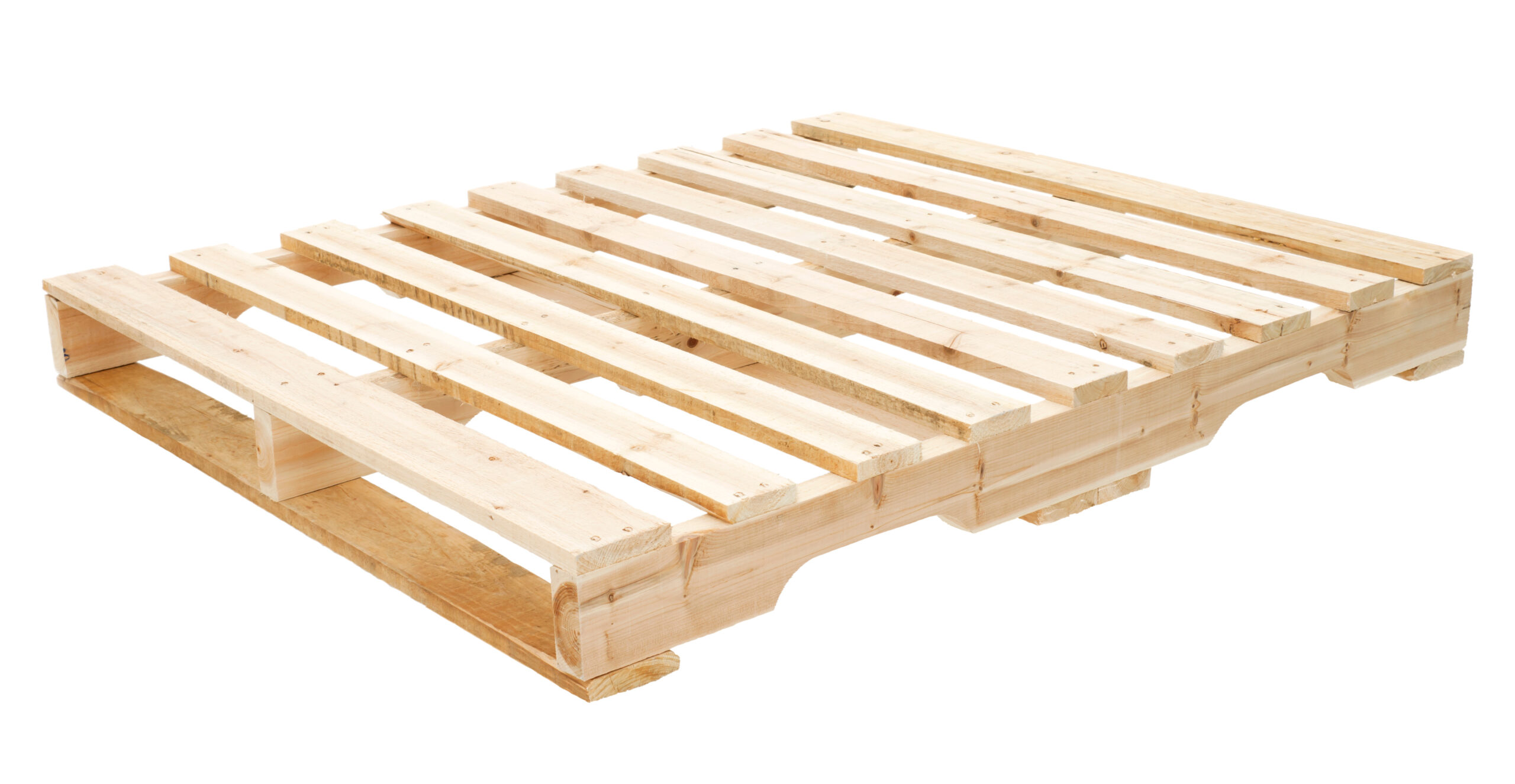
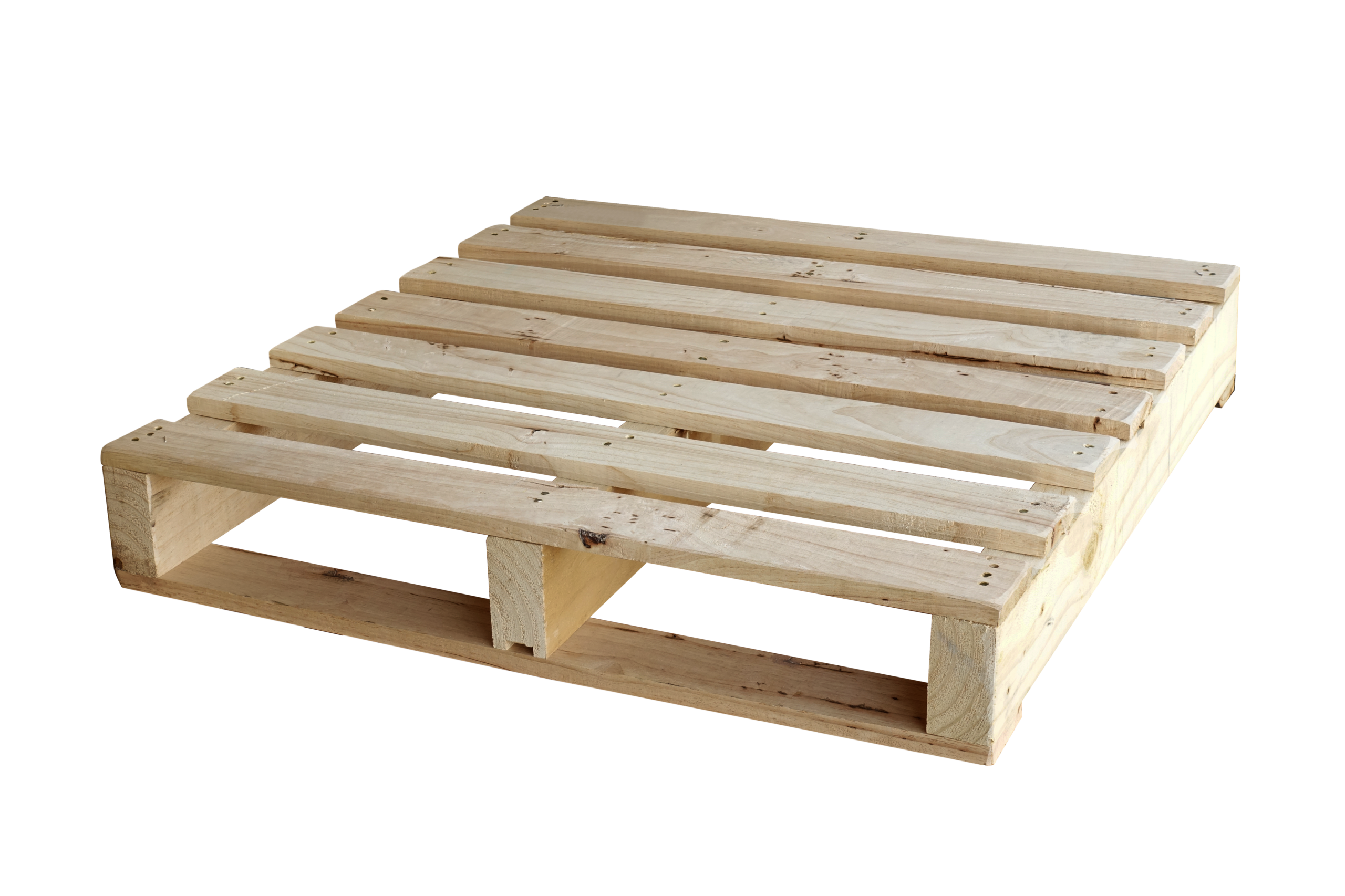
- 2-Way vs. 4-Way Pallets:
- 4-Way Pallets have notched stringers allowing forklift access from all four sides (often GMA-style).
- 2-Way Pallets can only be accessed from two sides (the ends), lacking notches.
- Pallet Orientation in Racks:
- Placing a pallet with the 40″ side facing the rack beams (40″ wide x 48″ deep) allows more pallet lanes in a given area.
- Rotating to 48″ wide x 40″ deep may allow more pallets in each lane but reduces the total number of lanes and can be trickier for forklift operators.
 |
 |
|
4-Way Pallet |
2-Way Pallet |
6. Pallet Quality and Material Considerations
Wood Pallets
- Grades:
- Grade A: Higher quality, minimal wear, no repaired stringers.
- Grade B: Some repairs or wear, but still usable.
- Grade C: Reconditioned pallets will vary widely in quality and strength. Will have reduced load capacity –unsuitable for heavy-duty, long-term applications.
- Pros: Common, cost-effective, easily repairable.
- Cons: Susceptible to splintering, protruding nails, and moisture damage.
Plastic Pallets
- Pros: Durable, lightweight, resistant to moisture and chemicals, consistent dimensions.
- Cons: Higher upfront cost, can have unique foot or pod designs that require additional rack decking or support.
Metal Pallets
- Pros: Heavy-duty, ideal for high-temperature or sanitary conditions, long lifespan.
- Cons: Can be expensive, potential weld issues or uneven surfaces.
Corrugated Paper Pallets
- Pros: Lightweight, recyclable, eco-friendly.
- Cons: Limited durability and load capacity; often used for one-way shipments.
Turn-Key Warehouse Service & Total Satisfaction Guarantee
The WOI team is here to help you match your pallet racking and material handling equipment with your pallet sizes and styles to maximize capacity and productivity.
Our team will walk with you each step of the way to streamline your project implementation and ensure your total satisfaction… in fact, we guarantee it.
The WOI Total Satisfaction Experience™
When you partner with WOI, you gain more than just design and installation expertise—you receive a dedicated team committed to your success. Our WOI Total Satisfaction Experience™ is built around five key principles:
- Listening to Your Needs – We take the time to understand your unique challenges and requirements.
- Executing with Precision – Our expert team ensures that your system is tailored to your exact specifications.
- Adhering to Timelines – We respect project deadlines to minimize disruptions and maximize efficiency.
- Ensuring Safety – Every aspect of our work prioritizes safety for your employees and operations.
- Attention to Detail – We meticulously oversee every project phase to deliver a flawless installation.
An integral part of your project is the installation of your pallet racking and equipment. WOI provides professional installation services to ensure the integrity and security of your warehouse systems.
With over 300 installations completed annually, our experienced team handles everything from permitting to final signoffs to ensure seamless project execution.
WOI Professional Installation:
- OSHA-Trained Project Managers
- Drug-Free Workplace Certification
- Daily Job Safety Analysis and Jobsite Inspection
- Authorized and Trained Forklift, Scissor Lift, and Aerial Lift Operators
- TN & AL Licensed General Contractor #00046536 ($1M License)
- Insurance Experience Mod. Rate 1.0
- Full Insurance with a $5M Umbrella
Trust WOI to get your next pallet rack installation done right.
By combining expert guidance on pallet selection with our turnkey installation services, WOI ensures that every aspect of your warehouse operation is optimized for safety, efficiency, and long-term success.
Contact our team today to schedule a free consultation and on-site visit. Let’s get started solving your warehousing challenges today!
WOI Service Areas
Nashville TN, Knoxville TN, Clarksville TN, Memphis TN, Chattanooga TN, Johnson City TN, Huntsville AL, Birmingham AL, Bowling Green KY, Asheville NC, Charlotte NC, Kalamazoo MI, South Bend IN
Contact Us Today
We will be happy to assist you with any questions or more detailed product information on any Warehouse Optimizers products.