
6 Questions to Ask When Buying Full Roller Pallet Flow Rack
The Versatility of Full Roller Pallet Flow Rack Makes it a Great Option
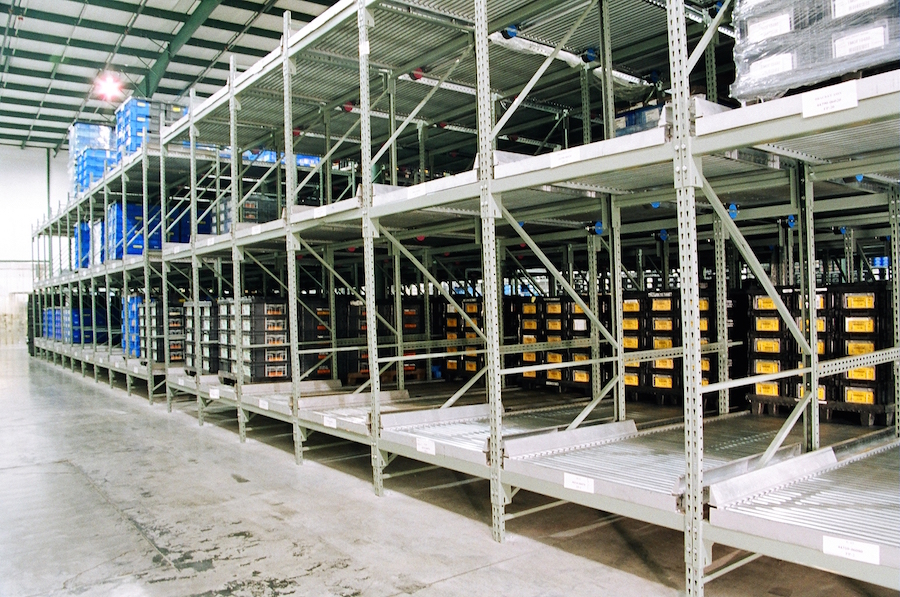
Full roller pallet flow is an efficient warehouse tool for a wide variety of gravity flow applications. It is a first-in/first-out (FIFO) pallet storage system that uses pitched lanes to flow pallets from a load side to a pick (extraction) aisle. Full roller describes a lane design where the roller width goes edge to edge vs. single rails of wheels or smaller rollers combined to form the lane. So, why would you choose full roller vs. one of the other pallet flow designs? We’ve got six questions for you that will help you decide if this is the right application for your needs.
Ask These 6 Questions Before Purchasing Full Roller Pallet Flow
1. When is full roller preferred to wheeled pallet flow rails?
Full roller is favored for non-standard pallets and inventory that varies in load weight. With non-standard pallets, full roller provides more surface area between the rollers and the bottom of the pallet. The more contact, the better the flow, particularly with pod pallets, plastic pallets, metal containers, and custom crates and pallets where the bottom surface area can be limited.
Full roller also allows leeway for varying inventory which is more economical than having different lanes for certain SKUs or replacing flow lanes to accommodate changing inventory. For example, a single lane can process multiple-sized pallets for an intake application, raw materials, or finished goods in a manufacturing line. With careful design, your full-roller system can be a universal system for a range of pallet specs.
2. What is the application difference between full-roller and split-roller pallet flow?
The quantity and layout of flow rails depend on the weight and dimensions of a product load. Significant load weight is a reason to choose split-roller vs. full-roller pallet flow. Heavy pallets can cause a slight deflection in full-width rollers, which adversely impacts flow and may cause a safety concern for the forklift operator. Split-roller is also preferred for extra-wide, bulky loads because you can line up rails to support the bottom deck boards.
3. What is the value of galvanized coating on the rollers?
The use of galvanized coating on rollers makes them rust-proof and more durable. This is particularly valuable in food processing and distribution facilities where washdown requirements can quickly damage rollers.
4. What are the mounting options for roller pallet flow?
Full roller pallet flow can be mounted into structural or roll-formed rack systems. Full roller can also be floor mounted. Floor-mounted is popular for dock staging, intake, and case picking. Our custom-fit mounting brackets are less bulky, lower profile, and reliable in stopping sway in the lane. They are also easy to install.
5. How do you control the speed of pallets in a full roller system?
The pitch of the lane has a lot to do with speed control, but adding speed controllers also helps. Speed controllers make contact with the pallets to slow them. Controlling the speed is important to prevent pallet loads from striking the end of the lane with too much force, potentially damaging inventory and causing a safety risk. Full-roller lanes have full-width rubber-coated rollers that work in tandem with speed controllers mounted underneath to slow the pallets effectively. Particularly for plastic and non-standard GMA-style pallets with limited bottom surface area, the full-width rollers are a good fit to get as much contact between the lane and the pallet.
Angled ramp stops can also be added at the end of a lane to bring pallets to a stop gently. They also serve as a safety feature to help secure the pallets in the lane at the pick aisle. We use bolt-on ramp stops. They are durable, heavy-gauge steel, but if they get damaged, they are easy to replace without replacing other system parts.
6. Can you use full roller pallet flow for case picking?
Yes, with the help of floor-mounted pallet flow and a case pick separator. A pallet can be isolated at the pick aisle so that when the pallet is empty, an employee can easily lift it from the lane. Once the pallet is removed, the separator is triggered to release the rear pallets to refill the pick aisle. Pallet separators are safe and efficient and remove all the back pressure (combined weight of the rear pallets) from the front pallet. If not addressed, back pressure can make it very difficult to remove the front pallet, potentially injuring workers and damaging inventory and equipment.
Invest Your Time & Money for the Biggest Return
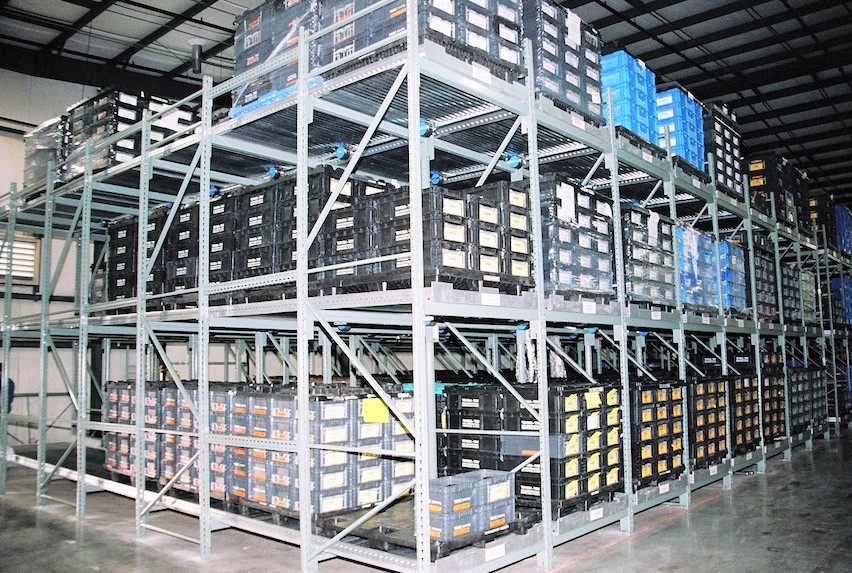
There are many things to consider when purchasing full roller pallet flow rack. Most importantly, it’s critical to design your system to match your inventory specifications –particularly the pallet style, size, and load weight. Our experts will work with you to create a system that meets your specific needs to get the most value from your gravity flow system.
With WOI, we provide over 180 years of combined material handling experience and dedicated professionals who are determined to meet your needs. We don’t simply sell products, we solve customer challenges –and we are committed to delivering 100% Customer Satisfaction with every application. We ensure customer satisfaction by following the tenets of our Total Satisfaction Experience™ (TSE).
The Total Satisfaction Experience focuses on five essential customer experiences:
- We will listen to your needs
- Execute your project with particular attention to your unique application
- Stick to project timelines
- Ensure a safe environment
- Pay close attention to the detail of the finished product
A key focus of the TSE commitment has to do with the installation of the project. Our team follows strict protocols and ensures the finished product meets customer expectations.
WOI Installation Team:
- Industry Experienced Professionals
- OSHA Trained & Certified
- Certified Drug-Free Workplace
- Licensed General Contractor
- Job Safety Analysis
- Forklift, Scissor Lift, and Aerial Lift Operator Trained
Call WOI today for a free consultation and schedule a site inspection —dial (833) 336-7005 or email info@warehouseoptimizers.com.
Contact Us Today
We will be happy to assist you with any questions or more detailed product information on any Warehouse Optimizers products.