
WOI Answers 5 FAQs About Cleanroom Certification
Battery Manufacturing Cleanroom Certification Made Simple — A WOI Case Study
You’re not alone if you’re wondering what it takes to get a cleanroom certification. It’s one of the most common questions we hear from businesses exploring cleanroom design and installation. Certification can feel complex—full of regulations, standards, and technical steps.
That’s precisely why we’re sharing a recent project as a real-world example. WOI partnered with our customer in Tennessee from the very beginning—taking their vision from concept, through design and installation, and ultimately to ISO certification.
Case Study: Battery Manufacturing Cleanroom Project
WOI recently completed a 4,500-square-foot cleanroom in Tennessee with 15-foot walls and three air showers, designed and installed to achieve ISO certification. This facility is part of a larger $100M Department of Energy–supported initiative to expand advanced energy manufacturing capacity in the U.S. The project highlights WOI’s turnkey role — from concept and design to installation and certification.
As you read, look for case study callouts highlighting how WOI tackled each step while we cover the five questions that matter most for cleanroom certification.
1. What Is Cleanroom Certification?
Cleanroom certification is the process of proving that your controlled environment meets the strict standards required for its intended use. In most cases, this means following ISO 14644 standards, which outline particle count limits and cleanliness classifications.
Why does this matter? Because certification is more than just a box to check—it’s the guarantee that your space can safely support pharmaceutical production, electronics manufacturing, medical device assembly, or other precision-driven operations. Without certification, your cleanroom may not meet compliance requirements, and your business could face safety, quality, or regulatory risks.
Case Study Callout:
👉 From day one, WOI tailored the Tennessee project to meet ISO requirements for a smooth certification.
2. What Standards Apply to Cleanrooms?
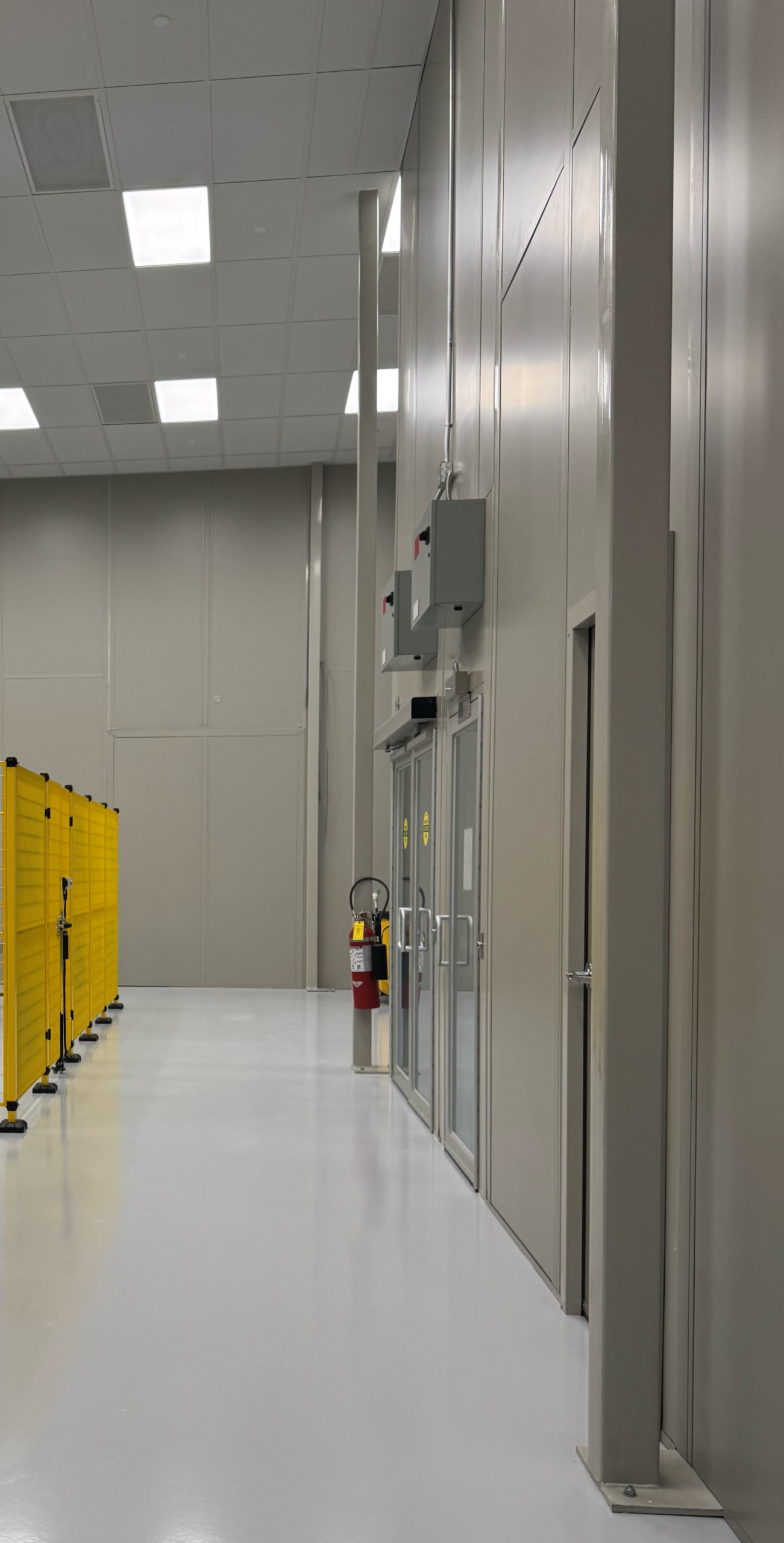
Side View: Doors to Air Showers
Cleanrooms are certified to ISO 14644-1, which classifies them based on the number and size of airborne particles allowed per cubic meter of air.
But particle counts aren’t the only factor. Certification often involves testing several key elements, including:
- Particle Count Testing – Measuring airborne particles (non-viable for classification, viable if required).
- Airflow and Pressure Verification – Confirming correct airflow patterns and maintaining proper room pressurization.
- Filter Integrity Testing – Ensuring HEPA/ULPA filters are effective.
- Environmental Monitoring – Checking temperature, humidity, and air changes per hour.
- Microbial Contamination Testing – Verifying surfaces and air are free from biological contaminants.
- Documentation & Validation – Recording results to prove compliance.
- Regular Recertification – Ongoing testing to maintain classification.
Case Study Callout:
👉 WOI built in features like balanced airflow systems and HEPA filtration, validated during certification testing.
3. How Do You Prepare for Cleanroom Certification?
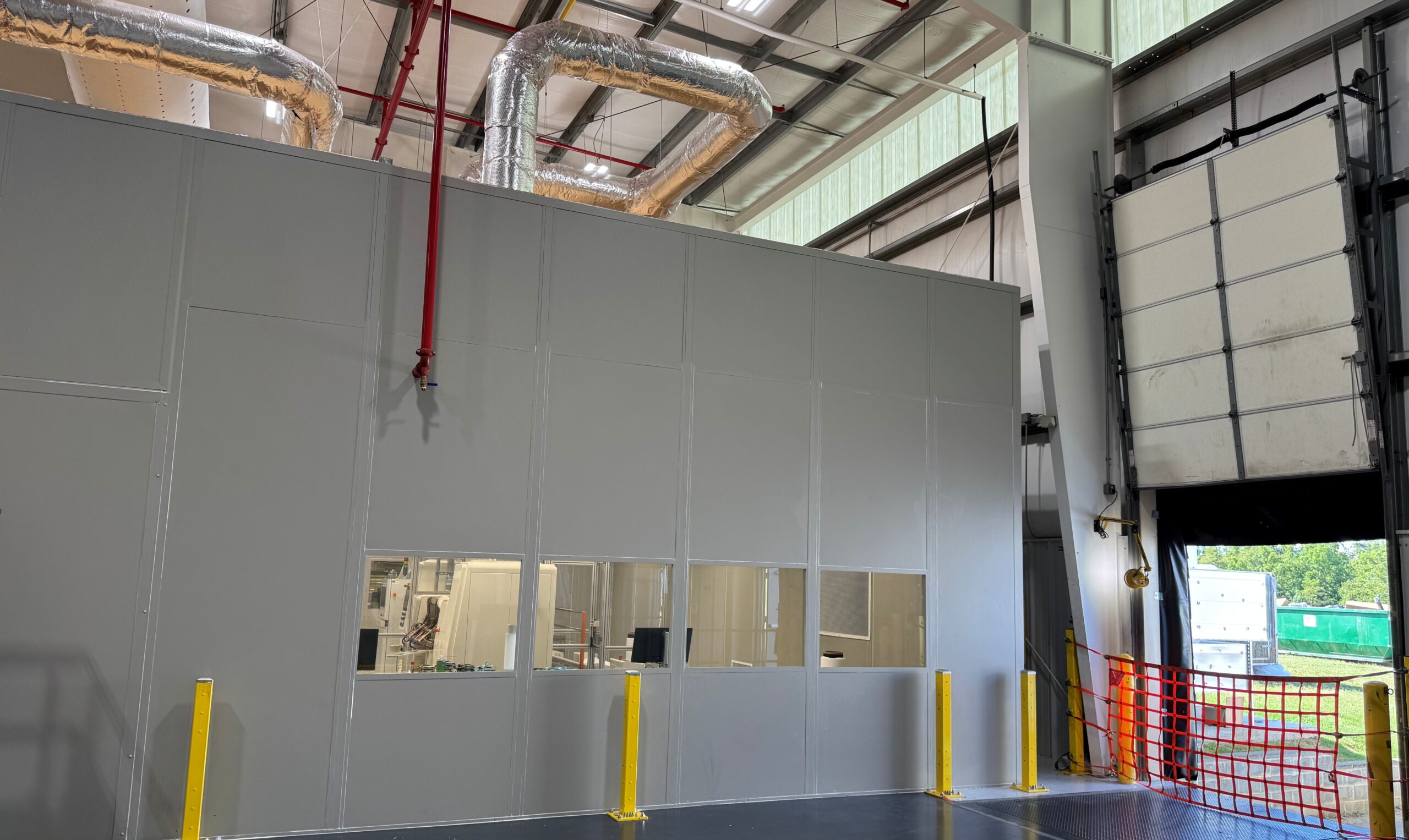
Cleanroom Air Shower
Preparation is often the most important step in achieving cleanroom certification. The process starts well before the first inspection—it begins in the planning and design phase. To set yourself up for success, you need to:
- Define Certification Goals – Determine which ISO class applies to your operations.
- Design for Compliance – Plan wall heights, air showers, filtration, and HVAC to support certification.
- Build in Proper Airflow – Engineer systems that achieve balanced airflow and pressure.
- Establish Procedures Early – Set protocols for gowning, cleaning, and environmental monitoring before certification day.
- Work with Experts – Choose a team experienced in cleanroom design, installation, and certification.
Case Study Callout:
👉 WOI’s turnkey process — early planning, documentation, and on-site management — gave the customer confidence heading into certification.
4. What Happens During the Certification Process?
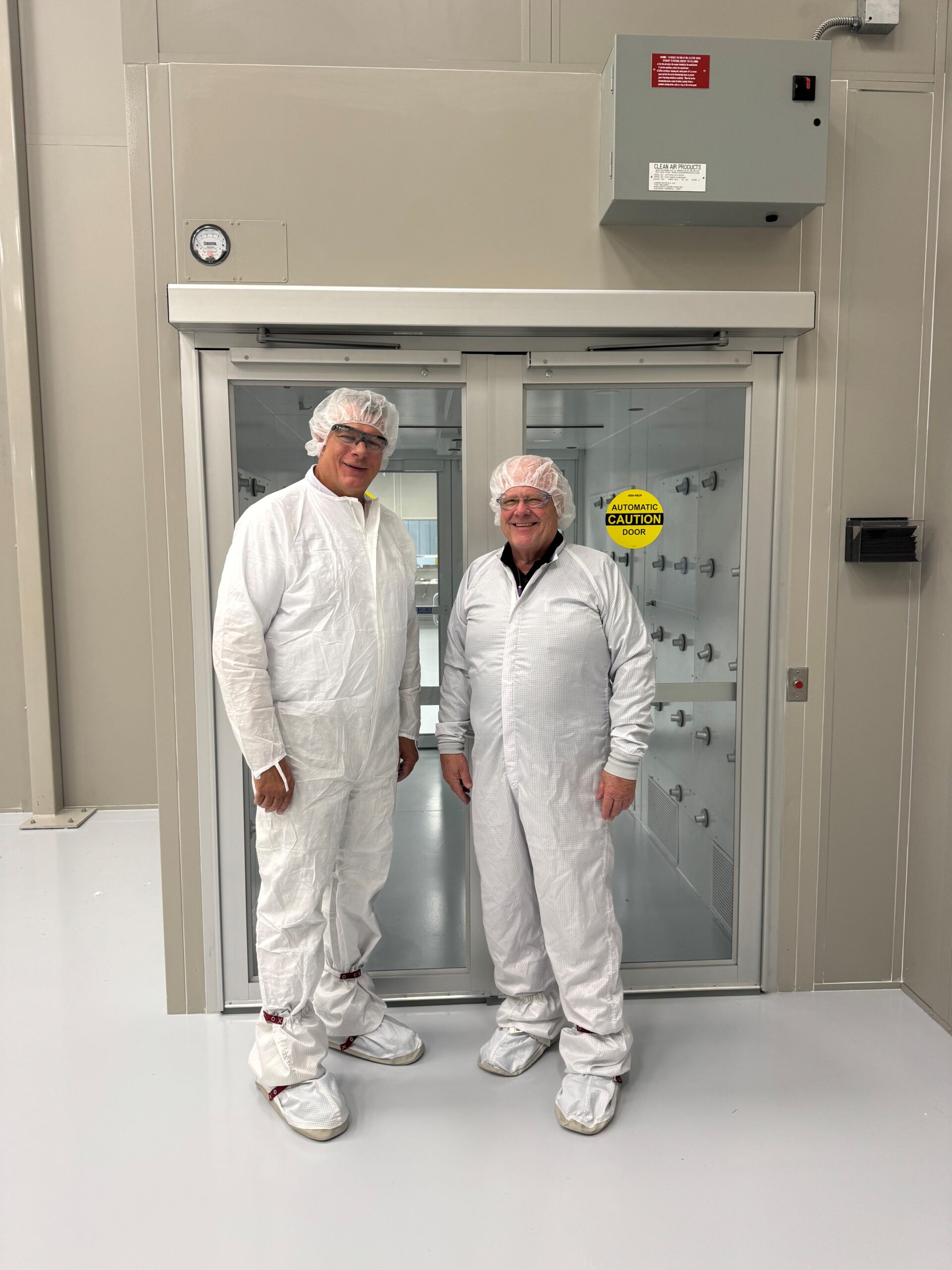
Gene Cates: Director of Sales and Marketing & Mike Carson: Sales Representative
Once a cleanroom is built, the certification process confirms that it meets the required ISO standards. This involves a series of inspections and tests carried out by trained professionals or third-party organizations. Typical steps include:
- Particle Count Testing – Verifying airborne particle levels match the chosen ISO classification.
- Airflow and Pressure Verification – Checking that air moves in the right patterns and that pressure differentials prevent contamination.
- Filter Integrity Testing – Ensuring HEPA/ULPA filters are performing effectively.
- Environmental Validation – Confirming temperature, humidity, and air change rates are stable.
- Documentation Review – Certifiers will examine design plans, monitoring procedures, and test results to validate compliance.
Certification is not the end of the road. Cleanrooms must also be recertified periodically to ensure performance doesn’t drift over time.
Case Study Callout:
👉 WOI coordinated directly with the certification team, handling pre-checks and documentation to keep the project on schedule..
5 . How Often Should I Certify My Cleanroom?
One of the most practical questions businesses ask is: “How often do I need to certify my cleanroom?”
The general rule is at least once a year. Annual certification confirms that your cleanroom continues to meet its required ISO classification. But frequency can vary depending on several factors:
- ISO Standards – ISO 14644-1 defines classes from ISO 1 (strictest) to ISO 9 (least strict). The higher the classification, the tighter the requirements — and often the more frequent the certifications.
- Industry Regulations – Some industries, like pharmaceuticals or semiconductors, require more frequent audits and certifications.
- Usage and Risk – Cleanrooms used for critical processes may require additional certifications to safeguard product quality.
- Changes or Upgrades – Recertification should always follow significant facility, equipment, or process changes.
- Historical Performance – If your cleanroom consistently performs well in past certifications, the frequency may be adjusted.
Case Study Callout:
👉 WOI’s role didn’t end with installation. In the Tennessee project, our team worked alongside the certifiers to ensure the cleanroom met ISO requirements — a foundation that positions the facility for smooth recertifications in the future.
Who Should You Trust with Your Cleanroom Project?

WOI Installation Team at Work
Safety is our top priority at Warehouse Optimizers, Inc. (WOI). A poorly designed or installed cleanroom — just like a poorly installed pallet racking system — can put employees, inventory, equipment, and compliance at risk. We deploy these standards across more than 300 installations annually.
WOI’s professional installation team is backed by:
- OSHA-10 Trained Project Managers
- Drug-Free Workplace Certification
- Daily Job Safety Analysis and Jobsite Inspections
- Authorized Forklift, Scissor Lift, and Aerial Lift Operators
- TN & AL Licensed General Contractor #00046536 ($1M License)
- Full Insurance with a $5M Umbrella
And beyond installation, the WOI Total Satisfaction Experience™ ensures your project adheres to our five key principles:
- Listening to Your Needs
- Executing with Precision
- Adhering to Timelines
- Ensuring Safety
- Attention to Detail
Case Study Callout:
👉 Our Tennessee project is proof of this commitment — a 4,500-square-foot cleanroom, completed from concept to ISO certification, delivered on time and built for long-term compliance.
When you partner with WOI, you gain more than just a cleanroom builder — you gain a dedicated team committed to your success, safety, and compliance.
Ready to plan your cleanroom project? Contact WOI today, and let’s build your path to certification.
WOI Service Areas
Tennessee: Nashville, Knoxville, Clarksville, Memphis, Chattanooga, Johnson City
Alabama: Huntsville, Birmingham
Kentucky: Bowling Green
North Carolina: Asheville, Charlotte
Midwest: Kalamazoo, MI; South Bend, IN
Contact Us Today
We will be happy to assist you with any questions or more detailed product information on any Warehouse Optimizers products.