
Data Center Design Essentials: Cages, Walls, Racks, and Storage
Planning Secure, Efficient, And Scalable Data Center Spaces
The physical side of data center design matters just as much as servers, cooling units, and power systems.
Industry standards for data centers explicitly cover physical infrastructure. This includes architectural, mechanical, fire safety, telecommunications, and security requirements (not just the IT itself).
A well-designed physical environment helps support the things operators care about most:
- Uptime and reliability
- Easier maintenance access
- Better airflow and cooling efficiency
- Stronger physical security and compliance support
- Cleaner paths for future expansion
That is why good data center design involves more than one product or a single isolated decision. It includes space planning, cages, walls, racks, enclosures, and storage solutions that work together.
1. Start with Strategic Space Planning
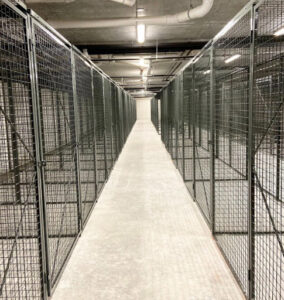
Before choosing cages, wall systems, or rack types, it helps to get the layout right. Good data center planning starts by defining what the space needs to do, what constraints it has, and how it needs to grow.
At the physical level, that usually means creating clearly defined zones for:
- Equipment areas
- Access pathways
- Maintenance and service space
- IT support and repair functions
- Future capacity or reconfiguration
When those zones are not thought through early, the same problems show up in crowded layouts, harder service access, awkward cable paths, and wasted square footage. Even cooling performance can suffer when air paths and rack rows are not planned as part of the layout.
That is why strong space planning is about supporting workflow, serviceability, and growth without making the data center harder to operate six months from now.
2. Defining Secure Spaces With Cages And Walls
Not every data center needs the same kind of separation. Some environments need visible, secure partitions around equipment. Others need fully enclosed rooms with tighter airflow control and a higher degree of isolation.
The right answer depends on the level of security, environmental control, and flexibility the space requires.
Data center and server cages
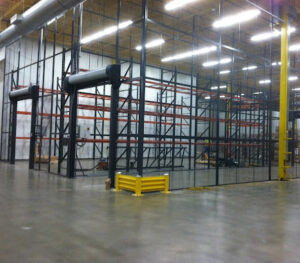
Data center cages are a practical option when you need to define equipment zones without fully closing off the space. They are especially useful in shared environments, colocation-style layouts, or dedicated equipment zones where controlled access matters but visibility and airflow still need to be maintained.
Cages are often a good fit when you want to:
- Create boundaries around critical equipment, including side and top protection when needed
- Secure restricted equipment areas with full- or inside-access-only locking options
- Separate customers, departments, or applications in shared areas
- Preserve visibility for operations teams
- Maintain more open airflow around the enclosed area
- Keep future layout changes possible with modular panel construction
Many wire partition server cages also offer structural and installation advantages beyond basic security. Heavy-gauge wire-mesh panels, framed in steel and bolted to steel posts, create a strong, rigid partition system that helps protect restricted equipment areas while maintaining visibility and airflow. With pre-sized components, secure floor anchoring, and compatibility with both concrete and raised-floor environments, these modular systems can also support a cleaner installation process and a reliable finished enclosure.
Modular wall systems
When more control is needed, modular wall systems turn open areas into enclosed, controlled spaces. They are a strong fit for environments with stricter compliance, tighter airflow management, or a higher need for separation. Compared with stick-built construction, modular walls are typically faster to install, less disruptive, and easier to expand or reconfigure later.
They also support the airflow strategy. Enclosed wall systems can help with hot-aisle and cold-aisle containment, improving cooling efficiency and reducing energy waste.
The key point is simple: cages and walls solve different problems. Cages work well when you need secure separation with visibility and airflow. Walls make more sense when you need stronger control over access, containment, and the environment.
3. Equipment Racks and Enclosures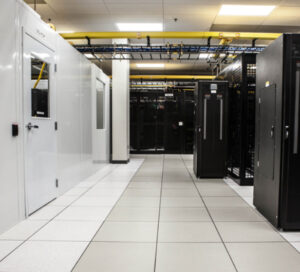
Racks do more than hold hardware. They affect accessibility, cable routing, cooling behavior, and the ease of servicing the environment over time. Tidy cable management inside IT racks is critical for uptime, safety, and cooling efficiency, and poor cable organization can increase human error and operational friction.
That is why the right rack system should support more than the weight of the equipment. It should also help with:
- Structural support for critical hardware
- Cleaner cable management
- Easier maintenance access
- Configurability for layout, hardware mix, and security needs
- Long-term usability as requirements change
The right IT racks serve as cleaner cabling paths, provide better access, and efficiently use space.
4. Storage for Maintenance and Support
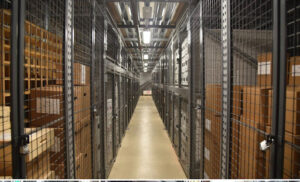
Storage is one of the easiest things to overlook in data center design because it does not feel as critical as racks or cooling. But in real operations, tools, spare parts, consumables, and backup inventory all need a place.
If technicians have to hunt for adapters or replacement parts during a service event, that lost time becomes part of the maintenance problem. That logic is one reason physical organization and serviceability matter so much in the first place.
What often needs to be stored includes:
- Spare parts
- Hand tools and specialty tools
- Consumables
- Documentation and accessories
- Backup inventory and packaged items
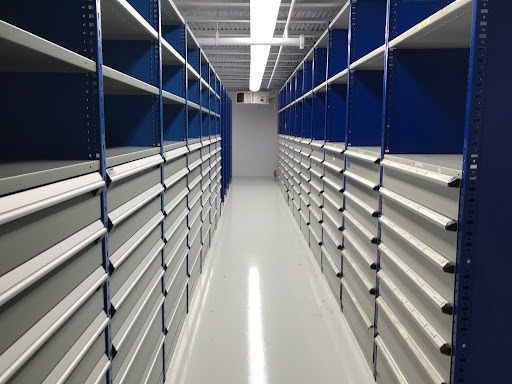
At WOI, our storage approach for these spaces is straightforward and practical. We focus on:
- Modular storage cabinets
- Industrial shelving
- Accessories like drawers, bins, and dividers to help keep parts easier to locate and spaces easier to manage.
That is a strong fit for maintenance rooms, server rooms, and support areas where the organization directly affects response time and day-to-day efficiency. The point is to remove avoidable friction from routine maintenance work and give the team a more reliable operating environment.
5. IT Rooms and Support Spaces
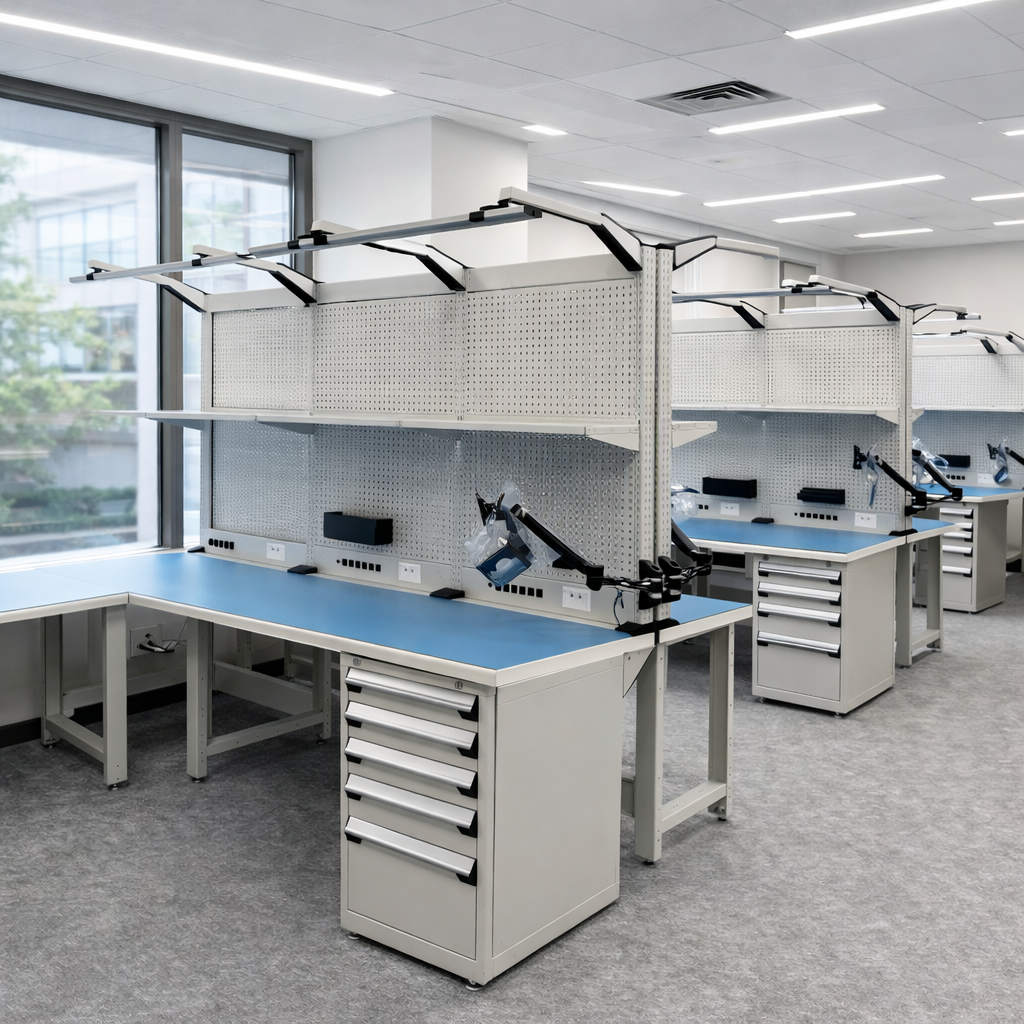
IT rooms, admin spaces, repair areas, and network support zones all play a role in keeping the broader environment functional.
The Department of Energy’s design guidance treats data center design as a wider system that includes not only IT equipment and environmental conditions, but also the surrounding infrastructure that supports operation and efficiency.
These spaces often need:
- Organized workstations: Help technicians complete repair, testing, and support tasks with less clutter, fewer delays, and a lower chance of mistakes.
- Accessible storage: Keeps tools, parts, and supplies easy to find and reach, which helps speed up maintenance and day-to-day support work.
- Functional layouts for repair or staging work: Create enough room for teams to inspect, prepare, repair, or temporarily stage equipment without disrupting nearby operations.
- Cabinets and shelving sized to the work being done: Make it easier to store items properly, protect equipment and supplies, and use space more efficiently.
- Flexibility to change as workflows evolve: Allows the space to adapt more easily as equipment, processes, or team needs change over time.
That is where modular furniture, cabinets, drawers, partitions, and locking options start to make a real difference.
6. Designing for Flexibility and Growth
Data center environments rarely stay static for long. Equipment changes, density changes, security expectations change, and capacity needs grow.
That is why flexibility should be built into the design from the start. When growth is not considered early, even a well-organized space can become harder to manage, more expensive to update, and less efficient to support over time.
Modular equipment helps make that possible. Configurable cages, expandable wall systems, adaptable racks, and reworkable storage solutions give teams the ability to adjust the space as requirements change without starting over.
That kind of flexibility has long-term value. Systems that can be expanded, reconfigured, or relocated help protect the original investment while making it easier to respond to new equipment, shifting layouts, and future operational needs.
Plan Your Data Center Design With Confidence
Designing a data center that performs well over time requires more than the right equipment. It requires careful planning, precise execution, and a strong focus on safety at every stage.
One advantage of modular enclosure systems is that their installation-friendly features can support both project efficiency and long-term performance. Pre-sized panels that bolt together, secure anchoring methods, and floor-compatible mounting options can contribute to a cleaner installation process and a more reliable finished system.
At Warehouse Optimizers, Inc. (WOI), safety is a top priority. Poorly installed systems (whether storage, enclosures, or support structures) can put employees, equipment, and operations at risk.
That’s why WOI provides professional installation services designed to ensure the integrity, performance, and long-term reliability of your systems.
With over 300 installations completed annually, WOI’s experienced team manages every phase of the project, from permitting to final sign-offs, helping ensure a smooth and efficient process.
WOI Professional Installation Includes:
- OSHA-10 Trained Project Managers
- Drug-Free Workplace Certification
- Daily Job Safety Analysis and Jobsite Inspections
- Authorized and Trained Equipment Operators (Forklifts, Scissor Lifts, Aerial Lifts)
- TN & AL Licensed General Contractor (#00046536 – $1M License)
- Insurance Experience Modification Rate: 1.0
- Full Insurance Coverage with a $5M Umbrella
The WOI Total Satisfaction Experience™
When you partner with WOI, you gain more than just design and installation expertise—you gain a team committed to delivering results that align with your goals. Our WOI Total Satisfaction Experience™ is built on five key principles:
- Listening to Your Needs – Understanding your space, challenges, and objectives
- Executing with Precision – Delivering solutions tailored to your exact requirements
- Adhering to Timelines – Keeping projects on track to minimize disruption
- Ensuring Safety – Prioritizing safe practices across every phase of the project
- Attention to Detail – Overseeing every step to ensure a clean, accurate installation
Whether you’re planning a new data center or optimizing an existing space, the right combination of storage, security, and infrastructure makes all the difference.
WOI Service Areas
Nashville TN, Knoxville TN, Clarksville TN, Memphis TN, Chattanooga TN, Johnson City TN, Huntsville AL, Birmingham AL, Bowling Green KY, Asheville NC, Charlotte NC, Kalamazoo MI, South Bend IN
Contact Us Today
We will be happy to assist you with any questions or more detailed product information on any Warehouse Optimizers products.