
Modular Offices for Warehouses: FAQs + Planning Checklist
Modular Offices in Warehouses: The Questions We Ask First
Industrial facilities change fast. Processes evolve. Seasonal peaks hit. A new product line shows up, and suddenly, the “temporary” setup has been temporary for 18 months.
That’s precisely why modular offices are a valuable “go-to” for warehouses and manufacturing plants. They let you create a real, enclosed space inside an active facility without a hefty price tag, long timelines, or disruptions.
What Do Modular Offices Mean in Warehousing and Manufacturing
In an industrial setting, “modular office” usually refers to a prefabricated wall-and-panel system (or a pre-built unit) installed in a warehouse, manufacturing plant, or DC to create an enclosed space for people, equipment, or specialized work.
Modular buildings, offices, and partitions are pre-fabricated structures that can be deployed inside or outside a facility. The goal is to add dedicated personnel space, manufacturing space, lab space, or storage, without the cost and disruption of stick-built construction.
What makes them especially practical in industrial environments is that they’re designed to behave like a system, not a one-off build. They can be configured and outfitted with the things teams actually need to work comfortably and safely: climate control, telecom, plumbing, HVAC, flooring, soundproofing, and more.
Common Industrial Uses Of Modular Offices
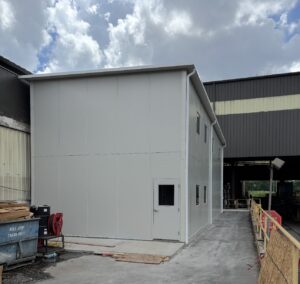
Modular offices and in-plant rooms can be added wherever a facility needs a controlled space within a larger, louder, busier space. Most commonly, that includes:
- Supervisor and operations offices close to the floor
- Break rooms, locker rooms, and cool-down rooms
- Labs, quality, and inspection rooms (including CMM rooms)
- Tool cribs, equipment rooms, secure storage, and specialized enclosures
Why Modular Office Instead of Stick-Built?
Modular construction is typically faster and cleaner to construct in an active operation. They are characterized by quick design and installation, plus a “clean, safety-minded installation” that minimizes waste.
The other reason is flexibility. Modular systems are often designed so we can reconfigure, repurpose, or even relocate the space later, rather than demolishing and rebuilding.
And in the real world, lead times matter too. Even before installation, you’re often working around equipment moves, scheduling, and delivery. Modular buildings and office spaces can arrive ready to assemble, with an average delivery range of 2-4 weeks.
Modular Office Depreciation And Potential Tax Advantages
You’ll often hear modular offices talked about more like “equipment” than “construction” because many systems are demountable and relocatable. This can affect how they’re depreciated. Some manufacturers describe them as tangible personal property for tax purposes.
We also note potential tax advantages here, including 7-year depreciation.
At a federal level, depreciation rules can change, and eligibility depends on how the office is installed, used, and classified, so it’s smart to confirm specifics with a tax professional. For the baseline IRS rules (including options like Section 179), the IRS points to Publication 946.
Answer these FAQs to Customize Your Modular Office Space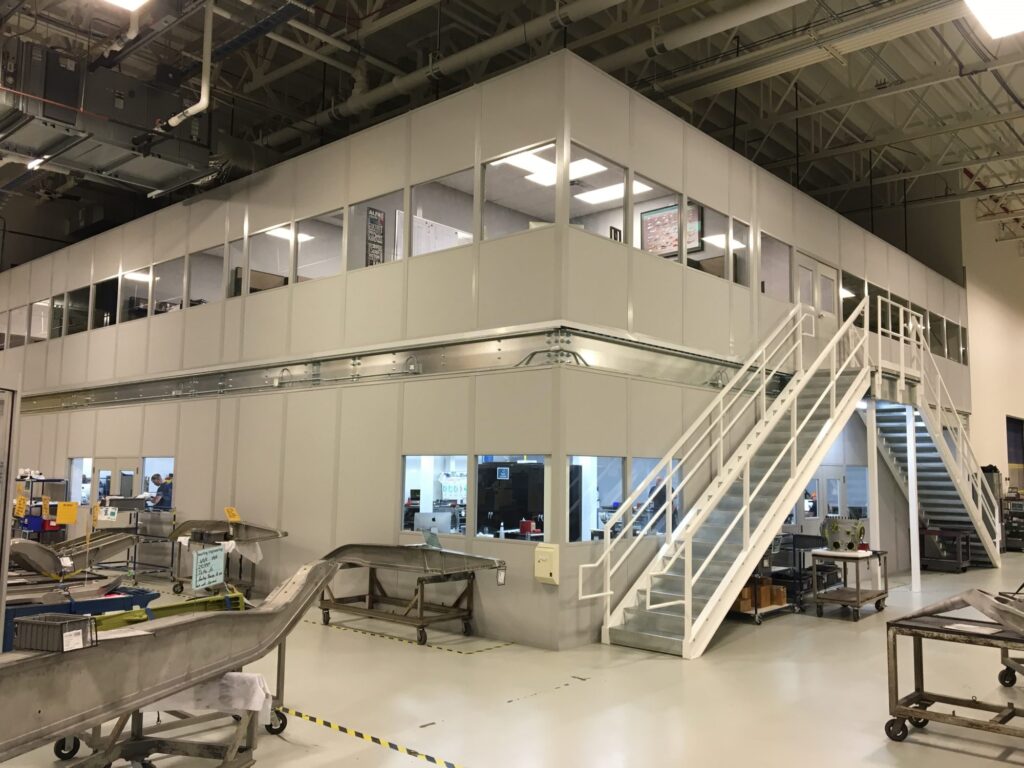
1. What are you using the space for (office, lab, CMM, break room)?
This is the first question the WOI team will ask, because the use case drives everything that follows. Layout. Wall type. Sound control. Utilities. Sometimes, even code requirements.
A break room usually prioritizes comfort, HVAC, and durable finishes. A lab or CMM room often needs tighter temperature control, cleaner finishes, and more controlled access. Once we lock in the purpose, we can design the space correctly the first time and avoid costly mid-project changes.
2. How tall do you need the panels to be (facility clear height and interior height inside the office)?
Panel height is really about matching your facility conditions to the performance you want inside the room.
If the building has a tall clear height, you may be able to choose standard wall height, go taller, or add a ceiling system, depending on what matters most, like sound reduction, temperature control, or dust separation.
Ceiling height is one of the biggest levers for comfort and how “sealed” the space feels. Here’s what we measure up front:
- Overall building clear height
- Obstructions like sprinklers, lighting, ducts, and beams
- The finished interior ceiling height you want inside the office
3. Can we tie into your existing facility on one or two walls?
Often, yes, if it helps the layout and the building conditions support it.
Tying into an existing wall can reduce materials and tighten the footprint. But it depends on what the wall is made of, where it sits, and what else is happening around it.
A masonry wall is different from a metal panel wall. A wall near docks and traffic lanes raises different questions than a wall tucked in a quiet corner. Utilities, sprinklers, and egress can also shape what’s possible.
This is also where turnkey coordination matters. When a modular space needs HVAC, electrical, fire protection, or flooring coordination, it helps to plan it as one integrated scope instead of piecing it together.
4. How many doors do you need?
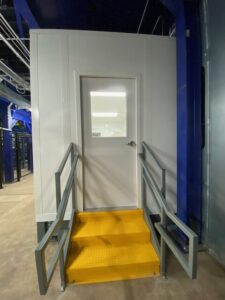
Door count is usually about workflow and safety. We want people moving naturally, not funneling into bottlenecks or cutting through the wrong areas.
We typically map:
- Workflow: where people enter from, like the warehouse floor, production, staging, or receiving
- Traffic type: people-only, carts, pallet jacks, or occasional equipment
- Access control: keyed entry, badge access, viewing window needs
- Emergency egress: depending on room size and use, additional exit routes may be required
A simple rule that works surprisingly well is to start with the path people already walk, then place doors where flow already happens.
5. Do you want windows, and if so, how many and what size?
Windows are about visibility, safety, and comfort.
Many teams want line of sight to the floor for supervision, training, or QA without putting staff in noisy, traffic-heavy areas.
The right window count and size depends on what you need to monitor, like dock doors, staging lanes, or production cells, and how private the space should feel. An HR office is different from a team room or supervisor station.
6. Do you want it prepped for a second level later, or possible storage down the road?
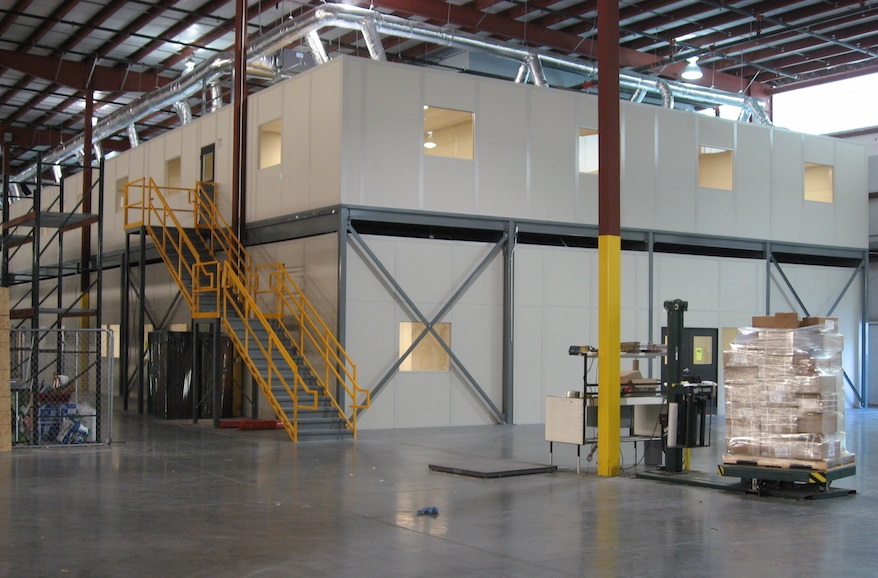
If there’s any chance you will want to expand later, it’s worth talking about it now.
Two-story modular buildings and modular-mezzanine combinations can double usable space in the same footprint. Planning for a future phase can influence column locations, stair placement, roof structure, and utility routing. It’s much easier to design for it now than retrofit it later.
7. HVAC and outlets: Do you want it modular-wired?
Most customers do, because comfort and usability are not optional when people are working inside the space all day.
Modular rooms can be equipped with climate control, electrical, telecom, HVAC, flooring, and other features depending on the application. Planning utilities early helps you avoid downtime later. You can route power and data cleanly, place outlets where work actually happens, and size HVAC correctly for occupancy and equipment heat load.
8. How fast do you need this installed—and how much operational disruption can you tolerate?
We ask this early because speed and cleanliness are two of the biggest reasons facilities choose modular in the first place. If you’re running live production, shipping, or receiving, we’ll plan around traffic patterns, shift schedules, and safety boundaries to keep disruption low.
Install timelines are often measured in weeks, not months, and the process is typically far less intrusive than traditional construction. That matters in active distribution and manufacturing environments where downtime gets expensive fast.
9. Are there any permitting, fire-rating, or sound-control requirements we need to account for?
Requirements can vary based on your location, your facility, and how the space will be used—so we like to get this on the table early.
Some modular structures may be treated more like equipment. In contrast, others can trigger permitting, egress, or fire-rating requirements—especially if you’re adding a ceiling, planning a second level, or tying into building systems. If sound control is a priority (training room, office work, lab/CMM use), we’ll also review panel/ceiling options to match your expectations.
Bottom line: we flag these considerations upfront and help confirm what applies before anything is ordered.
10. What details can you share now so we can turn around a fast, accurate quote?
We can move faster (and keep the budget tighter) by starting with a few key details. Here’s what we typically request:
- Approximate footprint (length × width) and preferred location in the building
- Photos of the area and nearby obstructions (sprinklers, lights, ductwork, columns)
- Facility clear height + the interior height you want inside the office
- Use case (office, break room, lab/CMM, etc.) and estimated headcount
- Door + window preferences (quantity, sizes, and where visibility matters)
- Utilities needed: HVAC, electrical, data/telecom, and whether you want modular wiring
- Future plans: second level, storage, expansion, relocation
With those inputs, we can recommend the right configuration quickly and keep the project moving from design to install without unnecessary back-and-forth.
WOI’s Modular Office Planning Checklist
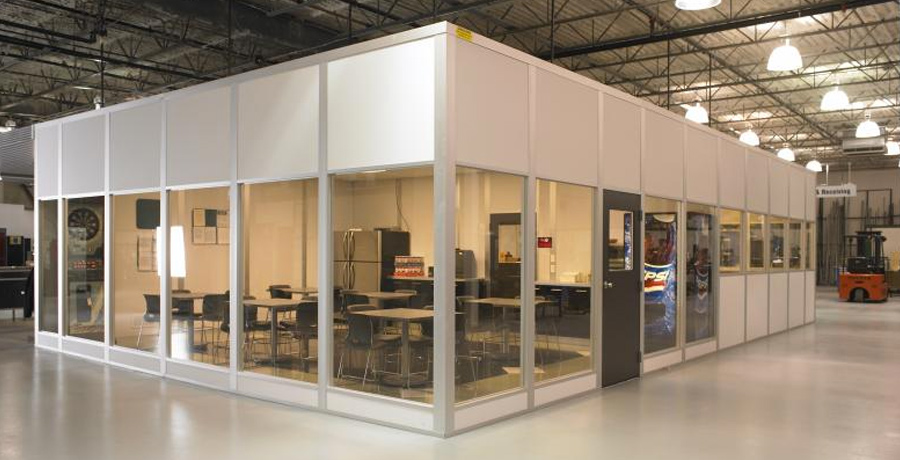
Use this as a quick prep list before a call or quote request. If we have these answers up front, we can design faster and price more accurately.
- Intended use: office, break room, lab, CMM, QA, secure storage, other
- Location in the building: where it’s going and what it needs to face or oversee
- Facility clear height: floor to lowest obstruction
- Desired interior height: finished ceiling height inside the space
- Obstructions nearby: sprinklers, lights, ducts, beams, columns, racking, conveyors
- Tie-in walls: are we attaching to an existing wall, and which wall(s)?
- Doors: how many, what type, and what needs to pass through
- Swing or sliding
- People only or equipment access
- Access control needs like keyed entry or badge access
- Windows: how many, what size, and what sightlines you need
- What needs to be visible (dock doors, staging, production, etc.)
- Privacy needs (HR vs. open team space)
- Future plans: any chance of a second level, storage, expansion, or relocation later
- Utilities required: what the space needs to function on day one
- HVAC and temperature control
- Electrical power and outlet locations
- Data and telecom
- Preference for modular wiring or traditional tie-ins
Why WOI for Modular Offices?
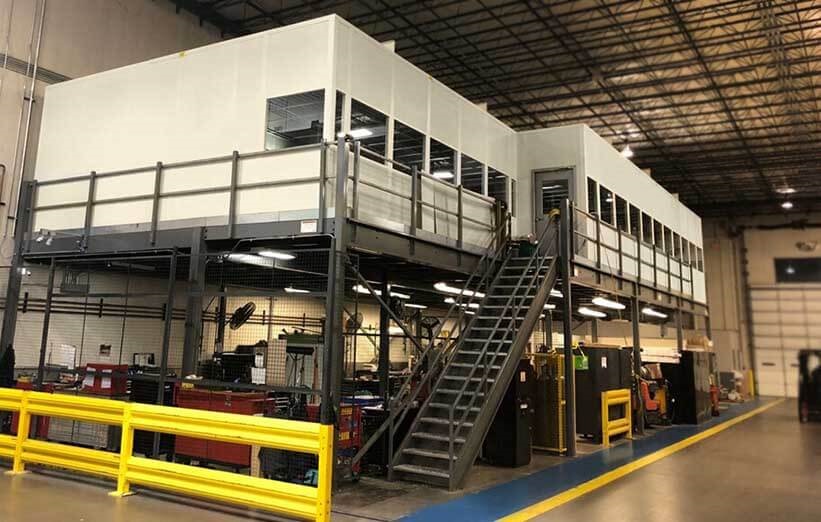
Once we answer the questions above, the rest gets simple. We recommend the right modular office setup, coordinate the details, and keep the project moving without surprises.
WOI modular offices are designed for real facilities that cannot pause operations. That usually means fast deployment, customization to fit the use case, options that support comfort and energy efficiency, minimal disruption during install, and the ability to reconfigure or relocate later if the facility changes.
Prefer to talk it through? Get in touch with our team.
WOI Professional Installation (Safety-First)
At Warehouse Optimizers, Inc. (WOI), safety is our top priority. A poorly installed pallet racking system can endanger employees, inventory, equipment, and infrastructure. That’s why WOI provides professional installation services to ensure the integrity and security of your warehouse systems.
With over 300 installations completed annually, our experienced team handles everything from permitting to final sign-offs to ensure seamless project execution.
Here are some WOI Professional Installation credentials and stamps of quality:
- OSHA-10 Trained Project Managers
- Drug-Free Workplace Certification
- Daily Job Safety Analysis and Jobsite Inspection
- Authorized and Trained Forklift, Scissor Lift, and Aerial Lift Operators
- TN & AL Licensed General Contractor #00046536 ($1M License)
- Insurance Experience Mod. Rate 1.0
- Full Insurance with a $5M Umbrella
The WOI Total Satisfaction Experience™
When you partner with WOI, you gain more than just design and installation expertise. You receive a dedicated team committed to your success. Our WOI Total Satisfaction Experience™ is built around five key principles:
- Listening to Your Needs: We take the time to understand your unique challenges and requirements.
- Executing with Precision: Our expert team ensures that your system is tailored to your exact specifications.
- Adhering to Timelines: We respect project deadlines to minimize disruptions and maximize efficiency.
- Ensuring Safety: Every aspect of our work prioritizes safety for your employees and operations.
- Attention to Detail: We meticulously oversee every phase of the project to deliver a flawless installation.
Improve warehouse efficiency and safety with WOI’s comprehensive pallet flow solutions and expert installation services. Contact us today to discuss your next project.
WOI Service Areas
Nashville TN, Knoxville TN, Clarksville TN, Memphis TN, Chattanooga TN, Johnson City TN, Huntsville AL, Birmingham AL, Bowling Green KY, Asheville NC, Charlotte NC, Kalamazoo MI, South Bend IN
Contact Us Today
We will be happy to assist you with any questions or more detailed product information on any Warehouse Optimizers products.