
How To Plan A Pallet Rack Installation That Stays On Time, On Budget, And Safe
Why Pallet Rack Installation Costs Go Over Budget — And How to Prevent It
Pallet rack installation is one of those projects that feels straightforward—until back charges stack up, schedules slip, and “little fixes” turn into costly redos. Overruns rarely come from one big blowup; they’re usually a dozen small misses in communication, design, and coordination. The #1 culprit is miscommunication—when vendors, contractors, and installers aren’t aligned, you get misplacements, delays, and rework. With that in mind, here are the Big Three budget busters—and how to prevent them.
Below, we break down the most common budget busters and the practical steps you can take to keep back charges in check, protect your timeline, ensure safe work, and control costs from kickoff to closeout.
The Big Three: Where Projects Go Off the Rails
1) Back Charges
The most preventable source of back charges is an unclear scope of work that the buyer and seller haven’t aligned and signed off on. When the scope is fuzzy, it cascades into rework, schedule hits, missed field conditions, and out-of-sequence activities (e.g., reinstalling beams after sprinkler work). It also drives extra mobilizations, lift rentals, freight redeliveries, disposal fees, and overtime to “catch up.”
2) Timelines
Compressed schedules and field-unready conditions (uncured slab, unfinished lighting, uncleared areas) force out-of-sequence work and overtime, and when equipment breaks down with no backup on site, the slip multiplies. A day lost early often costs three in the end.
3) Safe Work
Rushed crews make mistakes, and unsafe conditions trigger shutdowns—both cost more than getting it right the first time. Unplanned safety training requirements or pre-plan reviews by the buyer’s safety department can also halt progress and add cost.
Why Pallet Rack Installations Overrun (and What To Do Instead)
Consideration 1: Incomplete or Late Design Details
- Problem: Unclear elevations, missing load data, late seismic details, or “we’ll finalize onsite” decisions lead to change orders and rework. Lack of installation drawings agreed upon by buyer and seller.
- Prevention: Lock the design upfront with verified field measurements, load calculations, seismic/anchorage details, permit requirements, and signed submittals. Build in time for a thorough design review before procurement.
Consideration 2: Site Readiness Gaps
- Problem: Slab not cured, floor coatings still off-gassing, lighting unfinished, or aisles blocked with inbound inventory force installers to stop-and-start. Buyer unprepared for work at start time and date.
- Prevention: Use a pre-install readiness checklist: slab cure verification, lighting and power complete, clear aisles/staging zones, finished striping, marked obstructions, and confirmed MHE (forklifts, scissor lifts) access paths.
Consideration 3: Change Control (or Lack Thereof)
- Problem: Small field tweaks snowball into material swaps, re-permitting, or rework.
- Prevention: Set a formal RFI & change-order process. No changes without documented scope, cost, and schedule impact approval. Keep a live change log that everyone can see.
Consideration 4: Vendor & Trade Coordination
- Problem: Sprinkler, electrical, conveyors, and low-voltage trades collide with rack sequencing.
- Prevention: One master schedule with clear handoffs. Hold a cross-trade kickoff and weekly coordination huddles. Define rack “release” areas so trades can progress in phases without tripping each other up.
Consideration 5: Logistics & Staging
- Problem: Material shows out of sequence, sits in the wrong place, or requires double handling. Freight redeliveries and damaged components invite back charges.
- Prevention: Delivery plan tied to install sequence, protected staging and laydown areas, and damage inspection upon receipt. Assign a material controller to reconcile packing lists daily.
Consideration 6: As-Builts vs. As-Designed
- Problem: Field dimensions don’t match drawings; columns, drains, or conduit appear “out of nowhere.”
- Prevention: Preconstruction site survey with laser measurements and obstruction mapping. Confirm slab thickness/condition if anchors or heavy loads are involved.
Consideration 7: Safety Interruptions
- Problem: Near-misses or incidents stop work and trigger investigations, retraining, or medical attention.
- Prevention: Daily JSAs, lift certifications, and on-site supervision by trained project managers. Safer work is faster work over the life of the project. On-site review by client’s safety department on details of installation process.
Consideration 8: Procurement Assumptions
- Problem: Lead times, substitutions, and missed accessories (anchors, labels, load signs, shims, column guards) create emergency purchasing and schedule hits.
- Prevention: Complete BOMs (down to hardware and signage) and verified lead times. Order long-lead items early. Keep a minimal spares kit for rapid swaps. Order extra material to accommodate shipping damage or minor changes.
Consideration 9: Budget Visibility
- Problem: Hidden labor (cleanup, disposal, travel), equipment rentals, and premium-time labor surface late.
- Prevention: A cost tracker tied to the schedule and daily reports. If the plan shifts, update labor/equipment forecasts the same day—no surprises.
A Proven, Practical Playbook to Stay on Budget
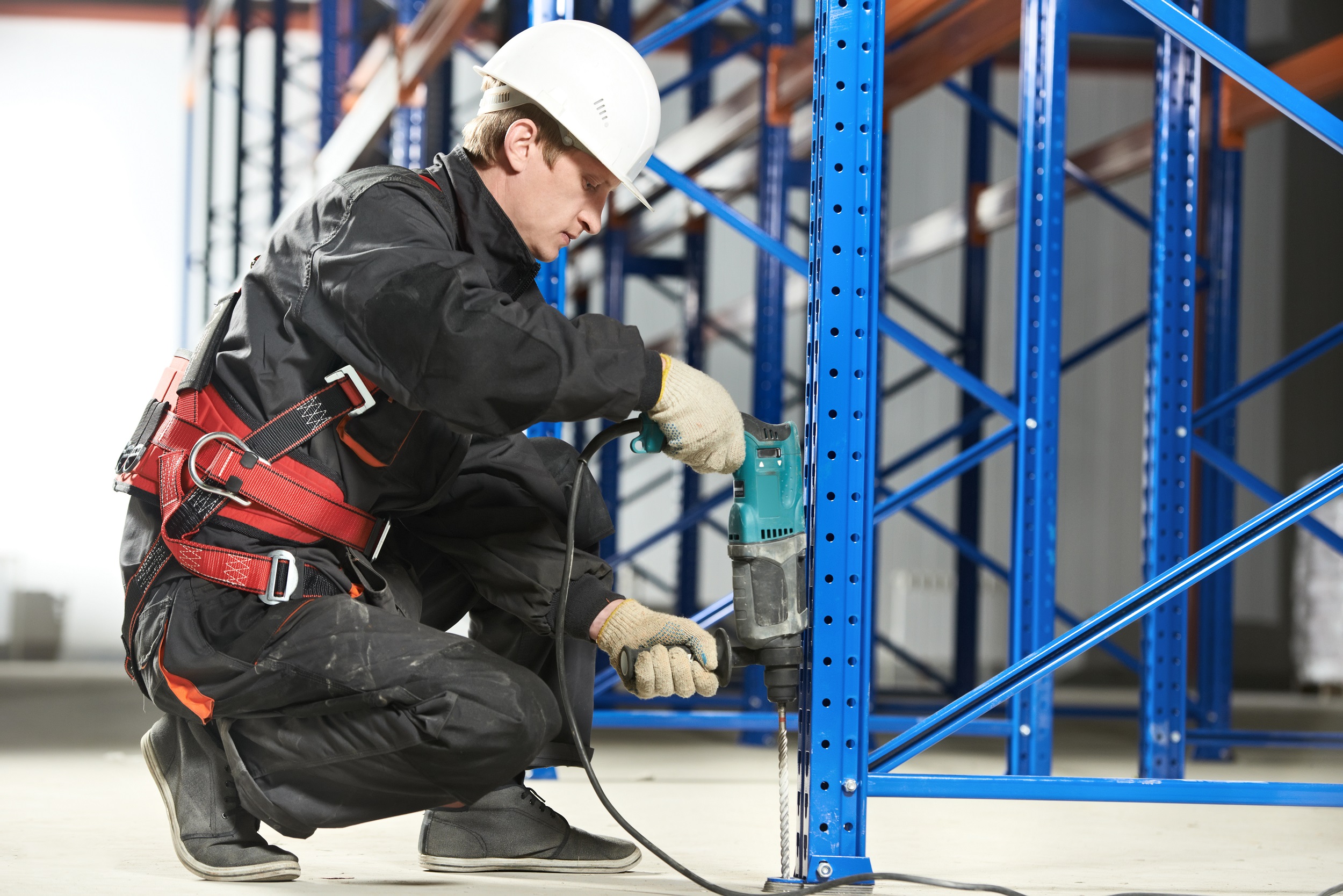
1) Kick off the Right Way
- Create a RACI chart (Responsible, Accountable, Consulted, Informed) so everyone knows their role.
- Scope boundaries (what’s included/excluded).
- Risk register (what might bite us and how we’ll avoid it).
- Communication cadence (daily huddles, weekly OAC meetings, instant escalation paths).
2) Front-Load the Design
- Field-verified measurements, seismic/anchorage details, slab condition checks.
- Signed and stamped submittals before ordering.
- Clear labeling, load signage plan, and layout drawings for installers.
3) Standardize RFIs & Changes
- One channel for questions.
- Documented responses with drawing updates.
- Change-order approvals include cost and schedule impact, plus who pays to prevent back charges later.
4) Schedule for Reality
- Phased areas with clean turnovers.
- Float for inspection and punch-list windows.
- “Gate checks” for readiness (lighting, floor cure, clear access) before releasing an area to install.
5) Control the Deck Daily
- Daily production goals and variance notes.
- Photo logs and brief field reports tied to area maps.
- Quick-hit issue board: what’s blocked, who’s on it, when it clears.
6) Lead with Safety
- Daily Job Safety Analyses, trained operators, and certified lifts on site.
- Stop-work authority for anyone who sees a hazard.
- Safety metrics discussed alongside schedule and cost—because they’re linked.
- Vet installation team contractor before determining who will install.
7) Close Out Cleanly
- As-builts reflect field reality.
- Load signs installed and documented.
- Owner training, O&M packets, and permit sign-offs finalized to avoid post-completion costs.
- Address any punch list items prior to the final day of installation.
Why WOI Project Management Makes the Difference
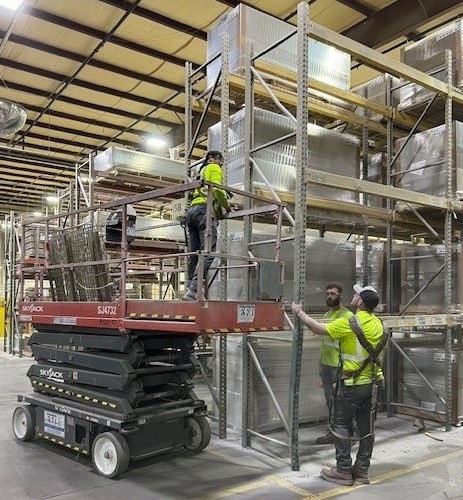 With proper project management, careful vendor selection, and robust upfront design, Warehouse Optimizers, Inc. (WOI) dramatically reduces the drivers of over-budget installs. We align vendors and trades around a single plan, keep communication tight, and sequence work to minimize back charges and schedule risk—delivering safer execution, fewer surprises, and stronger cost control. This is our value add that minimizes the overall cost of the project.
Because safety is our top priority, we pair that rigor with professional installation that protects your employees, inventory, equipment, and infrastructure. With over 300 installations completed annually, our experienced team manages everything from permitting to final sign-offs to ensure the integrity and security of your systems and a seamless closeout.
WOI Professional Installation:
- OSHA-10 Trained Project Managers
- Drug-Free Workplace Certification
- Daily Job Safety Analysis and Jobsite Inspection
- Authorized and Trained Forklift, Scissor Lift, and Aerial Lift Operators
- TN & AL Licensed General Contractor #00046536 ($1M License)
- Insurance Experience Mod. Rate 1.0
- Full Insurance with a $5M Umbrella
The WOI Total Satisfaction Experience™
When you partner with WOI, you gain more than just design and installation expertise—you receive a dedicated team committed to your success. Our WOI Total Satisfaction Experience™ is built around five key principles:
- Listening to Your Needs – We take the time to understand your unique challenges and requirements.
- Executing with Precision – Our expert team ensures that your system is tailored to your exact specifications.
- Adhering to Timelines – We respect project deadlines to minimize disruptions and maximize efficiency.
- Ensuring Safety – Every aspect of our work prioritizes safety for your employees and operations.
- Attention to Detail – We meticulously oversee every phase of the project to deliver a flawless installation.
Ready to control costs and protect your schedule?
Improve efficiency and safety with WOI’s pallet rack solutions and expert installation services. Contact us today to discuss your next project.
WOI Service Areas
Nashville, TN, Knoxville, TN, Clarksville, TN, Memphis, TN, Chattanooga, TN, Johnson City, TN, Huntsville, AL, Birmingham, AL, Bowling Green, KY, Asheville, NC, Charlotte, NC, Kalamazoo, MI, South Bend, IN
Contact Us Today
We will be happy to assist you with any questions or more detailed product information on any Warehouse Optimizers products.