
Unlocking Warehouse Potential: Why Slave Pallets Matter for Smooth Operations
The Role of Slave Pallets in Warehousing Safety and Efficiency
Efficiency in warehousing and distribution is often defined by the smooth movement, storage, and retrieval of products. Yet, some items pose challenges that standard pallets struggle to solve—ranging from non-standard footprints to difficult bottom profiles. Enter the slave pallet, a specialized tool designed to overcome these obstacles. By offering a sturdy, uniform platform that remains within the facility, slave pallets ensure even the most unwieldy loads can travel seamlessly across conveyors, racking systems, and automated storage solutions. In turn, this simplifies handling processes, reduces damage, and streamlines day-to-day operations.
Thanks to their lightweight design, captive pallets excel in a broad range of light-duty material handling tasks in industrial plants, distribution centers, and loading docks. Let’s examine common applications, benefits and challenges, and design considerations to see if they may be a good fit for your operation.
What Are Slave Pallets?

Slave Pallet on Ball Transfer Deck
A slave pallet is a robust, engineered platform that serves as a “mother” or “support” pallet for other containers, pallets, or products with incompatible bases or unique bottom profiles. These captive pallets remain in a facility, handling internal product movement rather than being shipped out. In many operations, slave pallets travel across conveyors, automated storage and retrieval systems (ASRS), ball transfers, or other forms of material handling equipment.
By placing standard or non-standard pallets and containers on top of a slave pallet, operators ensure that loads can be efficiently handled by forklifts and automated equipment without getting jammed, damaged, or misaligned. When not in use, slave pallets can be neatly stacked away using a standard forklift—saving valuable floor space and preserving operational flow.
Product Details: Uses and Applications
- Conveyor and ASRS Integration
Many distribution centers rely on conveyor lines or ASRS systems to move and store products quickly. However, not all product loads are compatible with conveyor belts or rollers; some pallets have open boards, broken corners, or unique bases that can catch in conveyor components. By placing these loads on a slave pallet, the problem is solved—any container or difficult pallet gains a smooth, uniform bottom surface. - Robotic Stacking and High-Density Storage
Automation continues to rise in modern warehousing, with robotic arms and AGVs (automated guided vehicles) taking over repetitive tasks. Slave pallets, built to precise dimensions and load-bearing requirements, ensure robots can reliably grab, stack, and move products—whether lightweight cartons or heavier industrial parts. - Pallet Building and Breaking Down
In many logistics settings, teams frequently build and break down pallets to create custom mixed loads or prepare items for shipping. By placing items on a slave pallet, operators create a controlled workspace. They can easily swap layers of products, rearrange boxes, or transfer loads to new pallets without repeatedly shifting the entire product load around the warehouse. - Quality Assurance (QA) and Inspection
Slave pallets are invaluable in QA processes where products on varying pallet types (cardboard, wood, plastic, etc.) move through inspection stations. Rather than reconfiguring equipment or risking damage to sensitive loads, QA personnel can standardize their process by using slave pallets, reducing manual handling errors and preventing damage. - Ball Mat Floor Applications
When using ball mat flooring platforms to sort and move pallets without powered equipment, slave pallets are often needed for effortless movement of various pallet designs. Pallets can be customized in size and capacity for the client’s application. Handles can be incorporated into the slave pallet design for ease of handling by personnel.
Benefits of Slave Pallets
- Enhanced Efficiency
- Reduced Handling Times: Employees spend less time wrestling with unwieldy or non-standard loads.
- Smoother Conveyor Flow: A consistent bottom surface ensures products travel smoothly through automated systems.
- Reduced Handling Times: Employees spend less time wrestling with unwieldy or non-standard loads.
- Improved Space Utilization
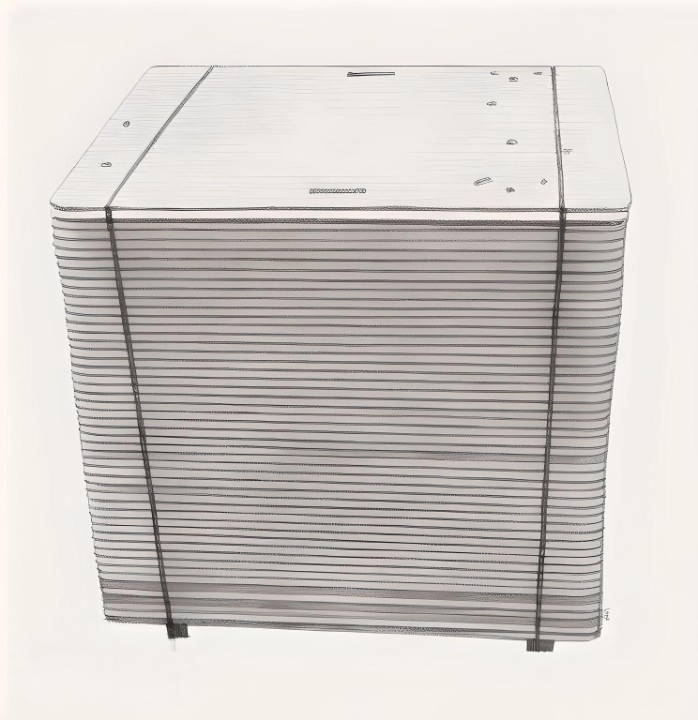
Stacked Slave Pallets
- Stackability: When not in use, slave pallets can be neatly stacked with a standard forklift, saving floor space.
- Integration with Storage Racking: Slave pallets can span the width of a pallet bay and rest directly on the front and rear beams, eliminating the need for additional pallet rack decking—especially when storing smaller pallets. Depending on your operational setup, forklift clearance bars may be required to allow fork access under the flat pallets. Be sure to consult with the WOI team to ensure your racking is optimized for smooth, safe captive pallet use.
- Versatile Configurations
- Customization Options: From 48″ x 48″ x ½″ standard models to custom dimensions, slave pallets can be tailored to any load size.
- Material Choices: Wood or plastic construction, depending on budget, durability needs, and regulatory requirements.
- Design Flexibility: Options like recessed barcode notches, eased perimeter edges, radius corners, and integrated conveyor rollers.
- Durability

Plastic Slave Pallet
- Built for Repetitive Use: Because slave pallets remain within the facility, they can be engineered for extended lifespans—reducing replacement costs over time.
- Enhanced Safety:
- No Nails or Splinters: Eliminates potential for worker injuries and inventory damage.
- Regulatory Compliance: Meets strict health and safety codes in food and pharmaceutical manufacturing/distribution.
- Protection for Fragile Products: Minimizes damage to delicate inventory during handling and transport.
Challenges of Slave Pallets
- Initial Cost Investment
- Quality captive pallets are built to last, so the upfront cost may be higher than standard one-way pallets. However, this investment pays off in reduced labor, minimized damage, and increased system efficiency.
- Maintenance and Inspection
- Over time, wear and tear can occur—especially in high-throughput environments. Routine checks ensure any signs of damage (such as cracks or weakened sections in plastic or wood) are addressed before they compromise safety or workflow.
- Storage Requirements
- Although they can be stacked to save space, large fleets of slave pallets still require thoughtful, safe storage planning. Relying on WOI’s design expertise helps ensure proper warehouse integration.
- Compatibility with Handling Equipment
- For an optimal experience, forklift attachments or modifications may be needed (such as different fork lengths, fork clamps, or specialized attachments). Proper planning and communication with equipment suppliers or WOI’s engineering team are essential.
Why Pallet Style and Size Matters for Rack and Conveyance Design
Effective warehouse design is a holistic process. The choice of pallet type—standard pallets, slave pallets, plastic, or wood—directly impacts rack and conveyor design. By considering slave pallets in the earliest design stages, facility managers and engineers can avoid retrofitting costs, maximize throughput, and ensure the safest possible environment for workers.
WOI’s Full-Service Support
At Warehouse Optimizers, Inc. (WOI), our mission is to make your warehouse operations safer, more efficient, and more profitable. We don’t just provide products—we offer a comprehensive suite of services encompassing every step of the warehouse optimization process.
- Initial Consultation and Assessment
- We evaluate your current setup, conduct an on-site assessment if needed, and identify areas where slave pallets or other solutions could enhance throughput.
- Custom Design and Engineering
- Whether you need wood or plastic slave pallets with specific load ratings, unique conveyor attachments, or custom integration with ASRS, our engineers work hand-in-hand with you to create a tailored solution that aligns with your application and budget.
- Professional Installation
- Ensuring the correct installation of racking systems, conveyors, and other equipment is paramount. A poorly installed system can put employees, inventory, and building infrastructure at risk. That’s why:
- OSHA-Trained Project Managers oversee every installation to guarantee compliance and best practices.
- We maintain a Drug-Free Workplace Certification, conduct Daily Job Safety Analysis, and perform job site inspections to uphold the highest safety standards.
- Our team comprises authorized and trained forklift, scissor lift, and aerial lift operators, ensuring each phase of your project runs smoothly and safely.
- We hold a TN & AL Licensed General Contractor #00046536 and carry full insurance with a $5M umbrella, giving you peace of mind throughout the project lifecycle.
- Ensuring the correct installation of racking systems, conveyors, and other equipment is paramount. A poorly installed system can put employees, inventory, and building infrastructure at risk. That’s why:
- Rack Inspection and Repair Services
- Even the best racking systems can face challenges over time due to accidental forklift impacts, changes in inventory profiles, or routine wear. WOI offers regular inspection services to catch potential issues early. Our professional repair services then ensure your system remains compliant, fully functional, and safe for continued use.
- Ongoing Support and Optimization
- As your business grows or evolves, WOI is ready to help adapt your warehousing solutions to meet your needs.
The WOI Total Satisfaction Experience™
When you partner with WOI, you gain more than just design and installation expertise—you receive a dedicated team focused on your success. Our WOI Total Satisfaction Experience™ is built around five key principles:
-
- Listening to Your Needs – We take the time to understand your unique challenges and requirements.
- Executing with Precision – Our expert team ensures your system is tailored to your exact specifications.
- Adhering to Timelines – We respect project deadlines to minimize disruptions and maximize efficiency.
- Ensuring Safety – Every aspect of our work prioritizes safety for your employees and operations.
- Attention to Detail – We meticulously oversee every project phase to deliver a flawless installation.
Contact us today to transform your operations, protect your bottom line, and position your facility for future growth.
WOI Service Areas
Nashville TN, Knoxville TN, Clarksville TN, Memphis TN, Chattanooga TN, Johnson City TN, Huntsville AL, Birmingham AL, Bowling Green KY, Asheville NC, Charlotte NC, Kalamazoo MI, South Bend IN
Contact Us Today
We will be happy to assist you with any questions or more detailed product information on any Warehouse Optimizers products.