
Understanding Basic Pallet Specs to Ensure Safe Pallet Rack Use
Exploring Pallets –Designs, Styles & Materials for Your Pallet Rack System
The essential function of pallet rack is to store palletized items –safely and efficiently. A lot of emphasis, rightly so, is given to pallet rack design, installation, and forklift access, but rarely is attention directed to the pallets. However, the pallet is a crucial component of the safe and productive function of your racking and, ultimately, your facility. It’s time to look closer at the quality, material, and design of the pallets that flow in and out of your warehouse.
Here’s an overview of all things “pallet.”
Pallet Designs
The most common pallet style used in the U.S. is GMA-style. The Grocery Manufacturers of America established that designation to create pallet uniformity for the industry, but those parameters quickly became widely accepted as a go-to for pallet design. GMA-style pallets meet the following criteria for construction and size.
What is a GMA-STYLE PALLET?
-
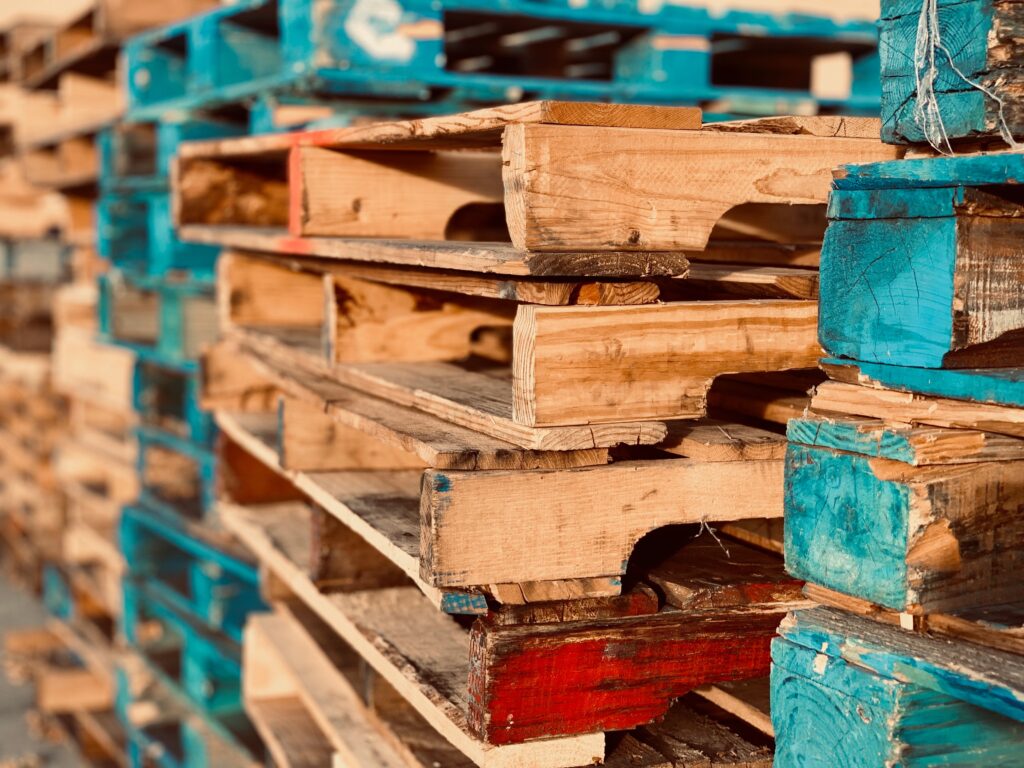 Material: Wood or plastic
 - Size: 40” w x 48” d x 6½” h
- Construction: 7 top and 5 bottom boards – minimum ½” thick
- Minimum load capacity: 2500 lbs
- Entry points: two notches on each side for four-way forklift entry
- Decking:
- Top boards — 5 1/2″ x 40″ on each end & five 3 1/2” x 40″ boards in the center
- Bottom boards – 5 1/2″ x 40″ on each end & three 3 1/2″ x 40″ boards between
GMA-style pallets have indentations on the stringers, enabling forklifts to access them from both the sides and the ends. These are referred to as “four-way” pallets. Conversely, when the stringer boards lack these indentations, the pallet can only be accessed from the ends, making them “two-way” pallets.
Other standard sizes of pallets include square pallets – 42 x 42 & 48 x 48.
Pallet Styles

Pallet styles are often referenced by how the forklift can access the pallet, i.e., the number of entry points.
- Two-way pallet – Open on 2 sides for forklift access.
- Four-way pallet – Open on all 4 sides for forklift access – the advantage being that it can be loaded into pallet rack in either direction.
- Open deck pallet – An Open deck pallet is a flat platform with no bottom deck boards, allowing for easy access and visibility of the stored goods.
- Solid deck pallet – The surface is a single solid sheet of wood, plastic, or metal. They are available in wood or plastic. They are ideal for small products and prevent item rips and tears.
- Double-face pallet – Has both a lower and upper deck. The lower deck makes a pallet sturdier and able to withstand heavier loads. The design helps create a uniform load distribution (UDL). Choose between reversible and non-reversible styles –non-reversible has one useable side, whereas reversible can be used on either side.
The most commonly used pallet is a stringer pallet. A stringer pallet is a type of pallet that consists of three or more parallel wooden or plastic boards (known as stringers) that support the top deck and bottom deck boards, providing structural integrity. They are usually two-way pallets, but there are also four-way stringer pallets.
Another popular pallet style is a block pallet. A block pallet features blocks or cubes at each corner between the top and bottom deck boards. This design adds support and stability to the pallet and helps evenly distribute the weight. Block pallets are typically more durable and suitable for heavy-duty applications. They are four-way forklift access pallets.
Other pallet types include:
Skid – a skid is a single deck pallet without bottom deck boards or blocks. They are often used for temporary or lightweight applications.
Pod – plastic footed (pods) pallets that are durable, lightweight, and hygienic, making them a go-to for various industries. Pod pallets provide easy handling, stackability, and compatibility with automated systems.
Solid top – plastic pallet with a smooth top surface to prevent rips and tears of inventory or storage cases. Allows for 4-way forklift access.
Pallet Materials
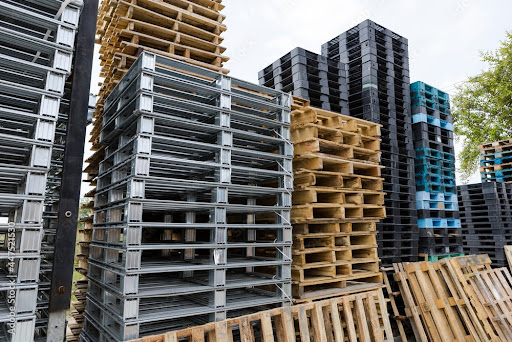
The pallet material used depends on your unique warehouse and product needs. Please note that particular industries require pallets made of certain materials. We suggest that you research your industry regulations and standards (if applicable). The majority of pallets are manufactured from wood, plastic, or metal.
Wood pallets
These are the most commonly used pallet, most likely because they are cost-effective and easily configurable. They’re made from various kinds of wood and therefore result in a range of costs and durability levels.
Advantages
- Cost-effective: Wood pallets are often more affordable compared to other materials, making them a cost-effective choice for businesses.
- Availability: Wood pallets are widely available and easily accessible, as wood is a renewable resource and can be sourced locally.
- Strength and durability: Wood pallets are known for their strength and durability, capable of handling heavy loads and enduring rough handling during transportation.
- Repairability: In case of damage, wood pallets can be repaired easily by replacing individual boards, extending their lifespan, and reducing replacement costs.
- Recyclable and biodegradable: Wood pallets are recyclable and can be repurposed into various wood products. They are also biodegradable, making them an environmentally friendly choice compared to plastic pallets.
- Friction and stability: Wood surfaces have natural friction, which helps prevent loads from slipping during transport. The weight of wood pallets also contributes to their stability.
- Customization: Wood pallets can be easily customized and modified to meet specific size, shape, or load requirements, allowing for greater flexibility in logistics operations.
- Insulation properties: Wood provides natural insulation against temperature changes, which can benefit certain goods during storage and transportation.
Disadvantages
- Cleanliness: They can be easily soiled and are not washdown friendly.
- Shipping costs: They may be more expensive to ship than other lighter-weight pallet options.
- Worker injury: Wood will retain water, increasing the pallet weight and risk to workers. Also, protruding nails and broken boards pose a risk to workers.
- Damage: too heavy loads or too rough treatment can damage the pallet.
Plastic pallets
These are the second most widely used type of pallet. They’re versatile and can be used for many products and industries and for indoor and outdoor use. Plastic pallets are great for storing biodegradable items and chemicals. It’s worth noting that plastic pallets may have a higher upfront cost compared to wood pallets, and they may not be suitable for heavy-duty applications where extreme weight or temperature conditions are involved.
Advantages
- Durability: Plastic pallets are highly durable and resistant to wear, weather conditions, and chemical exposure. They can withstand rough handling, impacts, and repeated use without splintering, cracking, or warping.
- Hygiene and cleanliness: Plastic pallets are easy to clean and sanitize, making them suitable for industries with strict hygiene requirements, such as food, pharmaceuticals, and healthcare. They do not harbor pests, bacteria, or mold.
- Consistency and uniformity: Plastic pallets are manufactured with precision, ensuring consistent dimensions and weight. This makes them compatible with automated systems like conveyor belts and palletizers.
- Lightweight: Plastic pallets are typically lighter than wood pallets, reducing transportation costs and easier handling. Their lightweight nature also minimizes the risk of employee injuries during manual handling.
- Nestable or stackable: Many plastic pallets are designed with nesting or stacking features, allowing for space-efficient storage when not in use. This helps optimize warehouse storage capacity and reduces empty return transportation costs.
- No splinters or nails: Unlike wood pallets, plastic pallets do not have protruding nails or splinters that can damage products or cause injuries to handlers. This enhances workplace safety and protects goods from potential damage.
- Chemical resistance: Plastic pallets resist chemicals, oils, solvents, and moisture. They do not absorb liquids or odors, ensuring the integrity of the pallet and the safety of the transported goods.
- Recyclable and environmentally friendly: Plastic pallets can be recycled into new plastic products, reducing waste and promoting sustainability. Some plastic pallets are even made from recycled materials, further reducing their environmental impact.
Disadvantages
- Cost: higher initial purchase cost vs. wood pallets
- Non-repairable: Can’t be refurbished
- Capacity: Restricted load weight capacity based on structure
Metal pallets
Metal are the most durable type of pallets, and they are best suited for weighty loads, i.e., air freight, barrels, and drums. They’re usually made of aluminum or steel, and the price depends on the type of metal. Steel metal pallets are great for closed environments that require durability and protection.
Advantages
- Strength and durability: Metal pallets are incredibly strong and durable, capable of withstanding heavy loads, impacts, and harsh environments. They have a high weight-bearing capacity and resist wear, bending, and breakage.
- Long lifespan: Metal pallets have a longer lifespan vs. wood or plastic pallets. They’re reusable for a significant number of cycles without the need for frequent repairs or replacements.
- Fire resistance: Metal pallets are non-combustible and have inherent fire resistance, making them suitable for industries where fire safety is a concern, such as chemical storage or certain manufacturing environments.
- Hygiene and cleanliness: Metal pallets are easy to clean, and they do not absorb liquids or harbor bacteria, mold, or pests. They are often used in industries with strict hygiene standards, such as pharmaceuticals and food processing.
- Stability and stacking ability: Metal pallets provide excellent stability and structural integrity, ensuring the safe stacking of goods. They are less prone to deformation or collapsing under heavy loads, contributing to safer storage and transportation.
- Resistance to environmental factors: Metal pallets can withstand extreme temperatures, moisture, UV exposure, and other environmental factors that may degrade or damage other pallet materials. This makes them suitable for outdoor storage or transportation in harsh climates.
- Compatibility with automation: Metal pallets are often compatible with automated handling systems, including conveyor belts and robotic palletizers. Their uniform size and shape facilitate a smooth operation and integration into automated processes.
- Recyclability: Metal pallets are recyclable and can be melted down and repurposed into new metal products. This helps reduce waste and supports sustainability initiatives.
Disadvantages
- Cost: biggest initial cost vs. other pallet types.
- Weight: tend to be heavier than other pallet types, which can increase transportation costs.
- Rust: prone to rusting over time
- Inventory damage: pose a risk of scratching or damaging items during transport if not properly handled or protected.
How Does All This Pallet Knowledge Apply to Your Pallet Rack System?
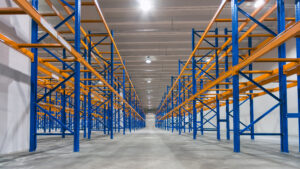 Selective Rack |
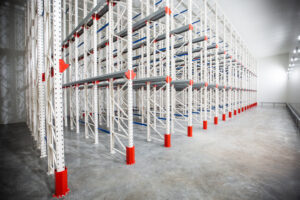 Drive-In Rack |
 Pallet Flow Rack |
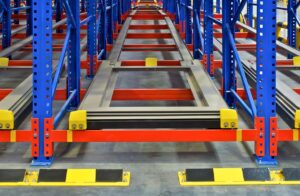 Push-Back Rack |
While your pallets may take one form or another, your pallet rack system must be configured for the precise specs of the pallets you’re using. Here is a quick overview of the most common pallet rack systems — when you’re ready to design and install your system, give the WOI team a call. We provide full-service, turn-key support with an emphasis on customer satisfaction.
- Selective pallet rack – This is the most common storage rack system. Designed using vertical upright frames and horizontal shelf beams to store one pallet deep with multiple units high and wide. Systems are often configured back to back to maximize floor space and consolidate aisles.
- Drive-in/drive-through pallet rack – This system is comprised of uprights and horizontal arms equipped with load rails. Pallets are placed on the rails vs. in a rack bay of a standard system, allowing deep-lane storage vs. horizontal. Drive-in systems use a single aisle for loading and unloading, while drive-through allows access from a front and rear aisle.
- Pallet flow pallet rack – A first-in/first-out (FIFO) gravity flow pallet storage system using wheels or rollers installed on a decline to propel inventory from a rear load aisle to a forward pick aisle. Individual SKU lanes keep SKUs organized and quickly accessible. Systems are typically 2-5 pallets deep but can be configured for deep-lane storage.
- Push-back pallet rack – A pallet storage system consisting of individual SKU lanes with enveloping wheeled carts on slightly pitched tracks. The first pallet sits on the top cart. As others are loaded, the front pallet is pushed back to reveal a cart underneath. As the system is unloaded, rear pallets flow forward automatically. The system is loaded and unloaded from a single aisle, usually 3 to 4 pallets deep. Push-back is a LIFO storage option.

At WOI, we understand that selecting the correct pallet rack system and pallets is essential to optimizing the efficiency of your warehouse operation. Our team is here to help you to make the right choices and expertly install the system. Our pallet rack installers complete over 300 projects annually, and we provide full-service support, including permits, electrical & utility contracting, and fire suppression systems.
WOI Expert Installation:
- OSHA Trained & Certified
- Certified Drug-Free Workplace
- Licensed General Contractor
- Job Safety Analysis
- Forklift, Scissor Lift, and Aerial Lift Operator Trained
When you work with WOI, you are assured of experienced, conscientious, personalized service. Our team has over 180 years of combined material handling experience and long-term industry relationships that guarantee reliable products at competitive pricing. The WOI team is committed to delivering 100% Customer Satisfaction on each project through our Total Satisfaction Experience™ (TSE).
The Total Satisfaction Experience focuses on five essential customer experiences:
- We will listen to your needs
- Execute your project with particular attention to your unique application
- Stick to project timelines
- Ensure a safe environment
- Pay close attention to the detail of the finished product
Call WOI for a free warehouse storage racking consultation. Contact us today to schedule your site inspection — dial (833) 336-7005 or email info@storagesolutionsinc.com.
Contact Us Today
We will be happy to assist you with any questions or more detailed product information on any Warehouse Optimizers products.