
Top Warehouse Safety Tips to Prevent Worker Injuries
Take a Look at These Actionable Warehouse Safety Tips
No one would argue that warehouses are busy places, bustling with people and machinery on the move. The balancing act is to keep your workers safe and protect your operation from accidents and incidents that can slow you down at best or grind you to a halt at worst. The use of preventative methods for warehouse safety can decrease days off due to injuries and accidents, decrease downtime, and reduce the likelihood of OSHA fines, insurance claims, and worker’s compensation claims.
Top Warehouse Safety Concerns
- Forklift accidents
- Falling objects
- Slips, Trips & Falls
- Pallet rack collapse
- Worker strains
- Heat-related illnesses
Take a look at our solutions to address common warehouse safety concerns with your team.
Warehouse Safety – Preventing Forklift Accidents
According to The National Safety Council, forklifts were the source of 78 work-related deaths and 7,290 nonfatal injuries involving days away from work in 2020. To prevent forklift accidents, OSHA requires operator training and certification, but that’s not all…
OSHA Guidelines to Decrease the Risk of Forklift Accidents
- Train, evaluate, and certify all operators to ensure that they can safely operate your forklift vehicles.
- Do not allow anyone under the age of 18 to operate a forklift.
- Properly maintain haulage equipment, including tires.
- Before using a forklift, conduct a vehicle safety review and examine it for dangerous conditions which would make it unsafe to operate.
- Follow safety procedures for picking up, putting down, and stacking loads
- Drive safely, never exceeding 5 mph, and slow down in congested areas or those with slippery surfaces.
Watch Out Below!
Inventory stored in vertical racks must be adequately secured to ensure warehouse safety. Falling objects can cause worker injury or, even worse, death.
- Vertical product stacking – Pallet racking is an ideal way to use vertical cube space and organize inventory for easy, quick access. However, it can create an unsafe condition if the rack isn’t correctly installed, is overloaded, or inventory isn’t secured onto the pallet and properly placed in the rack.
- Safety netting – Safety netting is a cost-effective way to prevent items from falling from the rack. It often secures to the back of your pallet rack system, particularly above pedestrian areas and aisleways.
Preventing Slips, Trips, and Falls
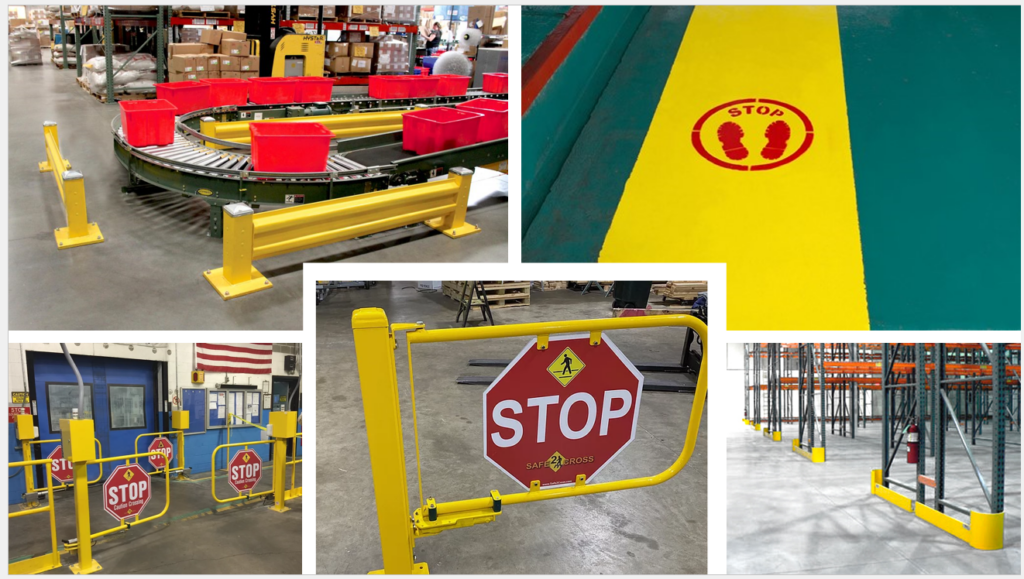
Tripping, falling, and slipping make up most general industry accidents. Slip and fall accidents make up 15 percent of all accidental deaths and 25 percent of all injury claims, according to the U.S. Department of Labor –but those statistics do not have to represent your facility where warehouse safety is a priority.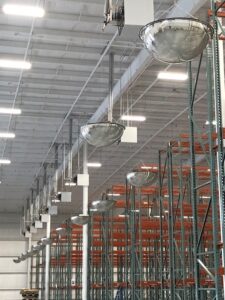
- Pallet rack – Wait, didn’t we just mention these? Yes, pallet rack systems are a superior warehouse product because they fill various needs. Racks are a smart way to open floor space for better traffic patterns and sight lines vs. stacks of inventory.
- Cleanliness – Clutter, congested spaces, and slippery conditions can spell catastrophe. Provide convenient disposal areas and cleaning equipment to augment regular cleaning efforts. Encourage workers to keep aisles and spaces clean.’
- Aisles and shared spaces – People and equipment must share the same area in a busy warehouse. Mark pedestrian and equipment pathways and install safety gates at crossings and restricted areas. You can also use floor markings, guardrails, lighting, and mirrors to help increase visibility.
- Signage and lighting – Warning signs and caution tape are cost-effective methods to remind workers of possible risks. They can also be used to indicate differences in floor surfaces. Use mounted plaques or take it to the next level with ceiling-mounted signal lighting. These automated lighting fixtures cast down bright lights, stop signals, etc., to direct traffic and prevent accidents. Increase lighting in poorly lit areas and replace inferior fixtures and burned-out bulbs.
Pallet Rack Safety

Pallet rack collapse is rare but always avoidable. It’s essential to follow safe practices regarding installation, load type, capacity, forklift interaction, and repairs to protect your team and operation.
- Training – Training is essential for both workers and forklift operators. Each must understand their role in warehouse safety, and there must be a method to report hazardous activity or conditions. It’s always better to address an issue before it becomes a tragedy.
- Avoid overloading – Ensure your pallet rack doesn’t exceed its load-bearing capabilities. Overloading your system presents a warehouse safety risk and can diminish your usefulness. Load capacity signs should be clearly visible and updated if the system is repaired or reconfigured. Pallet Rack changes should be evaluated by a trained professional.
- Warehouse walk-throughs – Complete warehouse walk-throughs regularly, looking up to ensure that pallet racks are uniformly stacked. Look for overhanging pallets that could fall or be hit by a forklift and fix them.
- Space – Create ample space between racks for proper forklift operation in each aisle.
- Scheduling – Schedule replenishment and restocking when employees are not in the same area, if possible.
Prevent Ergonomic Strains & Injuries
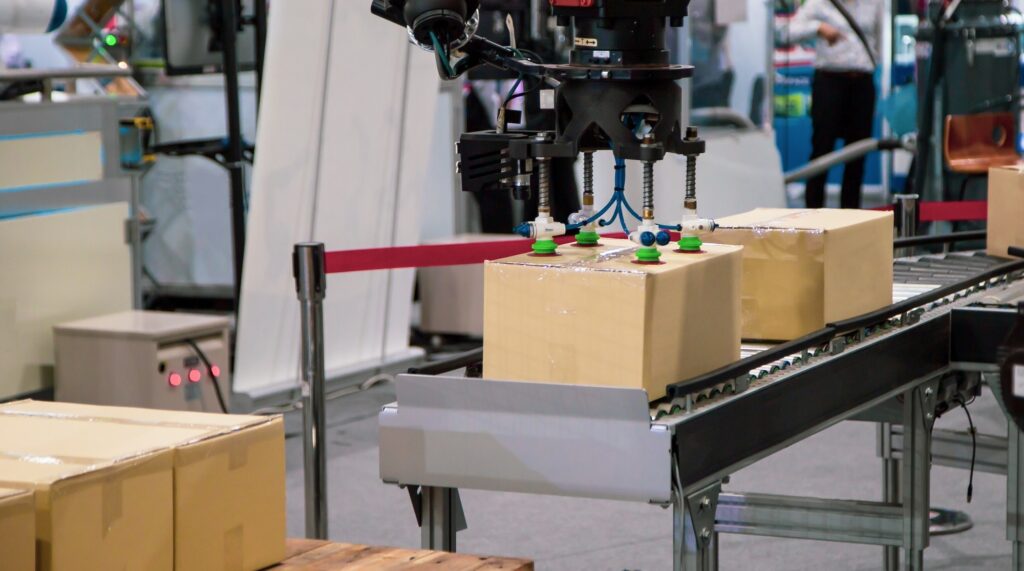
Repetitive motion activities, improper lifting, and poor operational design can lead to worker injury and accidents.
- Workstation design – Review workstation design in packing and returns processing. Ensure that the work surface’s square footage is sufficient and height adjustable.
- Rubber pads – Place rubber pads on the floor to reduce foot and leg fatigue.
- Ergonomics -Evaluate workers’ daily tasks and train them in proper lifting techniques, i.e., using their legs while keeping their backs in a natural position. Consider adding one of these to your work areas —vacuum lifters, lift tables, conveyors, and ball transfer deck/tables can be integrated into your intake and processing areas to safeguard against physical injuries and boost productivity. Investing in assistive products will spare your workers’ health and protect your bottom line. It also allows you to use your team more effectively.
- Back braces – Provide back braces for workers doing heavy lifting.
- Protective gear – Rubber-soled boots reduce the risk of trips and falls by providing a better grip on the floor. If your warehouse uses wood pallets, puncture-resistant boots can help prevent loose nails from going through shoe soles. Protective work gloves prevent cuts and splinters, while disposable gloves cover existing cuts, protect them from contamination, and prevent the contamination of products.
Chill Heat-Related Illnesses
As a Southeast-based business, we know how warm it can get inside a warehouse; unfortunately, air conditioning isn’t always an option. Here are a few ways to keep your warehouse as cool as possible.
- Modular cool rooms are a fast, easy, economical solution to help beat the heat and protect your team from heat-related injuries.
- HVAC ventilation – Hire a mechanical engineering firm specializing in warehouse HVAC ventilation to analyze your warehouse structure. They can suggest ventilation solutions to provide cooler air, install an exhaust system to relieve heat, or insulate pipes to reduce heat.
- Additional equipment – Consider using pallet jacks, pallet carts, and walkies, to move heavy palletized inventory vs. a more significant reliance on forklifts.
- Breaks – Ensure that workers receive (and actually take) proper breaks and are hydrated.
Improve Warehouse Safety the Warehouse Optimizers Way
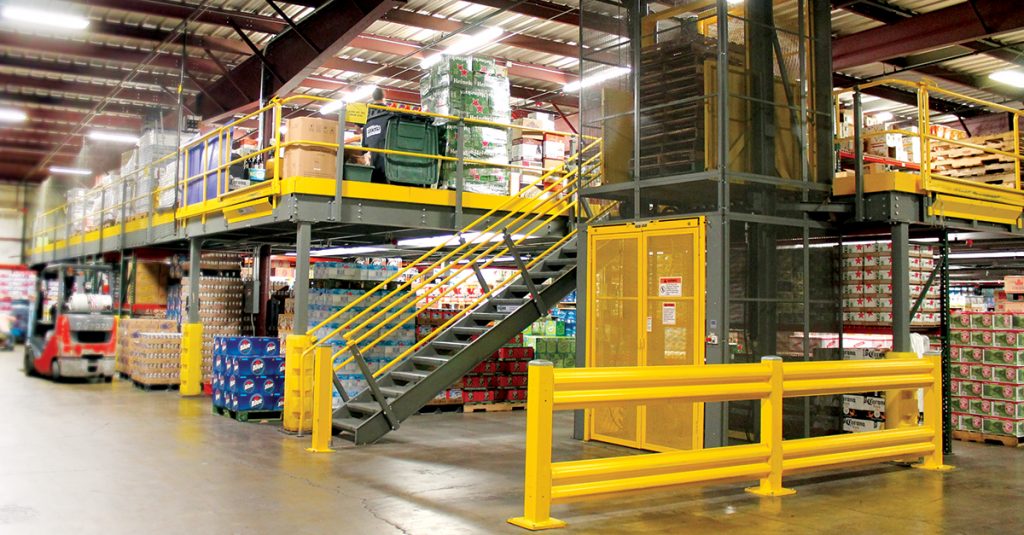
The tips outlined above are all tried, true, and effective. With a few actionable items, you can improve overall warehouse safety and prevent disruptions to your operation. Let us help you choose the most cost-effective solutions for your particular needs.
The WOI team works with a single focus… 100% Customer Satisfaction. We don’t sell our customers a project; we partner with them to solve their needs and guarantee their satisfaction. It’s called the WOI Total Satisfaction Experience™.
TSE focuses on five essential customer experiences:
- We will listen to your needs
- Execute your project with particular attention to your unique application
- Stick to project timelines
- Ensure a safe environment
- Pay close attention to the detail of the finished product
Since the finished product is critical to the customer’s satisfaction, we rely on our professional rack installation team. The WOI installation team follows strict protocols on every build.
- Industry Experienced Installation Teams
- OSHA Trained & Certified
- Certified Drug-Free Workplace
- Licensed General Contractor
- Job Safety Analysis
- Forklift, Scissor Lift, and Aerial Lift Operator Trained
Call WOI today for a free consultation and schedule a site inspection —dial (833) 336-7005 or email info@warehouseoptimizers.com. We proudly serve customers throughout the Southeast, including KENTUCKY, TENNESSEE, NORTH CAROLINA, ALABAMA, AND FLORIDA.
Related Content:
Contact Us Today
We will be happy to assist you with any questions or more detailed product information on any Warehouse Optimizers products.